Table of Contents >> Show >> Hide
- What Makes a Strawberry Shortcake “Shortcake”?
- Gluten-Free Shortcake Success: The “Why” Behind the Ingredients
- The Recipe: Classic Gluten-Free Strawberry Shortcakes
- Make-Ahead, Storage, and Food-Safety Tips
- Variations That Still Taste Like “Real Dessert”
- Troubleshooting: Fix the Usual Gluten-Free Shortcake Problems
- FAQ: Quick Answers That Actually Help
- Conclusion
- Extra: Real Experiences From the Gluten-Free Strawberry Shortcake Trenches
Gluten-free strawberry shortcake is one of those desserts that feels like summer showed up early, wearing sunglasses, and brought snacks. It’s simpletender shortcakes, juicy strawberries, fluffy whipped creambut it’s also the kind of “simple” that quietly demands good technique. And when you remove gluten (the stretchy scaffolding that makes wheat baking forgiving), details matter: flour blend choice, cold butter, not overmixing, and baking fast enough to puff without drying out.
This guide gives you an in-depth, reliable approach to gluten-free strawberry shortcakesplus smart swaps, troubleshooting, make-ahead tips, and a big “been-there” experience section at the end so you can avoid the classic GF pitfalls (like “Why did my biscuit turn into sand?”).
What Makes a Strawberry Shortcake “Shortcake”?
Despite the name, traditional American strawberry shortcake usually isn’t a sponge cake. It’s more like a lightly sweetened biscuit: “short” refers to the tender, crumbly texture created by fat (butter, cream) interrupting flour structure. That’s great news for gluten-free bakers because biscuit-style shortcakes are already less dependent on gluten than, say, a baguette with dreams of glory.
There are two popular directions:
- Biscuit-style shortcakes: flaky-tender, split and layered (the classic).
- Cake-style shortcakes: soft, fluffy, more like a vanilla cake base (great for crowds and sheet-pan serving).
Gluten-Free Shortcake Success: The “Why” Behind the Ingredients
1) The Gluten-Free Flour Blend
The easiest path is a 1:1 gluten-free baking flour blend designed to replace all-purpose flour. Many blends include a combination of rice flours and starches (like tapioca and potato starch) and often include a binder such as xanthan gum. If your blend doesn’t include a binder, you’ll typically need to add one (xanthan gum is common) to prevent a crumbly shortcake that collapses the moment you try to split it.
Practical tip: Weighing flour is extra helpful in gluten-free baking because GF flours pack differently. If you only have measuring cups, spoon the flour into the cup and level itdon’t scoop and compact.
2) Baking Powder (and Sometimes Baking Soda)
Biscuit-style shortcakes rely on chemical leavening to rise quickly. Baking powder does most of the heavy lifting. If you’re using buttermilk (or another acidic dairy), a little baking soda can improve browning and lift.
3) Cold Butter (Yes, Cold Means Cold)
Cold butter is not a cute suggestion; it’s the whole plan. Little pieces of butter melt in the oven and create steam pockets, giving you lift and tenderness. If butter softens before baking, you lose that structure and end up with “pleasantly flavored hockey pucks.” Keep butter cold, work quickly, and chill the dough if your kitchen runs warm.
4) Cream or Buttermilk
Both work, but they behave differently:
- Heavy cream: richer flavor and tenderness, often simpler dough.
- Buttermilk: tangy, helps tenderness, can improve browning; pairs well with a touch of baking soda.
5) Strawberries + Sugar = The Best Kind of Chemistry
Macerating strawberries (tossing with sugar) pulls out juices, creates a quick syrup, and makes the berries taste more “strawberry.” A little lemon juice brightens everything and keeps the flavor from tasting flat.
6) Whipped Cream: Peaks, Not Panic
Whipped cream should be soft and billowy, not stiff and butter-adjacent. Chill the bowl if you can, whip to soft or medium peaks, and sweeten lightly (powdered sugar dissolves smoothly). A splash of vanilla is optional but highly encouraged.
The Recipe: Classic Gluten-Free Strawberry Shortcakes
This is a biscuit-style versionlightly sweet, tender, and sturdy enough to hold juicy berries without turning into a delicious swamp.
Ingredients (Serves 6–8)
For the strawberries
- 2 pounds fresh strawberries, hulled and sliced
- 3–5 tablespoons granulated sugar (adjust to sweetness of berries)
- 1–2 teaspoons fresh lemon juice
- Optional: pinch of salt, or a few torn basil leaves for a fancy mood
For the gluten-free shortcakes
- 2 cups (about 280–300g) 1:1 gluten-free flour blend
- 1/4 cup granulated sugar
- 1 tablespoon baking powder
- 1/2 teaspoon fine salt
- 1/2 teaspoon xanthan gum (only if your blend does not include it)
- 8 tablespoons (1 stick) unsalted butter, very cold (grated or cubed)
- 2/3 cup cold heavy cream or cold buttermilk (plus a splash more if needed)
- 1 large egg (optional but helpful for structure and richness)
- 1 teaspoon vanilla extract (optional)
- Optional topping: coarse sugar for sparkle
For the whipped cream
- 1 1/2 cups cold heavy cream
- 2–3 tablespoons powdered sugar (or to taste)
- 1 teaspoon vanilla extract
Step-by-step Instructions
-
Macerate the strawberries:
In a bowl, toss sliced strawberries with sugar and lemon juice. Let sit 20–30 minutes at room temp, or cover and refrigerate up to a day. The berries should look glossy and juicy, like they’re posing for a summer magazine cover.
-
Prep the oven:
Preheat to 425°F. Line a baking sheet with parchment paper.
-
Mix dry ingredients:
In a large bowl, whisk together gluten-free flour blend, sugar, baking powder, salt, and xanthan gum (if needed).
-
Add cold butter:
Add grated or cubed cold butter. Use your fingertips, a pastry cutter, or two forks to work butter into the flour until you have pea-sized bits and some smaller crumbs. (Those butter bits are future flake pockets.)
-
Add liquids gently:
Whisk cream/buttermilk with egg and vanilla (if using), then pour into the bowl. Stir with a fork until the dough looks shaggy and mostly combined. If it’s too dry, add a tablespoon of cold cream at a time. If it’s too wet, sprinkle in a bit more flour blend.
Important: Don’t overmix. Gluten-free dough can go from “tender” to “oddly gummy” if you treat it like you’re kneading bread dough through its emotions.
-
Shape and cut:
Turn dough onto parchment or a lightly floured surface (use gluten-free flour). Pat into a 1-inch thick round. Cut into 6–8 circles. Re-pat scraps gently (don’t overwork).
Prefer minimal effort? Make drop shortcakes: scoop mounds with a large spoon and bake as-is. They’ll be rustic, which is code for “I meant to do that.”
-
Bake:
Place on baking sheet. Brush tops lightly with cream and sprinkle with coarse sugar if desired. Bake 12–16 minutes until puffed and golden. Cool 10 minutes before slicing.
-
Whip the cream:
Whip cold cream with powdered sugar and vanilla until soft-to-medium peaks. Stop before it turns grainy. If you accidentally overwhip, add a splash more cream and whisk briefly to loosen.
-
Assemble like a pro:
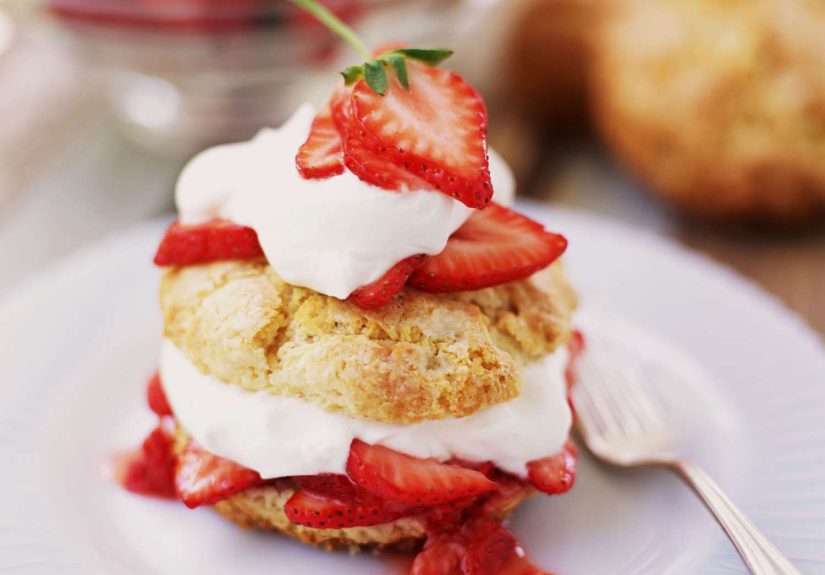
Split shortcakes. Spoon strawberries and syrup onto the bottom half, add whipped cream, then cap with the top. Add extra berries on top because we’re not here to be subtle.
Make-Ahead, Storage, and Food-Safety Tips
- Shortcakes: Best the day they’re baked. You can bake them a few hours ahead and keep loosely covered at room temp. To refresh, warm briefly in a 300°F oven.
- Strawberries: Macerate up to 24 hours ahead; refrigerate covered. For best quality, aim to use within 2–3 days.
- Whipped cream: Best fresh, but you can whip a few hours ahead and refrigerate. For longer hold, stabilize with a spoonful of mascarpone or cream cheese, or use a small amount of gelatin if you’re comfortable with it.
- Cut fruit safety: If berries are sliced and not eaten soon, keep them covered and refrigerated rather than sitting out for extended periods.
Variations That Still Taste Like “Real Dessert”
Dairy-Free Gluten-Free Strawberry Shortcake
Use a plant-based butter and a rich non-dairy cream (or full-fat coconut milk) in the dough. For topping, whip chilled coconut cream with powdered sugar and vanilla. Flavor is slightly different, but still deliciousmore “tropical summer” than “county fair summer.”
Grain-Free / Paleo-Style
Almond flour + a small amount of coconut flour can create tender, cake-like shortcakes. They won’t be flaky like biscuits, but they’re naturally gluten-free and rich. Great if you’re avoiding grains and want a softer bite.
Sheet-Pan “Shortcake Bar” for a Crowd
Make cake-style GF vanilla cake in a 9×13 pan, cut squares, and top with strawberries and cream. It’s faster to serve and less fussy than cutting biscuits mid-party while everyone watches you like it’s competitive baking.
Troubleshooting: Fix the Usual Gluten-Free Shortcake Problems
“My shortcakes are dry.”
- Likely too much flour or overbaking. Use a scale if possible.
- Add a bit more cream/buttermilk to get a moist, shaggy dough.
- Try brushing tops with cream before baking.
“They crumbled when I sliced them.”
- Your blend may need a binder (xanthan gum/psyllium) or a different flour blend.
- Let shortcakes cool 10 minutes before slicing so structure sets.
- Use the optional egg for improved cohesion.
“They didn’t rise.”
- Check baking powder freshness.
- Make sure butter stayed cold and the oven is fully preheated.
- Pat dough to a full 1-inch thicknessthin dough won’t magically levitate.
“Gummy centers.”
- Usually overmixing or too much liquid. Mix just until combined.
- Some blends are starch-heavy; try another 1:1 blend if it repeats.
FAQ: Quick Answers That Actually Help
Can I use frozen strawberries?
Yesthaw first, drain slightly, then macerate. The texture will be softer, but the flavor can still be great, especially in winter.
Can I reduce the sugar?
Absolutely. Reduce sugar in the berries and the shortcakes, but keep a little for balance. Strawberry shortcake without enough sweetness can taste like a salad with great PR.
What’s the best gluten-free flour for shortcakes?
A dependable 1:1 baking blend is the simplest. If your blend includes xanthan gum, you’re usually set. If not, add a small amount so the shortcakes hold together.
Conclusion
Gluten-free strawberry shortcakes don’t have to feel like a “special diet” dessert. With a reliable flour blend, cold butter, gentle mixing, and juicy macerated strawberries, you get the classic: tender shortcake layers, bright berry syrup, and whipped cream that tastes like summer vacation. Keep the technique simple, respect the cold butter, and let the strawberries do the loud talking.
Extra: Real Experiences From the Gluten-Free Strawberry Shortcake Trenches
If you’ve ever baked gluten-free biscuits and thought, “Wow, this tastes amazing!” only to watch them disintegrate into a delicious pile of crumbs the moment you add strawberries… welcome. That’s not you being cursed; it’s gluten-free physics. Strawberry shortcake is basically a moisture stress test: syrupy fruit + whipped cream + tender base. So the shortcake has to be tender and sturdylike a lifeguard with a soft heart.
One of the biggest lessons: not all gluten-free flour blends behave the same. The first time I tried a “random” blend that didn’t include a binder, the shortcakes baked up looking perfectgolden tops, cute little rise, bakery vibes. Then I sliced one and it crumbled like a dramatic villain turning to dust. Adding a small amount of xanthan gum (or choosing a blend that already includes it) was the difference between “Pinterest win” and “crumbly strawberry casserole.”
Another repeat experience: temperature management. Gluten-free dough can warm faster than you thinkespecially if you’re carefully cutting biscuits while the kitchen is warm and you’re moving at “I’m trying to be careful” speed. Ironically, being too careful can be the problem. When butter softens, you lose those steam pockets that create lift. The fix is simple and very human: if the dough feels soft or greasy, stop and chill it for 10–15 minutes. You’re not quitting. You’re being strategic. (Also, you get a snack break.)
Whipped cream has its own learning curve. I’ve overwhipped more cream than I’m willing to admit on the internet. The best habit is to stop whipping when it looks a tiny bit underdonesoft peaks that gently slumpbecause it firms up fast. And if you’re serving a crowd, stabilizing the cream with a spoonful of mascarpone or cream cheese is a quiet life upgrade: it stays fluffy longer, and nobody ends up eating “cream puddles” off the plate an hour later.
Then there’s the strawberry question: how juicy is too juicy? The honest answer is: when the berries are great, the syrup is the point. But if you’re assembling ahead, too much syrup can overwhelm the shortcake quickly. What works in real life is a two-step approach: spoon berries on, then drizzle syrup slowly until it looks right. You can always add more; you can’t un-sog a shortcake without inventing time travel.
Finally, the most useful serving trick: split the shortcakes, toast them lightly, then assemble. Even a quick warm-up in the oven helps the interior dry just enough to handle the berries while staying tender. It’s the difference between “falls apart in your hands” and “holds together like a proper dessert.” And if one still crumbles? Congratulationsyou’ve made a chef’s treat: put everything in a bowl, call it a “rustic gluten-free strawberry shortcake parfait,” and enjoy the fact that no one can argue with whipped cream.