Table of Contents >> Show >> Hide
- Start Here: The 30-Second Freshness Rule (So Your Tea Tastes Like Tea)
- 1) Give Tea a Dedicated Drawer (A “Tea Drawer” Is a Lifestyle Choice)
- 2) Use Clear, Stackable Bins to Consolidate Tea Bags (Goodbye, Box Chaos)
- 3) Upgrade Loose Leaf Storage with Airtight, Opaque Canisters
- 4) Create “Stadium Seating” with a Tiered Shelf Riser
- 5) Use a Tea Box or Tea Chest for Samplers (AKA The “Variety Pack Sanctuary”)
- 6) Build a Countertop Tea Station (A Tiny Café Corner)
- 7) Put the Pantry Door to Work with Slim Racks or Pockets
- 8) Spin Your Stash with a Lazy Susan (Yes, Your Tea Can Have a Carousel)
- 9) Add Labels + a “Drink-Me-First” System (So Tea Doesn’t Linger Forever)
- Quick Maintenance Routine: 5 Minutes a Week
- Common Tea Storage Mistakes (That Are Easy to Fix)
- FAQ: Quick Answers Tea Drinkers Actually Ask
- Bonus: of Real-World Tea-Storage Experiences (So This Feels Doable)
- Conclusion
If you’ve ever opened a cabinet and been gently bonked on the forehead by a rogue chamomile box, congratulations:
you’re officially a tea person. (It’s a real honor. We should probably get you a badge. Or at least a spoon.)
The problem isn’t the teatea is innocent. The problem is that tea multiplies when you’re not looking.
This guide gives you 9 tea storage ideas that actually work in real American kitchensfrom tiny apartments
with one heroic drawer to full-on pantries with labels that look like they were printed by a museum curator.
You’ll get practical setups for tea bag storage, loose leaf tea storage, and the “I bought this sampler set
because it promised ‘notes of moonlight’ and I regret nothing” category.
Start Here: The 30-Second Freshness Rule (So Your Tea Tastes Like Tea)
Before you organize, do one quick thing that makes every storage method better:
protect tea from the stuff that steals flavor. Tea’s enemies are air, light, heat, moisture, and strong odors.
If tea sits open near spices, coffee, or that garlic powder you spill like confetti, it can pick up those aromas.
And if it sits in fluctuating heat (hello, cabinet above the stove), it’ll go stale faster.
Good news: tea usually doesn’t “go bad” in a scary wayit mostly stales, meaning it tastes flat and less fragrant.
Translation: your mint tea won’t poison you, but it might disappoint you. And we don’t want that kind of negativity.
- Best place: a cool, dry, dark cabinet or drawer.
- Best containers: airtight and preferably opaque (especially for loose leaf).
- Best habit: keep only the “active rotation” accessible; store backups separately.
1) Give Tea a Dedicated Drawer (A “Tea Drawer” Is a Lifestyle Choice)
If you can spare one drawer, you can win the Tea Organization Olympics. A drawer keeps everything in a single layer,
which means you can see what you have without stacking boxes like a tiny cardboard skyline.
How to set it up
- Add adjustable drawer dividers to create lanes: black, green, herbal, decaf, “dessert teas,” etc.
- Lay tea bags/sachets flat. Stand boxed tea on its side only if the drawer is deep enough.
- Put your most-used teas in the front row (the “easy reach = actually gets used” principle).
Pro tip
Keep a small empty lane called “Open Boxes” for partially used packages so they don’t wander through your kitchen
like lost tourists.
2) Use Clear, Stackable Bins to Consolidate Tea Bags (Goodbye, Box Chaos)
Tea boxes take up space, hide tea bags inside, and somehow always look rumpled. Consolidating tea bags into clear,
lidded bins makes your stash smaller, easier to browse, and way less likely to avalanche when you grab one thing.
What this works best for
- Individually wrapped tea bags
- Sachets and sampler packs
- Single-serve instant chai/latte packets (if you’re into that cozy chaos)
Make it neat without being fussy
- Assign each bin a category: “Herbal & Sleepy,” “Caffeinated,” “Floral,” “Citrus,” “Seasonal.”
- Choose stackable bins so you can use vertical cabinet space efficiently.
- If you have unwrapped bags, place them in an airtight container inside the bin for freshness.
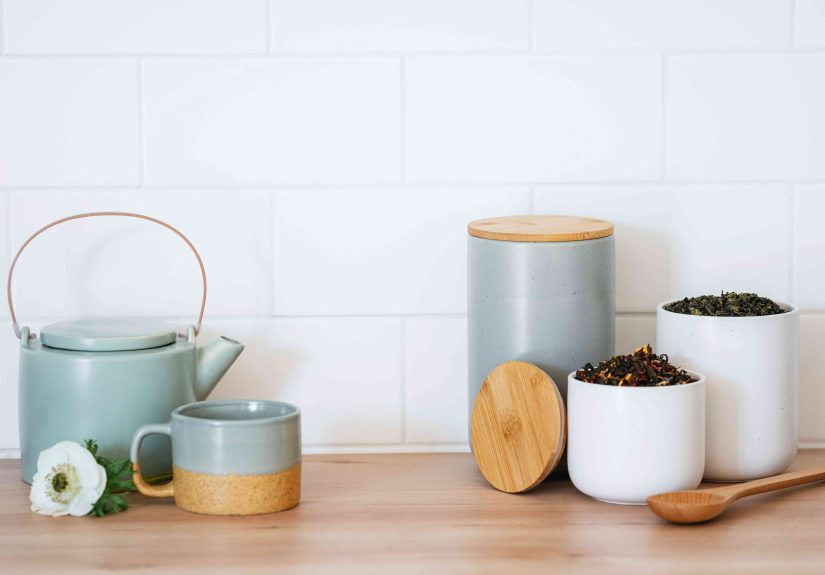
3) Upgrade Loose Leaf Storage with Airtight, Opaque Canisters
Loose leaf tea is the diva of the tea worldin a good way. It tends to be more aromatic and nuanced,
which means it deserves storage that protects those aromatics. The best move: airtight canisters that block light.
Simple container rules
- Pick airtight lids (silicone gasket lids are great).
- Prefer opaque metal tins or ceramic canisters for light protection.
- If you use glass jars, store them in a dark cabinet (not a sunny countertop).
Add one tiny tool that changes everything
Put a dedicated teaspoon or small scoop in your loose leaf zone. When measuring is easy, you’ll brew loose leaf more often.
And if you brew it more often, you’re less likely to end up with a “vintage 2019 jasmine” situation.
4) Create “Stadium Seating” with a Tiered Shelf Riser
The main reason tea gets messy is visibility. If you can’t see it, you forget itand then you buy more.
A tiered shelf riser (like a mini staircase) turns your cabinet into stadium seating, so tins and jars don’t hide behind each other.
Best use cases
- Small tins of loose leaf
- Short canisters
- Matcha tins (stored away from heat and light)
Mini layout idea
Bottom row: everyday teas. Middle row: “sometimes” teas. Top row: “special occasion / I’m trying to be fancy” teas.
5) Use a Tea Box or Tea Chest for Samplers (AKA The “Variety Pack Sanctuary”)
Samplers are fun until they become the junk drawer of beverages. A compartment tea box keeps small packets organized and easy to browse.
It also makes tea feel a bit like a curated collection instead of a hoard.
How to make a tea box work long-term
- Assign each compartment a theme: “Herbal,” “Black,” “Green,” “Fruity,” “Dessert,” “Weird & Interesting.”
- Keep one compartment for “Try Next” so new teas don’t disappear.
- Store the tea box in a cabinet or drawer (not in direct sunlight).
6) Build a Countertop Tea Station (A Tiny Café Corner)
If you make tea daily, a countertop station can be both practical and prettyespecially near your kettle or hot water dispenser.
The trick is keeping it curated so it doesn’t become a clutter shrine.
What to keep on the counter
- 3–6 teas you actually drink this month
- Sweeteners (if you use them), plus a small spoon
- Tea infuser or basket (if you brew loose leaf)
- A mug or two (optionaldon’t start a mug museum)
What to store elsewhere
Backstock, seasonal teas, and the “gift teas” you’re emotionally not ready to open yet. Keep the station lean so it stays charming, not chaotic.
7) Put the Pantry Door to Work with Slim Racks or Pockets
Doors are underrated storage real estate. A slim rack on the inside of a pantry door can hold small jars, packets, and tea accessories.
If you’re short on shelf space, this is a sneaky way to expand capacity without remodeling your life.
What to store on the door
- Individually wrapped tea bags and sachets
- Honey sticks, sugar packets, stirrers
- Tea filters, disposable infuser bags
Keep it stable
Use bins or pockets with enough depth to prevent packets from sliding out when you open and close the door.
8) Spin Your Stash with a Lazy Susan (Yes, Your Tea Can Have a Carousel)
A Lazy Susan works beautifully for tea because it solves the “back of the shelf” problem.
Spin it and everything comes to youlike a tiny beverage audition.
Perfect for
- Round tins
- Small canisters
- Sweeteners and tea add-ins (cinnamon sticks, dried lemon, etc.)
Bonus move
Use two turntables: one labeled “Caffeinated,” one labeled “Herbal/Decaf.” Your sleepy self will thank you.
9) Add Labels + a “Drink-Me-First” System (So Tea Doesn’t Linger Forever)
Organization isn’t just “where stuff goes.” It’s also “what gets used.” A simple rotation system keeps your stash fresh and prevents
a pile-up of forgotten teas.
The easiest rotation method
- Create one small bin labeled “Drink Me First” for older teas or open packages.
- Label loose leaf canisters with the tea name and the month you opened it.
- When you buy new tea, move older tea forward (first-in, first-out).
Keep it realistic
You don’t need a spreadsheet (unless that brings you joy). A marker and a simple bin label is enough to make a big difference.
Quick Maintenance Routine: 5 Minutes a Week
- Refill your tea station (swap in what you’ll actually drink this week).
- Consolidate half-empty boxes or bags.
- Move anything “older/open” into the Drink-Me-First bin.
- Wipe crumbs/dust from the tea drawer (tea deserves dignity).
Common Tea Storage Mistakes (That Are Easy to Fix)
- Storing tea above the stove: heat and humidity swings can dull flavor faster.
- Keeping tea next to spices/coffee: tea can absorb strong aromas.
- Leaving bags open: air exposure steals aroma and freshness.
- Using clear jars in sunlight: light exposure can degrade quality over time.
- Refrigerating opened tea: condensation and odors can be an issue unless it’s sealed properly.
FAQ: Quick Answers Tea Drinkers Actually Ask
How long does tea last?
Many teas stay enjoyable for a long time, but flavor fades with ageespecially once opened.
For best taste, use what you love most first and store it well. If it smells faint or tastes flat, it’s probably stale, not “unsafe.”
Is it okay to store tea in glass jars?
Yesif they’re airtight and kept in a dark cabinet. Glass on a sunny counter is where tea flavor goes to retire early.
Should I keep tea in the fridge?
Usually, no. Opened tea can pick up moisture/condensation and odors unless it’s sealed and handled carefully.
A cool, dark cabinet is simpler and safer for day-to-day storage.
Bonus: of Real-World Tea-Storage Experiences (So This Feels Doable)
Here’s what tea organization looks like in real lifenot in a perfectly staged kitchen where nobody ever opens a packet with wet hands.
Imagine it’s a weekday evening. You want something calming, so you reach for chamomile… but the chamomile is buried behind three mint boxes,
a chai you bought during a “new year, new me” phase, and a random single sachet that appears to be labeled “Mystic Orchard.”
You pull one box out, two boxes slide forward, and suddenly your cabinet is doing a slow-motion tea avalanche.
The first time you try one of the storage ideassay, the clear binsyou notice something immediately: your tea stops feeling “messy.”
You can see your options at a glance. You also discover duplicates (“Wait. I have three lemon gingers?”) and patterns
(“I buy peppermint every time I’m stressed, which explains… everything”). Consolidating those half-full boxes into one bin feels like
reclaiming space and reclaiming sanity. It’s oddly satisfying, like finding money in a coat pocketexcept the money is tea.
Then comes the emotional category: gifts and samplers. They’re fun, but they tend to drift into the “miscellaneous” zone.
A tea box with compartments turns that chaos into a library. You start browsing it the way you browse streaming services:
“Do I want something cozy, bright, or dramatic?” You pick a new flavor more often because you can actually find it.
And when you don’t love a tea, you don’t leave it to become a permanent residentyou put it in “Drink Me First” and move on.
You also learn that scent is a sneaky villain. Maybe you once stored tea next to spices and wondered why your delicate green tea
tasted vaguely like taco seasoning. After switching to airtight canisters and separating tea from strong-smelling foods,
your teas taste cleaner and more like what the label promised. Suddenly “jasmine” tastes like jasmine againnot jasmine plus pantry.
The biggest, most realistic shift is this: you stop trying to store every tea in the same way. Tea bags live happily in divided bins.
Loose leaf gets the VIP canisters. Daily favorites get promoted to the tea station. Backups go to a separate shelf.
When each type of tea has a “home,” you spend less time rummaging and more time enjoying the actual point of the stash:
a warm cup that feels like a tiny reset button.
And on the days you don’t maintain the system perfectly? Nothing falls apart. That’s the goal. The best tea organization isn’t the fanciest;
it’s the one that still works when you’re tired, busy, and operating solely on vibes and hot water.
Conclusion
A well-organized tea stash isn’t about having fewer teas (that’s between you and your shopping cart). It’s about making tea easy to choose,
easy to brew, and easy to keep fresh. Pick one or two ideas that match your spacelike a tea drawer plus airtight canistersand you’ll feel the
difference immediately. Less clutter, more flavor, and far fewer cabinet ambushes.