Table of Contents >> Show >> Hide
- Why Would Evolution Allow This?
- 1) Spotted Hyena Cubs
- 2) Nazca Booby Chicks
- 3) Masked Booby Chicks
- 4) Blue-Footed Booby Chicks
- 5) Great Egret Chicks
- 6) Golden Eagle Eaglets
- 7) Boreal Owl Owlets
- 8) Tiger Salamander Larvae
- 9) Lady Beetle Larvae
- So… Is This “Normal” in Nature?
- of “Experience” With This Topic
- Conclusion
If you grew up on cute cartoon wildlife, here’s your gentle warning: nature did not sign a contract to be wholesome.
In the animal kingdom, “newborn” can mean “adorable,” “wobbly,” andoccasionally“immediately committing workplace-level betrayal.”
The scientific term for siblings killing siblings is siblicide, and it’s most famously seen in birds (especially when chicks hatch at different times),
but it also pops up in mammals, amphibians, and even insects.
Before we jump in, a quick (non-judgy) translation: siblicide isn’t a “villain origin story.” It’s usually an evolutionary strategy tied to
limited food, unpredictable hunting, or parents playing the risky game of “let’s lay a backup baby, just in case.”
Biologists often talk about obligate siblicide (it’s basically the default outcome) versus facultative siblicide
(it happens when conditions get tough, like food shortages).
Why Would Evolution Allow This?
The uncomfortable truth is that survival and “fairness” aren’t the same thing. In many species, parents can’t reliably raise every offspring they produce.
So they hedge their bets: produce extra young, then let sibling competition (and sometimes outright violence) reduce the brood to a number that can
realistically be fed. It’s brutal, but it can increase the odds that at least one strong offspring survives a bad year.
Think of it as nature’s version of packing an extra charger on a trip. You might not need itbut if the main one fails, you’re glad you brought a spare.
The difference is: the spare charger sometimes gets yeeted off a cliff.
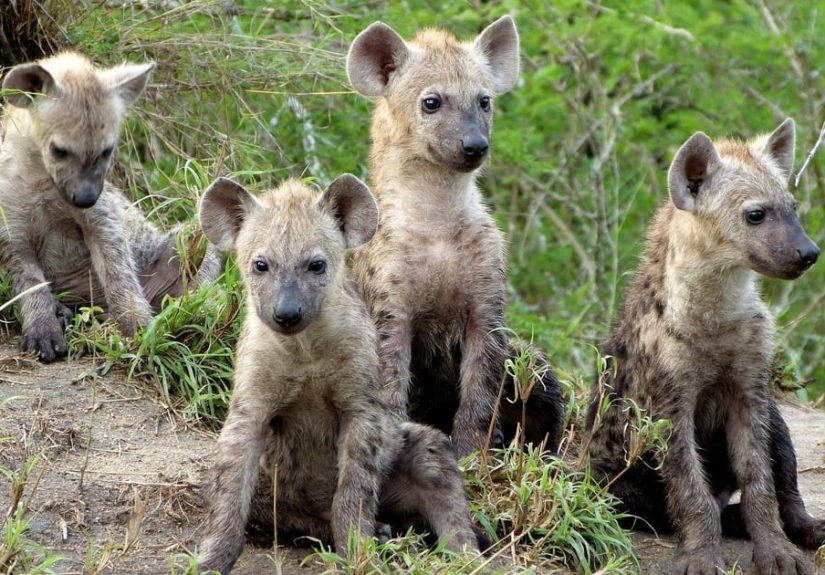
1) Spotted Hyena Cubs
Born ready to fight
Spotted hyenas don’t ease into sibling rivalrythey cannonball into it. Hyena mothers often have twins, and the cubs can be born with teeth already in
place. In same-sex twin litters, intense aggression can escalate into lethal attacks, especially when milk access is limited or the mother is away
for long stretches.
The darker twist: hyena cubs may jockey for dominance so aggressively that one cub monopolizes nursing and the other weakens or dies.
It’s not “mean,” exactlymore like “I would like to be alive next month.”
Why it happens
Hyenas live in highly competitive ecosystems. If a mother can’t reliably provide enough energy for both cubs, the stronger cub’s aggression can
“solve” the resource problem by reducing the number of mouths. Ugly, yes. Effective, also yes.
2) Nazca Booby Chicks
The ultimate “no roommates” policy
Nazca boobies are a famous example of obligate siblicide. Parents typically lay two eggs, but when the second chick hatches,
the older chick often attacks and ejects the younger from the nest scrape. The parents usually do not intervene.
If you’re thinking, “Why lay two eggs then?”welcome to the “insurance egg” strategy. The second egg can serve as backup if the first egg fails.
But if both hatch, the older chick is strongly favored to be the only one raised.
Why it happens
Foraging trips can be long and uncertain. Two chicks may be too expensive to feed consistently, so natural selection favors a system where the senior chick
reliably becomes the lone survivor.
3) Masked Booby Chicks
Same family, same playbook
Masked boobies are close relatives of Nazca boobies and are also known for siblicide. When two eggs hatch, the older chick is typically larger and stronger
and often drives the younger chick out or pecks it relentlessly. Research on booby siblicide has long emphasized how brood reduction can be “built in” to
the species’ breeding system.
Why it happens
Again: “insurance egg” logic. The parents get a second chance if the first egg fails, but raising two chicks may reduce overall success.
A ruthless older chick can function like an automatic brood-size regulator.
4) Blue-Footed Booby Chicks
When times are good: siblings. When times are bad: rivals.
Blue-footed boobies bring a little more nuance. Their siblicide is often described as facultativemeaning it’s more likely when food is scarce.
In lean periods, the dominant chick may attack and sometimes kill the smaller nestmate. In better conditions, both chicks have a better shot.
One especially interesting detail from research: parents can influence how much sibling violence happens (yes, bird parenting is complicated),
including through how and when they deliver food.
Why it happens
The core issue is predictable: limited calories. In a bad year, “two chicks” can turn into “two starving chicks,” so brood reduction can be the grim
way to ensure at least one fledges.
5) Great Egret Chicks
Brood reduction with a pointy beak
Great egrets are a classic case in the scientific literature on siblicide and resource monopolization. In some colonies, larger chicks attack younger siblings,
sometimes fatally. Researchers have linked these differences to how food arrives: if parents deliver prey that can be monopolized by the strongest chick,
aggression can pay off.
Cornell’s bird references also note that aggression among nestlings is common and that larger chicks can kill smaller siblings, especially under poor conditions.
Why it happens
When prey is limitedor simply delivered in a way that lets one chick dominatebeing the biggest isn’t just an advantage. It’s a survival strategy.
6) Golden Eagle Eaglets
Cainism: the older chick’s brutal head start
In many raptors, eggs hatch asynchronously (not all at once), which creates a size gap between siblings. In golden eagles, the older chick may attack the younger,
and the smaller eaglet can be injured, starved, or killed. This phenomenon is often called cainism in birds of preynamed after the biblical story
of one brother killing another.
The “why” often comes back to uncertainty. If food supply can swing wildly, a second egg can act as backup. But if conditions aren’t strong enough to raise two,
the older chick’s dominance can reduce the brood to one.
Why it happens
This can be nature’s risk management: produce two potential survivors, then let environmental reality decide whether one or two can be supported.
7) Boreal Owl Owlets
When the nest turns into a high-stakes buffet
Boreal owls provide a documented example of siblicide and even cannibalism. Continuous nest monitoring in Alaska has recorded cases where a larger owlet killed
and consumed a smaller sibling. It’s not presented as the “normal” outcome in every nest, but it does occurespecially under conditions that likely reflect
resource limitation.
Why it happens
Owls often lay multiple eggs across days, so the first-hatched chick can be significantly larger than the last. If food runs short, the smallest sibling is the
most vulnerable, and the largest sibling has both the strength and incentive to remove competition.
8) Tiger Salamander Larvae
When your sibling is… also lunch
Tiger salamanders can develop into a “cannibal morph” under certain conditionsoften linked to crowding and competition. These larvae may grow broader heads
and larger teeth, making them better suited to eating bigger prey… including other salamander larvae.
Researchers have also explored how salamanders recognize kin, and how that can influence cannibal behavior. The biology here is fascinating: the environment
can trigger a developmental pathway that turns a typical larva into a sibling-eating specialist.
Why it happens
In a crowded pond with limited food, cannibalism can reduce competition and provide a high-protein meal. In evolutionary terms, it’s a harsh shortcut to
“less crowded habitat, more calories, better chance of surviving to adulthood.”
9) Lady Beetle Larvae
Adorable as adults, absolutely savage as babies
Lady beetles (often called ladybugs) are celebrated as garden heroesbut their larvae can be opportunistic cannibals, especially when prey like aphids
is scarce. Some larvae eat eggs, including eggs from their own species. Scientists studying ladybirds have measured egg cannibalism rates and explored how
density and food availability influence the behavior.
From an evolutionary standpoint, it can even make sense for parents to lay some eggs that effectively become “emergency rations” for the first hatchlings.
Nature loves efficiencyeven when it looks like a horror movie in miniature.
Why it happens
Eggs are nutrient-rich, stationary, and easy to eat. When prey is limited, cannibalism can help at least some offspring survive.
So… Is This “Normal” in Nature?
It’s normal in the sense that it’s real, observed, and sometimes common in specific speciesespecially those with asynchronous hatching and unpredictable food.
It’s not “normal” in the sense of being universal. Many species raise siblings peacefully, and even siblicidal species may only show lethal outcomes in poor years.
The key point is that evolution doesn’t optimize for kindness; it optimizes for gene survival under real-world constraints. If a strategy reliably helps at least
one offspring reach adulthood, it can persisteven if it makes humans clutch their pearls.
of “Experience” With This Topic
If you’ve ever watched wildlife footage with a cup of coffee and big “aww!” energy, siblicide can feel like getting emotionally jump-scared by biology.
One minute you’re admiring fluffy nestlings, and the next you’re thinking, “Surely a parent will step in,” only to discover thatnopeparents often
don’t intervene at all. That moment, the first time you see it, tends to stick. People describe it as equal parts shock, disbelief, and a weird urge
to write a stern letter to Nature’s customer service department.
Bird nest cams intensify this reaction because they turn an evolutionary strategy into a front-row livestream. Viewers form attachments fast: they name chicks,
track their growth, celebrate first flaps, and treat feeding time like a daily episode. Then brood reduction happens, and suddenly the chat is a mix of
grief, anger, and “I did not consent to this plot twist.” It’s not that viewers are naiveit’s that our brains are wired to read baby animals as
vulnerable and deserving of protection. When an older chick bullies a younger one, we instinctively map human ethics onto it, like we’re watching a
playground fight. But in many of these species, the “playground” is a resource bottleneck, and the stakes are literally survival.
Researchers and wildlife rehabilitators often talk about a different kind of experience: learning to observe without “fixing.” That can be hard.
If you find a fallen chick under a nest, your instincts scream to help. But in many protected species, intervening can be illegal, harmful, or
simply misguidedbecause the underlying issue is that the parents can’t feed two young that year. In that context, “rescuing” a chick doesn’t
solve the ecological equation; it just moves the struggle into a new setting.
There’s also an odd kind of humility that comes from sitting with this reality. Siblicide forces you to recognize that nature is not a morality play.
It’s a system built on trade-offs: backup eggs versus limited prey, more hatchlings versus fewer meals, the hope of two survivors versus the certainty
that one strong survivor is better than two weak ones. Once you understand that, the story shifts. It’s still sadbut it’s also a reminder that
life-history strategies evolve under constraints we don’t feel in our day-to-day lives.
And yes, you can still love animals after learning this. In fact, many people end up appreciating them morebecause real nature isn’t sanitized.
It’s complicated, sometimes harsh, and strangely brilliant. If “cute” got you to pay attention, “truth” is what keeps you learning.
Conclusion
“Baby animals that kill their siblings” is a headline that sounds like pure nightmare fuelbut the reality is more nuanced (and, in a grim way, practical).
Siblicide and sibling cannibalism show up when parents can’t reliably raise every offspring, when food is unpredictable, or when hatching order creates a built-in
size advantage. In those scenarios, sibling rivalry can become a brutal form of brood reduction. It’s not a fair systembut evolution isn’t a fairness engine.
It’s a survival engine.