Table of Contents >> Show >> Hide
- Why Paint Color Matters So Much in a Small Living Room
- 1. Benjamin Moore Simply White
- 2. Farrow & Ball Light Blue
- 3. Benjamin Moore Light Pewter
- 4. Farrow & Ball Green Smoke
- 5. Portola Paints Anchor
- 6. Benjamin Moore Eggplant
- 7. Benjamin Moore Jester
- How to Choose the Right One for Your Living Room
- What People Actually Experience After Painting a Small Living Room
- Final Takeaway
Some small living rooms feel charming. Others feel like the sofa, coffee table, and TV stand are engaged in a very committed group hug. If your space falls into the second category, paint can help more than you might think. No, it will not physically push out your walls unless you have access to wizardry or a very aggressive contractor. But the right paint color can absolutely change how roomy your living room feels.
Designers keep coming back to the same idea: color affects depth, light, mood, and the way your eye reads a room’s edges. In practical terms, that means a smart paint choice can make a compact living area seem brighter, softer, taller, calmer, and more open. Sometimes that comes from a crisp white or a creamy off-white. Sometimes it comes from a hushed blue-green. And sometimes, in a plot twist worthy of home makeover television, it comes from a rich dark color that makes the walls visually recede.
Below are seven designer-backed paint colors that can help a small living room feel bigger, more polished, and far more intentional. Some are airy. Some are moody. All of them prove that “small” does not have to mean “boring.”
Why Paint Color Matters So Much in a Small Living Room
Before we get into the specific shades, it helps to know why certain small living room paint colors work so well. The basic trick is visual perception. Lighter shades can reflect more light, soften hard lines, and reduce contrast. That makes a room feel less boxed in. Warm whites, creams, and pale neutrals are especially useful when your living room is short on natural light or has a lot of visual clutter already happening through furniture, shelving, and decor.
But lighter is not the only route. Designers also use medium and deep shades to create depth. A saturated color can blur the boundaries of a room, making the walls feel as though they sit farther away. That is why some dark greens, plums, and charcoals can make a tiny living room feel cozy in the best way instead of cramped in the worst way.
The other secret is continuity. When walls, trim, and sometimes even the ceiling stay in the same color family, the eye moves more smoothly around the room. Fewer visual stops usually equal a more spacious look. So while the paint swatch matters, how you use it matters just as much.
1. Benjamin Moore Simply White
The bright white that helps a dim room breathe
If your small living room gets about as much natural light as a closed shoebox, Benjamin Moore Simply White is an excellent place to start. This shade is bright without feeling icy, which is exactly what you want in a room that already feels a little starved for sunlight. It gives walls a clean, lifted look and helps the room feel more open the moment you walk in.
What makes this color especially effective is its balance. Stark whites can sometimes feel clinical, and creamy whites can occasionally drift too yellow if the lighting is tricky. Simply White lives in the sweet spot. It brightens the room, makes architectural edges feel less heavy, and plays nicely with most furniture styles, from modern sectionals to traditional wood coffee tables.
In a small living room, this is the kind of color that works hard in the background. It does not demand attention. It lets your sofa, art, curtains, and lighting do the talking while quietly making the space look larger. Use it on the walls, and consider painting the trim in the same shade or a closely related white to keep the room from breaking up into choppy little zones.
If you want the classic “airy small living room” look, this is the safest crowd-pleaser of the bunch.
2. Farrow & Ball Light Blue
The soft blue that acts like borrowed sky
Blue is one of those colors designers love because it can create a sense of openness without shouting for attention. Farrow & Ball Light Blue does that beautifully. It is gentle, subtle, and slightly atmospheric, which means it can make a small living room feel calm and spacious instead of plain.
One reason pale blue works so well in tight spaces is that it mimics something naturally expansive: the sky. That sounds poetic because it is, but it is also practical. When walls read as airy and distant, the room can seem less confined. In a small living room with decent daylight, Light Blue can make the whole space feel fresher and more relaxed.
This shade is especially useful if you want color but do not want your living room to feel visually heavy. It adds personality while still reflecting light. Pair it with off-white trim, light oak furniture, woven textures, or linen upholstery and the room starts feeling bigger without losing warmth.
It is also a smart option for people who find plain white a little too safe. Think of it as white’s more charming cousin: still easy to live with, but better at making people say, “Wow, this room feels lovely.”
3. Benjamin Moore Light Pewter
The greige that makes a small room feel soft, warm, and pulled together
If you want something neutral but not boring, Benjamin Moore Light Pewter deserves serious attention. This shade falls into the beloved greige family, which means it blends gray and beige in a way that feels balanced and versatile. In a small living room, that balance matters. Too cool and the room can feel flat. Too warm and it may feel heavy. Light Pewter threads the needle.
Designers like greiges for compact spaces because they add dimension without creating visual noise. Light Pewter gives the room a warm-yet-airy feel, which is ideal when your living room has multiple functions, such as movie zone, reading corner, snack headquarters, and occasional home office.
This shade also works well when you have earthy decor, wood tones, natural textiles, or mixed metals. It does not fight the rest of the room. Instead, it softens everything around it and helps the entire space feel cohesive. And cohesion is a big deal in small living rooms. The more your pieces feel like they belong together, the bigger the room tends to read.
For homeowners who want timeless paint colors for small living rooms, Light Pewter is a quietly smart choice. It gives you enough color to feel intentional, but not so much that you will be repainting in six months out of regret.
4. Farrow & Ball Green Smoke
The sage-leaning green that brings in personality without shrinking the space
Green can be magic in a small living room when it lands in the right range. Farrow & Ball Green Smoke works because it feels natural, grounded, and calm, but not muddy or oppressive. It has that softened sage quality designers love, which gives a room character without making it feel closed in.
Nature-inspired colors often work well in compact spaces because they read as soothing rather than busy. Green Smoke has enough depth to look interesting throughout the day, yet enough softness to avoid cave territory. If your living room needs a bit more soul but you are not ready for a dramatic dark navy or full-on jewel tone, this is a beautiful middle ground.
It also pairs effortlessly with materials that already make a room feel welcoming: warm woods, natural fibers, brass accents, and creamy upholstery. In a small living room, that mix can create a space that feels layered and styled rather than merely squeezed into existence.
This shade is especially appealing if you want your room to feel serene. It is not flashy. It is not trying too hard. It just quietly makes the room feel balanced, which is exactly what many small spaces need.
5. Portola Paints Anchor
The moody charcoal that proves dark colors are not the enemy
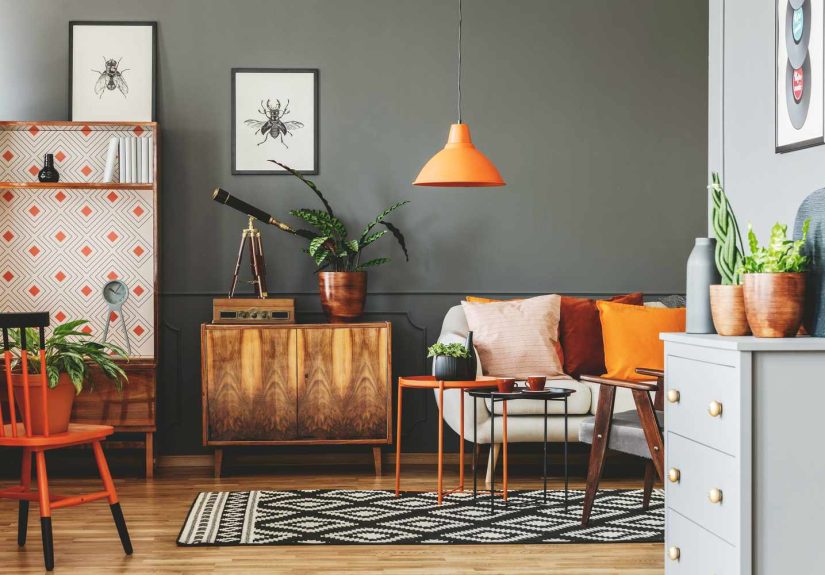
Let us clear up one of the biggest decorating myths right now: dark paint does not automatically make a small living room feel smaller. In fact, when used well, it can do the opposite. Portola Paints Anchor is a perfect example. This rich, moody gray adds depth, atmosphere, and a little drama, but it does not have to close in the room.
The key is context. Anchor works best in a small living room that already has some natural light or strong layered lighting. In that setting, the darker tone can blur the room’s edges and create the impression of greater depth. Instead of noticing where the walls stop, your eye reads the space as richer and more dimensional.
This is also a smart shade if your room has colorful accents, bold art, or sculptural furniture. Dark walls can make those elements pop, which distracts from the room’s footprint and shifts the focus to style. Suddenly the living room feels curated instead of cramped.
If white walls are not your thing and you want your small living room to feel intimate, stylish, and grown-up, Anchor makes a persuasive case for going darker. Just balance it with lighter upholstery, reflective surfaces, and enough lamplight to keep the room feeling intentional rather than gloomy.
6. Benjamin Moore Eggplant
The glossy aubergine that turns tiny into jewel-box chic
Benjamin Moore Eggplant is not for the faint of heart, which is precisely why it works so well for the right small living room. Rich purple tones can create a cocooning effect that feels luxurious rather than confining. When used thoughtfully, especially with a sheen that bounces light, this shade can make a petite room feel dramatic, warm, and surprisingly expansive.
Here is the trick: a deep color with gloss or lacquer catches and reflects light differently than a flat, light paint. That shimmer adds movement. It keeps the color from feeling flat and helps the room sparkle a bit. In a small living room, that extra energy can make a major difference.
Eggplant also has a way of making the space feel deliberate. Instead of apologizing for the room’s size, it leans into intimacy and makes it look chic. Pair it with brass, cream, velvet, glass, or lighter artwork and you get a room that feels layered and bold without turning into a gloomy little cave of questionable decisions.
This is not the color for someone who wants “safe.” It is the color for someone who wants a living room with personality. And sometimes that confidence is exactly what makes a small room feel bigger: the room stops trying to disappear and starts owning the spotlight.
7. Benjamin Moore Jester
The deep plum that makes a compact living room feel rich and enveloping
If Eggplant is bold and glamorous, Benjamin Moore Jester is its sophisticated, moodier cousin. This deep plum can make a small living room feel intimate and substantial in the best possible way. It works particularly well in rooms with some decent daylight, where the color can shift and reveal more depth over the course of the day.
Dark plum is not usually the first thing people think of when searching for paint colors that make a room look bigger. But designers return to colors like this because they create visual depth. Rather than putting a hard stop at the wall, a tone like Jester softens the perimeter and makes the room feel more atmospheric.
This shade is also ideal for a living room that doubles as a cozy retreat. If the goal is not just “bigger” but also “warmer,” “richer,” and “more memorable,” Jester checks those boxes. It pairs beautifully with pale rugs, warm wood, creamy sofas, and metallic accents. The contrast keeps the room from feeling heavy while allowing the walls to recede in a softer, more elegant way.
For anyone tired of default beige but not ready to go full black or navy, Jester offers something more unexpected. It is moody, yes, but it is also inviting, which is a rare and useful combination in small-space design.
How to Choose the Right One for Your Living Room
Picking the best paint color for a small living room is not just about what looks pretty on a swatch card under cheerful store lighting. It is about your room’s conditions. Does it face north and feel cool all day? Warm whites, creams, and friendly greiges usually perform better there. Does it get lots of sun? You can be more adventurous with blue-greens, medium neutrals, and deeper dramatic shades.
Also pay attention to undertones. A white that looks soft in one home can turn sterile in another. A beige that seems cozy in the store can go muddy next to gray flooring. A blue-green may feel fresh in daylight and murky at night if your bulbs are too warm. That is why sampling matters. Put large test swatches on more than one wall and check them in the morning, afternoon, and evening before you commit.
And do not forget the continuity trick. If you want your small living room to feel bigger, painting the walls, trim, and even parts of the ceiling in the same color family can make the room feel less chopped up. The eye travels more easily, and the space often appears calmer and larger.
What People Actually Experience After Painting a Small Living Room
Once the paint dries, the most noticeable change is often not the size of the room itself, but the way people move through it. That is what makes these paint choices so powerful. A small living room painted in the right shade starts to feel less like a problem to solve and more like a space you actually want to spend time in. People describe the room as “lighter,” “calmer,” “less crowded,” or “more open,” even when not a single piece of furniture has moved.
Warm whites and off-whites usually create the fastest, most obvious transformation. In real life, they tend to make the room feel cleaner first, then bigger second. Morning light bounces farther. Corners look softer. Bulky furniture pieces do not seem quite as bulky anymore. A beige sofa that looked dull before suddenly feels intentional. Wood floors appear warmer. Even the television area, which can dominate a small living room, feels less visually heavy when the walls around it are light and cohesive.
Blue and blue-green tones often produce a different kind of experience. Instead of screaming “look how bright I am,” they make the room feel quieter and more settled. People often notice that they want fewer accessories in the room once these colors go up. That is because soft blues, sages, and smoky greens already add enough mood. The space feels decorated without needing every surface covered in candles, bowls, books, and decorative objects with mysterious life purposes.
Darker colors create the biggest surprise. Homeowners are often nervous before painting a small living room plum, charcoal, or deep green. Then the walls go up, the lamps go on, and suddenly the room feels layered and sophisticated instead of tiny. It is a strange but very real effect. The boundaries blur. Art stands out more. Light upholstery looks sharper. People often say the room feels “cozy, but bigger somehow,” which sounds contradictory until you have seen it happen.
There is also an emotional shift that comes with choosing a color that suits the room instead of fighting it. A small living room does not need to pretend to be a ballroom. It just needs to feel balanced. The best paint colors help that happen by working with the light, softening the room’s edges, and giving the eye a place to rest. In day-to-day life, that means the room feels easier. Easier to style, easier to relax in, and easier to love.
That is why designers spend so much time talking about undertones, trim color, sheen, and light direction. These details sound fussy until you experience the difference yourself. Then suddenly it makes perfect sense. A small living room painted well feels less like a compromise and more like a clever design decision. And honestly, that may be the biggest makeover of all.
Final Takeaway
The best paint colors for small living rooms do not all look the same, and that is good news. If you love bright, fresh spaces, go with a smart white like Simply White. If you want softness, try Light Blue or Light Pewter. If you want personality without chaos, Green Smoke is a beautiful choice. And if you are ready to embrace mood and depth, Anchor, Eggplant, and Jester prove that darker colors can make a compact room feel larger, not smaller.
In the end, the winning color is the one that works with your lighting, your furniture, and the feeling you want in the room. The square footage may stay the same, but the atmosphere can change completely. And when a small living room feels bright, cohesive, and confidently styled, it suddenly stops feeling all that small.