Table of Contents >> Show >> Hide
- Why Hammer-Ons Matter
- 1. Hammer-On From an Open String
- 2. Hammer-On From a Fretted Note
- 3. Double Hammer-Ons for Faster Legato Runs
- 4. Chord Hammer-Ons for Rhythm Guitar
- 5. Hammer-On From Nowhere
- How to Make Every Hammer-On Sound Clean
- Common Hammer-On Mistakes
- A Simple Practice Routine
- Final Thoughts
- Experience Section: What Learning Hammer-Ons Actually Feels Like
If you have ever listened to a guitar lick and thought, “Why does that sound so smooth, so slippery, so annoyingly cool?” there is a good chance a hammer-on was involved. This little technique is one of the fastest ways to make your playing sound more expressive without buying a new pedal, a vintage amp, or a mysterious scarf that somehow improves tone. A hammer-on lets you sound a higher note with your fretting hand after you pick the string just once. The result is a cleaner, more connected, more vocal sound that works in blues, rock, country, metal, funk, folk, and pretty much any style that appreciates a little attitude.
In plain English, a hammer-on is what happens when your fretting hand does some of the work usually handled by your picking hand. Instead of picking every single note, you pick the first note and then bring another fretting finger down firmly on a higher fret to make the next note ring out. That tiny move changes your phrasing immediately. Suddenly, lines feel more fluid. Chords sound more decorated. Riffs get personality. And your fingers? They start learning the difference between random movement and musical intention.
This guide breaks down five practical ways to hammer on a guitar note, how each approach works, where each one sounds best, and how to practice them without turning your guitar session into a public struggle documentary. By the end, you will know how to use hammer-ons in lead guitar, rhythm guitar, chord embellishments, and fast legato runs, along with a few smart tips for making every note ring clearly.
Why Hammer-Ons Matter
Hammer-ons are more than a flashy trick. They change the feel of a phrase. Picked notes have a sharper attack, while hammer-ons create a softer, more connected sound. That is why players use them to create legato phrasing, make scales flow, and add movement to chord-based rhythm parts. On an electric guitar, sustain and gain can help the note speak more easily. On an acoustic guitar, you often need a slightly firmer touch, but the payoff is huge because clean hammer-ons add life and motion to even simple progressions.
They are also efficient. One picked note can lead into two or three fretted notes, which means less picking, more speed potential, and a smoother sound. That is why hammer-ons show up everywhere from beginner open-chord strumming patterns to advanced soloing. They are simple enough for a first-week technique lesson and deep enough to keep experienced players busy for years. Not bad for a note you did not even pick twice.
1. Hammer-On From an Open String
What it is
This is the beginner-friendly version and one of the most useful. You pick an open string and then quickly bring a fretting finger down on a higher fret of the same string. The string is already vibrating, so your job is to give that second note enough force and accuracy to sound clearly.
Why it works
Open-string hammer-ons are perfect for folk, country, blues, and rock rhythm playing. They sound natural inside open chords and are often used to dress up basic progressions that would otherwise sound a little plain. Think of it as giving a standard chord a better haircut.
Example
Pick the open G string, then hammer your index or middle finger onto the 2nd fret. The goal is not to poke the fretboard timidly like you are testing bathwater. Land confidently, close to the fret, and keep the finger down so the note sustains.
Best use
Use this in open-position riffs, chord embellishments, and rootsy rhythm parts. It sounds especially good inside chords like G, D, A, and E major, where open strings are already doing a lot of the heavy lifting.
2. Hammer-On From a Fretted Note
What it is
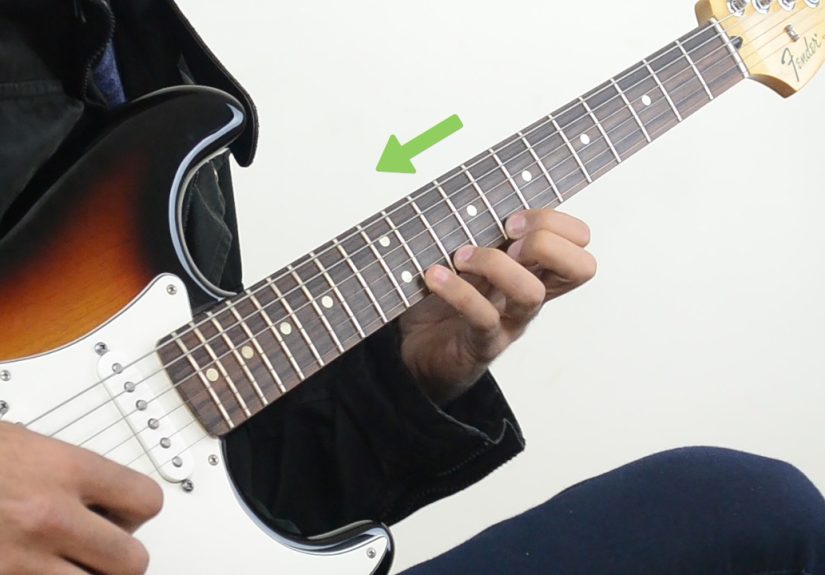
This is the classic hammer-on most players learn early. Fret one note, pick it, and then hammer a second finger onto a higher fret on the same string. For example, hold the 5th fret with your index finger, pick the note, then hammer your ring finger onto the 7th fret.
Why it works
This version is essential for scales, riffs, pentatonic licks, blues phrases, and melodic lead guitar. It is the foundation of legato playing because it teaches you how to connect notes without re-picking every pitch.
Example
Make sure the first finger stays planted while the hammering finger drops down. If the first finger lifts or relaxes too early, the second note may sound weak or choked. Good hammer-ons are not just about force. They are about control, timing, and placement.
Best use
Use this in blues boxes, rock solos, and melodic fills between vocal lines. If you want your lead playing to sound less like a typewriter and more like singing, this is where the magic starts.
3. Double Hammer-Ons for Faster Legato Runs
What it is
Once the basic hammer-on feels comfortable, you can chain them together. Pick one note, then hammer onto a second fret, then hammer again onto a third fret higher up the string. This creates a three-note burst from one picked attack.
Why it works
Double hammer-ons help you play scale fragments and licks with less pick motion and more fluidity. This is a major step toward faster legato playing, but it only sounds impressive when each note is equally clear. Speed without clarity is just panic with better marketing.
Example
Start very slowly. Pick the 5th fret, hammer to the 7th, then hammer to the 8th. Try to make all three notes equal in volume. Most players notice the last note is weaker at first, which is normal. The fix is consistent finger motion, not brute strength. Stay relaxed and let the fingertips do the work.
Best use
Use this in rock and metal leads, fusion-style legato, modern blues, and fast scale passages. It is also a great exercise for finger independence and fretting-hand stamina.
4. Chord Hammer-Ons for Rhythm Guitar
What it is
Hammer-ons are not just for solos. Rhythm players use them constantly to decorate chords. In this version, you strum or pick part of a chord and then hammer one or more fretting fingers into place to create movement inside the harmony.
Why it works
This is one of the easiest ways to make rhythm guitar sound alive. A simple open chord can suddenly feel dynamic, bluesy, soulful, or country-inspired just by adding a well-timed hammer-on. It creates the illusion that more is happening than there actually is, which is a lovely trick both in music and in life.
Example
This kind of move works beautifully with C, A, D, and E shapes. You are essentially turning a plain chord into a mini phrase. The trick is rhythm. The hammer-on has to land in time, not just somewhere in the general neighborhood of the beat.
Best use
Use chord hammer-ons in singer-songwriter progressions, blues turnarounds, classic rock riffs, Americana strumming, and even stripped-down pop arrangements. If you only learn one hammer-on approach for accompaniment, make it this one.
5. Hammer-On From Nowhere
What it is
This version sounds exactly as dramatic as its name suggests. A hammer-on from nowhere happens when the fretting hand sounds a note on a string that has not just been picked in the normal way. In other words, the fretting hand creates the note almost by itself, usually as part of a legato phrase, a string crossing, or a more advanced soloing passage.
Why it works
It opens the door to smoother runs, more advanced phrasing, and some seriously slick lead lines. It is common in legato-focused styles and can make your playing sound faster and more polished because the line keeps moving without obvious pick attacks on every string.
Example idea
Imagine playing a phrase on one string, then moving to the next string and sounding the first note there purely with the fretting hand instead of re-picking it. That first note on the new string is the “from nowhere” note. It takes precision and confidence, because weak contact equals weak sound.
Best use
Use this in legato solos, fusion lines, shred phrasing, and any passage where you want notes to pour out smoothly rather than clack out one by one. It is not the first hammer-on a beginner should learn, but it is absolutely worth chasing once the basics are solid.
How to Make Every Hammer-On Sound Clean
Land close to the fret
Do not hammer in the middle of nowhere between frets. Aim just behind the fret wire. That is where the note speaks most clearly.
Use enough force, not maximum force
The finger should drop with confidence, but you do not need to attack the fretboard like it owes you money. Too much tension slows you down and makes your hand tire faster.
Keep the finger down
After the hammer-on, hold the note. Many beginners land the finger and then instantly release pressure, which kills sustain.
Mute unwanted strings
Great hammer-ons are not only about the note you hear. They are also about the strings you do not hear. Use both hands to control noise, especially on electric guitar with gain.
Practice with a metronome
Start slow, line up the hammer-on with the beat, and gradually increase speed. Fast sloppiness is not a style. It is just fast sloppiness.
Common Hammer-On Mistakes
- Hammering too softly and wondering why the note disappears.
- Missing the fret position and landing too far back.
- Lifting the first finger too early on fretted hammer-ons.
- Rushing the rhythm in chord embellishments.
- Trying to play fast before the note rings clearly at slow tempos.
If your hammer-ons sound uneven, do not panic. That is normal. Clean articulation comes from repetition, not magic. A few focused minutes a day will usually do more for your technique than one heroic marathon session followed by three days of “recovery.”
A Simple Practice Routine
- Spend 2 minutes on open-string hammer-ons across all six strings.
- Spend 3 minutes on 5h7 and 7h9 fretted hammer-ons on each string.
- Spend 2 minutes on double hammer-ons like 5h7h8.
- Spend 2 minutes adding hammer-ons to open chords.
- Spend 1 minute playing slow musical phrases, not just drills.
This keeps the technique practical. Exercises build control, but music gives the technique meaning. Your fingers should not just get faster. They should get smarter.
Final Thoughts
Hammer-ons may be small, but they punch far above their weight. They can make a beginner chord progression sound expressive, turn a basic blues lick into a phrase with character, and help advanced players unlock smoother legato lines. The five main approaches are easy to remember: hammer on from an open string, from a fretted note, as a double hammer-on, inside a chord, or from nowhere in a more advanced phrase. Learn all five, and you will hear a real difference in your sound.
The biggest secret is this: a hammer-on should sound intentional. Not accidental, not half-awake, not like your finger tripped and landed somewhere useful. When done well, it adds flow, rhythm, and emotion. It helps the guitar sing instead of just speak. And once your hands get comfortable with it, you will start slipping hammer-ons into everything, because honestly, it is hard to stop once they begin sounding good.
Experience Section: What Learning Hammer-Ons Actually Feels Like
Learning hammer-ons is one of those guitar experiences that starts out humbling and ends up strangely addictive. At first, most players think the idea sounds easy. Pick a note, drop another finger, done. Then reality enters the room wearing heavy boots. The second note sounds weak, or buzzy, or not at all. You try again. Same result. Now the guitar seems to be judging you. This is the stage where many players discover that a hammer-on is not just a finger movement. It is timing, angle, confidence, rhythm, and pressure all rolled into one very small event.
Then something funny happens. After enough slow repetitions, one clean hammer-on rings out properly. It is bright, clear, and weirdly satisfying. Suddenly your brain says, “Oh, that is what we were trying to do.” From there, the technique becomes a kind of chase. You want another clean one, then ten in a row, then a whole phrase that sounds smooth instead of clunky. This is where hammer-ons become fun. They stop feeling like an exercise and start feeling like a sound you can control.
Many players also notice that hammer-ons reveal differences between acoustic and electric guitar in a very personal way. On electric, especially with a little sustain, the technique can feel forgiving. Notes jump out more easily, and the sound encourages you to keep experimenting. On acoustic, everything feels more honest. If the hammer-on is weak, the guitar tells you immediately. That can be frustrating, but it is also helpful. Acoustic guitar has a way of forcing technique to grow up.
Another common experience is discovering how hammer-ons change rhythm playing. A chord you have played a thousand times can suddenly feel fresh with one tiny embellishment. A basic D chord, a simple A shape, a humble E major that has seen better days, all of them can come alive with the right hammer-on. This is often the moment when players realize technique is not just for solos. It affects groove, feel, and songwriting too.
There is also a confidence shift that comes with clean hammer-ons. When the notes begin speaking clearly, your fretting hand starts to trust itself. You stop babying the strings and start moving with purpose. That confidence spills into other areas: pull-offs sound better, slides feel smoother, bends get more controlled, and your phrasing becomes less stiff. In that sense, learning hammer-ons is not just about one trick. It teaches your hands how to commit.
Maybe the best part is that hammer-ons give immediate musical rewards. Even a tiny improvement sounds like music, not homework. One smooth embellishment in a chord progression can make you want to play the whole song again. One clean legato lick can make you stay in your chair for another twenty minutes. And that is the real win. Techniques that make you want to keep playing are the ones that change your guitar life the most.