Table of Contents >> Show >> Hide
- Why Collect Rainwater in the First Place?
- Quick Fix #1: Choose a Rain Barrel That Looks Intentional
- Quick Fix #2: Hide the Hardware Without Blocking Access
- Quick Fix #3: Add an Overflow Plan That Protects Your Foundation
- Quick Fix #4: Make Watering Easier with Smart Delivery
- Quick Fix #5: Build a Maintenance Routine That Takes Minutes
- Style Ideas That Make Rain Barrels Look Designed
- Common Mistakes to Avoid
- Extra Experience Notes: What Actually Works in a Real Yard
- Conclusion
Rainwater collection used to have a very practical reputation: a barrel, a downspout, a hose, and maybe a heroic amount of duct tape. Useful? Absolutely. Stylish? Not always. But today’s rainwater harvesting can be both smart and beautiful. With the right setup, a rain barrel can save water, reduce runoff, support your garden, and still look like it belongs beside your patio instead of behind a shed wearing a disguise.
The best part is that you do not need a huge cistern, a complicated plumbing system, or a degree in backyard engineering to start. For most homeowners, collecting rainwater begins with one simple idea: catch the water that runs off your roof, store it safely, and use it where it makes senseusually for outdoor irrigation, ornamental plants, houseplants, lawns, shrubs, and garden beds.
This guide focuses on five quick fixes that make rainwater collection more attractive, safer, easier to maintain, and more useful. Think of it as a glow-up for your gutter system. Your plants get a drink, your yard gets a design upgrade, and your water bill may breathe a small sigh of relief.
Why Collect Rainwater in the First Place?
Rainwater harvesting is the process of capturing, diverting, and storing rainfall for later use. In a basic residential setup, the roof acts as the catchment surface, gutters move water toward a downspout, and a rain barrel or tank stores it until you need it. A standard home rain barrel often holds around 50 to 80 gallons, which is enough to water containers, small beds, shrubs, or thirsty patio plants between storms.
Collecting rainwater helps in several ways. First, it reduces the amount of stormwater rushing off your roof and across hard surfaces. That runoff can carry soil, lawn chemicals, leaves, pet waste, and other debris toward storm drains, streams, and local waterways. Second, rain barrels provide a free source of non-potable water for many landscape uses. Third, rainwater is often appreciated by gardeners because it is naturally soft and does not contain the same disinfectants that may be present in treated tap water.
There is one important reality check: collected roof water is not automatically safe to drink. It can pick up dust, bird droppings, roof particles, gutter debris, bacteria, and chemicals. Unless you have a properly designed, permitted, filtered, disinfected, and tested potable system, treat rain barrel water as non-drinking water. In other words, your hydrangeas may love it, but your coffee maker should not be invited to the party.
Quick Fix #1: Choose a Rain Barrel That Looks Intentional
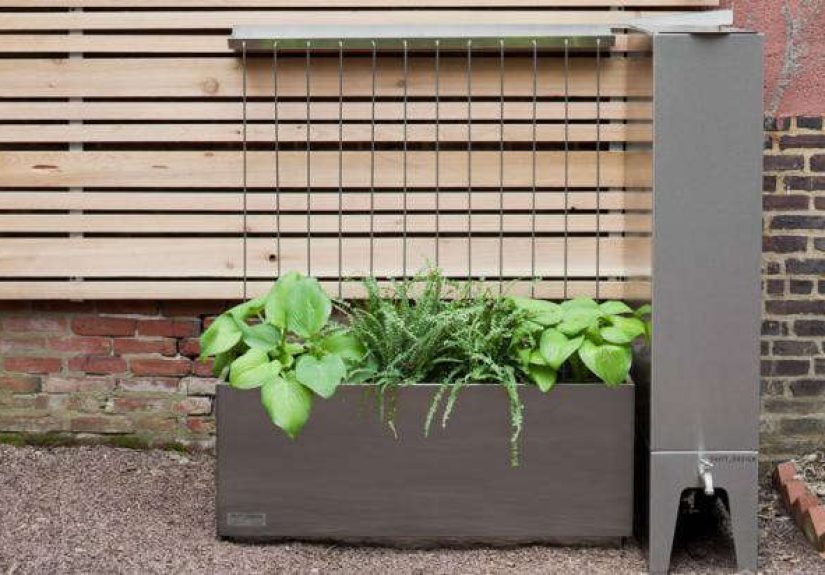
The fastest way to make rainwater collection stylish is to stop thinking of the barrel as something to hide. Instead, treat it like an outdoor design element. Modern rain barrels come in shapes and finishes that resemble ceramic urns, stone planters, wood barrels, slim wall tanks, and decorative columns. Some even include built-in planters on top, which is a clever way to turn a functional container into a mini garden feature.
Match the Barrel to Your Home’s Style
If your home leans farmhouse, a wood-look barrel or matte black container can blend beautifully with raised beds, gravel paths, and galvanized planters. For a cottage garden, choose a soft green, terracotta, or stone-textured barrel surrounded by lavender, salvia, or ornamental grasses. For a modern home, consider a slim rectangular tank in charcoal, sand, or white. The goal is not to make the barrel disappear; it is to make it look like you meant to put it there.
If you already own a plain plastic drum, paint can do wonders. Use an exterior-grade paint made for plastic, clean the barrel thoroughly, and choose a color that coordinates with your siding, trim, fence, or patio furniture. Darker colors can also help block sunlight, which reduces algae growth inside translucent containers.
Use a Food-Grade Container
If you build your own rain barrel, start with a food-grade drum that previously held something safe, such as juice, olives, or pickles. Avoid any barrel that once stored chemicals, solvents, pesticides, or unknown industrial products. A mystery barrel is not a bargain; it is a backyard plot twist waiting to happen.
Quick Fix #2: Hide the Hardware Without Blocking Access
A rain barrel needs practical parts: an inlet, a screen, a spigot, an overflow outlet, and sometimes a hose or diverter. These pieces are necessary, but they do not have to make the setup look messy. The trick is to organize the system so it appears clean while remaining easy to inspect and maintain.
Create a Simple Base
Set the barrel on a level, sturdy platform made from concrete blocks, pavers, bricks, or a purpose-built stand. Raising the barrel improves water pressure at the spigot and makes it easier to fit a watering can underneath. The base must be strong because water is heavy. A full 55-gallon barrel can weigh more than 450 pounds. That is not patio decor; that is a tiny water elephant.
For a more polished look, surround the base with gravel, flat stones, or mulch. Keep the area stable and well-drained so water does not pool around the foundation or barrel stand.
Use Plants as Soft Screening
Instead of boxing the barrel into a hard-to-reach corner, soften it with plants. Try ornamental grasses, dwarf shrubs, ferns, sedges, or container flowers placed nearby. Leave enough space to reach the spigot, remove the lid, clean the screen, and inspect fittings. A rain barrel that looks beautiful but cannot be maintained is like a designer handbag with no zipper: cute, but not helpful.
Keep the Lid Secure
A stylish setup must also be safe. Always use a secure lid and a fine mesh screen over openings. This helps keep out leaves, insects, animals, and curious hands. It also helps prevent mosquitoes from turning your water-saving project into a neighborhood buffet.
Quick Fix #3: Add an Overflow Plan That Protects Your Foundation
A rain barrel fills faster than many people expect. During a strong storm, a small section of roof can send a surprising amount of water into the barrel. Once the barrel is full, that water needs somewhere safe to go. Without a proper overflow plan, water may spill beside your foundation, flood mulch beds, erode soil, or create muddy puddles right where you walk.
Direct Overflow Away from the House
Install an overflow hose, pipe, or diverter that carries excess water away from your foundation. Ideally, overflow should move toward a landscaped area, rain garden, dry creek bed, or existing drainage path. Do not aim overflow at a neighbor’s property, sidewalk, driveway, basement window well, or low spot that already stays soggy.
Many downspout diverters automatically send water back through the original downspout when the barrel is full. This is a clean option for homes where the existing downspout already drains correctly. If your current downspout empties too close to the house, fix that problem first. A rain barrel should improve drainage, not become the villain in your basement’s origin story.
Connect Multiple Barrels Carefully
If one barrel is not enough, you can connect two barrels with a linking hose or pipe. This increases storage while keeping the setup relatively simple. Place both barrels on solid, level bases and make sure the overflow from the final barrel still drains away safely. In some states or municipalities, rainwater collection volume may be regulated, so check local rules before expanding.
Quick Fix #4: Make Watering Easier with Smart Delivery
A rain barrel is only useful if you actually use the water. If the spigot is awkward, the hose kinks, or the watering can does not fit, the barrel becomes yard sculpture with plumbing. Make the system convenient from the start.
Place the Spigot High Enough
Install or choose a barrel with a spigot several inches above the bottom. This leaves space for sediment to settle below the outlet and gives you room to attach a hose or fill a watering can. Some barrels include a lower drain plug for cleaning, which is useful when it is time to empty and rinse the barrel.
Use Rain Barrel Water at the Base of Plants
For ornamental beds, shrubs, trees, and containers, rain barrel water is usually best applied near the base of plants. Hand-watering, low-flow hoses, and soaker hoses are good options. Avoid spraying rain barrel water overhead, especially on edible plant parts. Splashing can move soil-borne organisms onto leaves and fruit, and wet foliage may encourage plant disease.
For vegetable gardens, be more careful. Use rain barrel water only in ways that avoid contact with the edible portion of the plant. It may be reasonable for fruit trees, tall trellised tomatoes, berries, or non-edible landscape plants when applied at soil level. For rinsing produce, cooking, drinking, brushing teeth, or washing dishes, use safe potable water.
Pair the Barrel with Containers
If your garden is mostly potted plants, position the barrel near the patio or container zone. A decorative barrel near planters feels intentional and saves steps. Group thirsty plants close together so watering takes five minutes instead of a backyard expedition involving a hose, two sandals, and regret.
Quick Fix #5: Build a Maintenance Routine That Takes Minutes
The most stylish rain barrel is a clean, working rain barrel. Maintenance does not need to be complicated, but it does need to be regular. A few quick checks can prevent mosquitoes, algae, clogs, leaks, and unpleasant smells.
Clean Gutters and Screens
Leaves, twigs, seeds, and roof grit can clog screens and reduce water flow. Clean gutter guards, inlet screens, and downspout filters regularly, especially after storms or during heavy leaf drop. If water backs up over the gutter instead of flowing into the barrel, the system is not harvesting rain; it is performing a tiny waterfall show.
Prevent Mosquito Problems
Mosquitoes need very little standing water to reproduce. Keep every opening screened, make sure the lid fits tightly, and inspect the system for leaks or puddles. Clean filters and remove debris. If mosquitoes remain a problem, consider mosquito dunks labeled for water features or rain barrels. These products commonly use bacteria that target mosquito larvae and are designed not to harm people, pets, plants, fish, or wildlife when used according to label directions.
Drain and Winterize in Cold Climates
In regions with freezing temperatures, disconnect and drain the rain barrel before the first hard freeze. Water expands when frozen and can crack fittings or damage the barrel. Remove hoses, empty the tank, rinse out sediment, and store the barrel upside down or in a protected area. Reconnect it in spring after the risk of hard freezes has passed.
Style Ideas That Make Rain Barrels Look Designed
Rainwater collection does not have to look like a utility project. With a few design touches, your setup can support the entire look of your yard.
Try the “Planter Top” Trick
Some rain barrels include a shallow planting area on top. Use trailing annuals, succulents, herbs, or pollinator-friendly flowers. This turns the barrel into a living feature and softens the transition between house and garden. Just avoid planting anything so large that roots interfere with the lid or screen.
Frame It with a Mini Rain Garden
If you have a safe overflow area, create a small rain garden with moisture-tolerant plants. Native sedges, rushes, cardinal flower, swamp milkweed, blue flag iris, and other region-appropriate plants can help absorb overflow while creating habitat. Choose plants suited to your climate, sun exposure, and soil.
Use Matching Hardware
A brass-look spigot, tidy hose hanger, matching downspout extension, or painted pipe can make the system look finished. Small details matter. A crooked white PVC elbow on a charcoal barrel may work perfectly, but visually it can shout “temporary fix” for the next seven years.
Common Mistakes to Avoid
Using Rain Barrel Water as Drinking Water
Unless your system is designed and maintained for potable use, do not drink collected rainwater. Roof runoff can contain germs and chemicals. A basic rain barrel is for non-potable outdoor use.
Forgetting Local Rules
Rainwater collection rules vary by state, city, neighborhood, and building code. Many places encourage rain barrels, but some regulate size, indoor use, plumbing connections, or permits. Check with your local water authority, extension office, building department, or homeowners association before installing a large system.
Letting Overflow Dump Near the Foundation
This is one of the most common mistakes. A full barrel does not stop rain from falling. Plan for overflow before the first storm.
Ignoring the Screen
A missing or damaged screen invites leaves, mosquitoes, and debris. Keep it clean and secure.
Extra Experience Notes: What Actually Works in a Real Yard
After working with rain barrel setups in everyday landscapes, one lesson becomes clear quickly: convenience decides whether the system gets used. A rain barrel placed in a forgotten corner may technically collect water, but if it takes a long walk, a stiff valve, and a wrestling match with a hose to use it, most people go back to the outdoor faucet. The best location is usually near the plants you water most often, especially containers, herbs, foundation shrubs, or a small vegetable bed.
A second real-world lesson is that aesthetics matter more than people admit. Homeowners are far more likely to maintain a barrel that looks good. A plain blue drum can work beautifully, but if it clashes with the patio, it may become a source of visual guilt. Painting it to match the fence, adding a wood screen, placing potted flowers nearby, or choosing a decorative barrel from the beginning can turn the setup from “science project” into “garden feature.” Style is not superficial here; it encourages long-term use.
Another practical tip is to test the system during the first rainfall. Put on rain boots, grab an umbrella, and watch where the water goes. Does the downspout feed the barrel cleanly? Does the lid leak? Is the overflow moving away from the house? Is water pooling around the stand? Five minutes of storm-watching can reveal problems that are invisible on a sunny installation day. It is much better to discover a bad overflow angle during a drizzle than during a dramatic thunderstorm when your mulch is floating away like tiny brown boats.
For gardeners, rain barrel water is especially useful for container plants because pots dry out quickly. A single full barrel may not irrigate a large lawn, but it can keep patio tomatoes, porch flowers, and herbs happy through dry spells. It also makes watering feel more intentional. Instead of turning on the hose and zoning out, you start thinking about which plants actually need water. That small habit can reduce waste.
Maintenance is easiest when it is tied to routines you already have. Clean the screen when you clean gutters. Check the spigot when you water containers. Inspect overflow after big storms. Drain and store hoses when you prepare the garden for winter. The system should not feel like a second job. It should feel like a simple part of caring for the yard.
Finally, start small. One well-placed, attractive, properly maintained rain barrel is better than three neglected barrels hidden behind the garage. Once you understand how much water your roof supplies and how quickly your garden uses it, you can decide whether to add another barrel, a larger tank, a rain garden, or drip irrigation. Rainwater collection works best when it grows with your landscape rather than arriving all at once like a backyard infrastructure takeover.
Conclusion
Collecting rainwater with style is not about pretending a barrel is a sculpture. It is about combining function, safety, and design so the system improves your home instead of cluttering it. Choose a barrel that fits your landscape, elevate it on a sturdy base, screen every opening, direct overflow away from the foundation, water plants at soil level, and keep maintenance simple. With these five quick fixes, rainwater harvesting becomes less of a chore and more of a smart outdoor upgrade.
Your garden gets a practical water source. Your property sends less runoff into storm drains. Your patio gains a feature that can actually earn its keep. And you get the quiet satisfaction of watching rain fall and thinking, “Perfect. Free water delivery.” Honestly, that is about as close as a homeowner gets to applause from the sky.