Table of Contents >> Show >> Hide
- Way 1: Check Your Personal Readiness
- Way 2: Evaluate the Health of Your Relationship
- Way 3: Talk Through the Practical Stuff (The Unromantic but Crucial Part)
- Way 4: Pay Attention to Timing, Pressure, and Red Flags
- How to Use These Four Ways Together
- Real-Life Experiences: What Deciding to Marry Actually Feels Like
- Final Thoughts
Few questions feel as big as, “Should I get married?” It’s not just about rings, parties, or changing your relationship status. Marriage is about combining lives, calendars, closets, bank accounts, and families. That’s a lot for any human brain to process, so if you’re feeling a mix of excitement and mild panic, you’re completely normal.
Instead of treating marriage like a yes/no pop quiz, it helps to break the decision into practical steps. Think of this as a wikiHow-style guide for your heart and your life: four clear ways to explore whether marriage is right for you, right now, with this person.
Use these four paths as a checklist, a journaling prompt, or a conversation starter with your partner, your therapist, or your most honest friend. The goal isn’t to pressure you into saying “I do.” The goal is for you to feel calm, informed, and confident about whichever decision you make.
Way 1: Check Your Personal Readiness
Before you ask whether your relationship is “marriage material,” ask whether you are. A wedding won’t magically turn you into a different person. If you’re hoping marriage will fix loneliness, anxiety, or chaos in your life, that’s a sign to slow down and focus on your own readiness first.
Clarify why you actually want to get married
Grab a piece of paper (or open a notes app) and answer this, unfiltered: “Why do I want to get married?”
Healthy reasons might sound like:
- “I want a long-term teammate to build a life with.”
- “We share values, goals, and we already act like partners.”
- “I want to deepen our commitment in a way that’s meaningful to both of us.”
Shaky reasons often sound like:
- “Everyone else my age is getting married.”
- “I’m afraid I won’t find anyone better.”
- “My family won’t stop asking when it’s happening.”
- “This will probably fix our relationship problems.”
If your main motivation is fear, pressure, or comparison, that doesn’t automatically mean “never,” but it does suggest “not yet.” It’s your life; the reason has to make sense to you, not to Instagram, your parents, or your group chat.
Look honestly at your emotional health
Marriage doesn’t require perfection, but it does require a certain level of emotional stability. Ask yourself:
- Can I handle stress without taking it out on my partner every time?
- Do I have healthy coping skills besides shutting down, exploding, or disappearing?
- Am I able to apologize and take responsibility when I’m wrong?
- Can I set and respect boundaries?
- Do I know who I am outside of this relationship?
If your honest answer is, “I crumble under stress and have no idea who I am unless I’m in a relationship,” that’s not a shameful verdict. It’s valuable information. It might be worth spending more time in therapy, doing self-work, or simply letting yourself grow before tying your life to someone else’s long-term.
Ask yourself: “Would I marry me?”
This question sounds cheesy, but it goes deep quickly: Would you happily commit to someone who treats people the way you treat people and lives the way you live?
Consider:
- Your habits and routines (sleep, hygiene, cleaning, time management).
- Your relationship with money (saving, spending, debt, communication).
- Your communication style (honest, passive-aggressive, conflict-avoidant, explosive).
- Your ability to give and receive love, support, and feedback.
If your instinctive answer is “yes, mostly, but I’d want to tweak a few things,” you’re in a pretty strong place. If your answer is a hard “no,” that’s okayuse that as a roadmap for growth, not a verdict that you’re unlovable or doomed.
Way 2: Evaluate the Health of Your Relationship
Once you’ve looked inward, the next step is to look at the relationship itself. A gorgeous engagement ring cannot compensate for constant resentment, disrespect, or fear. Marriage tends to amplify whatever dynamic already exists, not erase it.
Trust as the foundation
Trust isn’t just “I don’t think they’ll cheat.” It’s:
- “I believe they tell me the truth.”
- “I can depend on them to follow through.”
- “I feel emotionally safe being vulnerable with them.”
If you’re checking their phone, stalking their social media, or constantly second-guessing their stories, that doesn’t mean you’re paranoid for no reason. It might mean the trust between you is damaged or never fully formed. That doesn’t automatically disqualify marriage, but it means the two of you have work to do before you walk down the aisle.
How you fight matters more than how often you fight
Every couple argues. What separates healthy relationships from train wrecks is how you handle conflict:
- Do you both get a chance to speak, or does one person dominate every disagreement?
- Can you disagree without name-calling, threats, or silent treatment marathons?
- Do you eventually reach solutions, or do you keep circling the same argument with no progress?
- Can one of you say, “Let’s take a break and come back to this,” without the other taking it as rejection?
If every argument feels like emotional warfare, marriage won’t soften that dynamic. It usually raises the stakesnow you’re fighting about in-laws, mortgages, and whose turn it is to clean the bathroom. Learning healthy conflict skills now is one of the best investments you can make in your future self.
Shared values and life direction
You don’t need to be identical twins in personality, hobbies, or politics. But you do need enough alignment in core values that you’re walking in the same general direction. Talk honestly about:
- Whether you want kids, and if so, when and how many.
- Your big-picture career goalssteady job, big ambitions, frequent moves, remote work, etc.
- Where you want to live (city vs. suburbs vs. rural, near family vs. far away).
- How you each define “a good life” (simple and quiet, social and busy, travel-focused, etc.).
Opposites can attract and even balance each other, but if one of you dreams of a quiet cabin in the woods and the other wants a high-rise city life with constant travel and late nights, you’ll need very clear compromises to make that work in reality.
Way 3: Talk Through the Practical Stuff (The Unromantic but Crucial Part)
Romantic comedies fade out after the wedding. Real life keeps goingwith utility bills, insurance, laundry, and tax season. Talking about the “boring” topics now can save you from massive resentment later.
Money: your shared game plan
Money is one of the top sources of conflict in marriage, and nearly a quarter of divorces are linked to financial issues. It’s better to face those conversations now than be surprised a year in when you discover your spouse’s idea of “budgeting” is “guessing and vibes.”
Start with:
- Income, savings, debt, and credit scoresno secrets.
- How each of you typically spends money (thrifty, splurge-y, anxious saver).
- Whether you’ll combine accounts, keep them separate, or do a mix.
- Who will pay which bills and handle what financial tasks.
- Short- and long-term goals: emergency fund, travel, kids, home, retirement.
These talks can be awkward, but avoiding them doesn’t make the issues disappear. If you can’t have a calm conversation about money now, that’s a sign to work on communication skills before signing a marriage certificate.
Household labor and the mental load
Chores sound trivial until one person is quietly keeping track of every appointment, meal, and cleaning task while the other just “helps out.” That imbalance can erode even the most loving relationship.
Have a clear conversation about:
- Who usually cooks, cleans, shops, does laundry, and manages repairs.
- Who keeps track of birthdays, school emails, family events, and appointments.
- How you’ll adjust if one person works longer hours or if kids enter the picture.
You don’t need a perfect 50/50 split, but you do need a system that feels fair to both of you. Marriage works better when both partners feel like teammates, not a boss and an unpaid intern.
Kids, families, and lifestyle choices
There are a few topics you really don’t want to “figure out later.” These include:
- Whether you want children, and what you’d do if infertility becomes an issue.
- How you feel about adoption, fostering, or remaining child-free.
- Your expectations around religion, holidays, and traditions.
- How involved you expect your extended families to be in your lives.
You probably won’t agree on every detail, but you should have a sense that you can negotiate, compromise, and respect each other’s non-negotiables. If you’re fundamentally misaligned on kids, faith, or family boundaries, that’s not a tiny “personality difference”it’s a core issue to address before marriage.
Way 4: Pay Attention to Timing, Pressure, and Red Flags
Sometimes the relationship is good, the logistics mostly work, and you still feel… off. That’s not you being “too picky.” That’s your intuition asking for a closer look at timing, pressure, or possible red flags.
Cold feet vs. serious concerns
It’s normal to feel nervous before making a big life decision. But there’s a difference between butterflies and your whole nervous system screaming, “This is wrong.” Ask yourself:
- Am I generally anxious about big decisions, or is this feeling new and intense?
- Are my worries vague (“What if marriage is hard?”) or specific (“My partner belittles me in public”)?
- Do my doubts go away when I talk openly with my partner, or do they get louder?
Specific, persistent concernslike controlling behavior, emotional or physical abuse, dishonesty, or untreated addictionare not “cold feet.” They’re real issues that deserve attention, often with the help of a therapist or trusted outsider. In these situations, delaying or canceling a wedding can be an act of courage, not failure.
Blocking out external pressure
It’s hard to hear your own voice when everyone else is shouting their opinions. Maybe your family is pushing for a wedding, your friends are all pairing off, or your social media feed is one long highlight reel of proposals and honeymoons.
Try this simple exercise: If no one else had an opinionno parents, no friends, no culturewhat would you choose? If your honest answer is “I’d wait,” that’s valuable information, even if it complicates other people’s expectations.
Giving your relationship enough time
There’s no magical number of months or years that guarantees a good marriage, but time does matter. The longer you’ve spent navigating real life togetherstress, travel, illness, money, family dramathe more data you have about how you both behave under pressure.
If you’ve only seen each other in vacation mode and date-night lighting, consider slowing down. Spend time doing boring things together: grocery runs, sick days, holidays with family, long project deadlines, apartment hunting. Those are the conditions your marriage will live in most of the time.
How to Use These Four Ways Together
These four ways aren’t a rigid test you either pass or fail. Think of them as lenses you look through, one at a time, to see the full picture more clearly.
- Start with you. Reflect, journal, or talk with a therapist about your reasons for wanting marriage and your emotional readiness.
- Examine the relationship. Ask whether the trust, communication, and values between you feel sturdy enough for a long-term partnership.
- Have the hard conversations. Money, chores, kids, faith, and family involvement all belong on the table before marriage, not after.
- Check the timing. Sort out what’s normal anxiety, what’s external pressure, and what might be your intuition pointing to real problems.
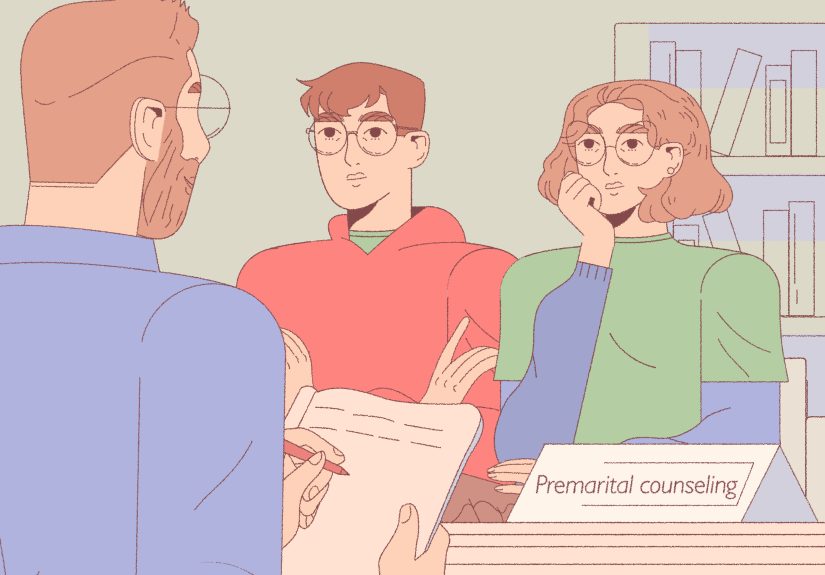
If you get stuck at any point, consider premarital counseling or couples therapy. A neutral third party can help you explore these questions without the conversation turning into a battle or a shutdown.
Real-Life Experiences: What Deciding to Marry Actually Feels Like
Advice is helpful, but sometimes it still feels abstract. So let’s look at how these four ways might show up in real people’s lives. Names and details are fictional, but the patterns are very real.
“We were in love, but the timing was wrong”
Alex and Jordan had been dating for a year. They were wildly attracted to each other, finished each other’s jokes, and had already pictured their wedding playlist. When Jordan suggested they get engaged, Alex felt thrilledand then weirdly panicked.
On paper, it looked perfect. In reality, they hadn’t talked about money, kids, or where they would live. Alex had never seen Jordan under serious stressno job loss, no family crisis, not even a big disagreement about something that really mattered.
They decided to pause the engagement idea and instead made a “marriage readiness project” out of the next year. They had weekly check-ins where they talked openly about money, family, careers, and conflict. They took turns planning difficult conversations and practiced listening instead of defending.
A year later, when they revisited the idea of marriage, both felt calmer and more grounded. The spark was still there, but now it was sitting on top of shared skills and real-world experience, not just chemistry.
“We said nofor nowand that was the healthiest choice”
Sam and Taylor had been together for five years. Everyone assumed they would eventually get married, including Sam, who felt the weight of that expectation growing every year.
When they finally went through the hard topicskids, money, lifestyleit turned out they were deeply misaligned. Sam wanted to stay in their hometown, have children, and build a stable routine. Taylor wanted to travel long-term, wasn’t sure about kids, and prioritized creative freedom over stability.
They genuinely loved each other, but every time they tried to plan a shared future, one of them ended up feeling like they had to erase a core part of themselves. After a lot of honest conversations, they made the painful choice to stay together without marriage for nowand eventually, they decided to separate completely.
It hurt. But years later, both looked back and were grateful they hadn’t forced themselves into a marriage that would have demanded huge sacrifices from both sides. Sometimes the healthiest “marriage decision” is choosing not to marry.
“We did the work before the weddingand it paid off”
Priya and Marcus got engaged quicklyafter just nine months of dating. Friends and family worried they were rushing in. Instead of getting defensive, they used that concern as a prompt to slow down emotionally, even if the ring was already on.
They started premarital counseling, not because something was “wrong,” but because they wanted more tools. They talked openly about expectations around career, gender roles, chores, and intimacy. They made a detailed budget, including how they’d handle debt and big purchases. They rehearsed conflict conversations in therapy so that when real disagreements showed up later, they weren’t starting from scratch.
Years later, when they hit a rough patch with job loss and family health issues, they both said the same thing: “We’re so glad we learned how to do this before we were in crisis.” The work they did during their engagement didn’t prevent hard times, but it gave them a stronger, more flexible foundation to stand on together.
Your story can be differentand that’s okay
Maybe your path looks nothing like these. Maybe you’re older, younger, divorced, neurodivergent, long-distance, or in a blended family situation. Maybe you’re not sure you believe in marriage at all.
What matters isn’t fitting your story into a template. What matters is making your choice with as much honesty, calm, and self-respect as you can. Whether you end up saying “yes,” “no,” or “not yet,” you deserve to feel like you were awake and present for that decisionnot pushed into it by fear or pressure.
Final Thoughts
Deciding whether to get married is less about finding a “perfect” partner and more about asking clear questions: Am I ready? Are we healthy together? Have we looked at the real-life details? Am I choosing this freely?
If you can say, “Yes, we’ve done the work, we know each other deeply, we’ve had the uncomfortable conversations, and this still feels like a decision I want,” that’s a strong sign you’re on the right track. And if your gut is saying, “Hold on, I need more time,” that’s not a failureit’s wisdom.
Marriage is one path, not the only path. Whatever you decide, you’re allowed to choose the version of commitment and connection that fits your life, your values, and your heart.