Table of Contents >> Show >> Hide
- Cabinetry That Feels Like It Belongs in the House
- 1) Shaker-style cabinet doors (the little black dress of kitchens)
- 2) Inset cabinetry for a tailored, furniture-like look
- 3) Beaded inset doors when you want extra heritage charm
- 4) Crown molding above upper cabinets
- 5) Glass-front uppers for display that doesn’t feel trendy
- 6) Furniture-style details: legs, feet, and built-in hutches
- 7) A contrasting island that still plays nice
- 8) Symmetry where you can get it
- Countertops and Surfaces That Age Gracefully
- Backsplashes and Wall Details That Don’t Date Fast
- The Sink and Faucet: Where Traditional Kitchens Show Off
- Floors That Look Better After Real Life Happens
- Lighting and Hardware: Small Details, Big Timeless Energy
- Architectural Details That Make It Feel Custom
- How to Combine These Ideas Without Overdoing It
- of Real-World Kitchen Experience (The Stuff You’ll Actually Notice)
- Conclusion
Trends are fun. (So is watching them age like a banana on the counter.) But if you want a kitchen that still looks intentional 10, 15, even 25 years from now, traditional design is the safest bet that’s not, like, “bet the house on a neon backsplash.” A traditional kitchen isn’t stuck in the pastit’s built on proportions, craftsmanship, and materials that keep their charm even after a thousand weeknight dinners.
Below are 32 traditional kitchen ideas that consistently show up in the best “before-and-after” remodels, designer portfolios, and real homes that actually get used (read: someone has cooked bacon there). Mix a handful of these timeless moves and you’ll end up with a classic kitchen design that feels warm, polished, and incredibly livable.
Cabinetry That Feels Like It Belongs in the House
1) Shaker-style cabinet doors (the little black dress of kitchens)
Shaker doors are simpleframe, recessed center panel, clean linesand that simplicity is exactly why they last. They work in traditional, transitional, even slightly modern rooms without looking confused. Pair them with classic knobs and you’re basically future-proofing your cabinetry.
2) Inset cabinetry for a tailored, furniture-like look
Inset doors sit flush inside the cabinet frame, creating crisp shadow lines and a custom finish that reads “old house quality” even in a new build. If you love traditional kitchens with refined details, inset is a signature move. (Yes, it’s usually pricier. So is anything that looks like it was made carefully on purpose.)
3) Beaded inset doors when you want extra heritage charm
A beaded inset adds a small decorative bead around the inside edgesubtle, but it brings that “crafted millwork” feeling traditional kitchens do so well. It’s detail without drama, which is the traditional kitchen motto.
4) Crown molding above upper cabinets
Crown molding helps cabinetry feel built-in rather than “installed.” It softens the transition to the ceiling and adds architectural polishespecially in homes with traditional trim elsewhere.
5) Glass-front uppers for display that doesn’t feel trendy
Traditional kitchens often mix closed storage with a few glass doors. Use them to show off everyday white dishes, vintage glassware, or a color-coordinated collection. The key is restraint: a couple of glass cabinets feel curated; an entire wall feels like a museum gift shop.
6) Furniture-style details: legs, feet, and built-in hutches
Add turned legs on an island, a hutch-style pantry, or base cabinets that feel like a sideboard. Traditional kitchens love the “furniture in the room” vibe because it makes the space feel collected, not cookie-cutter.
7) A contrasting island that still plays nice
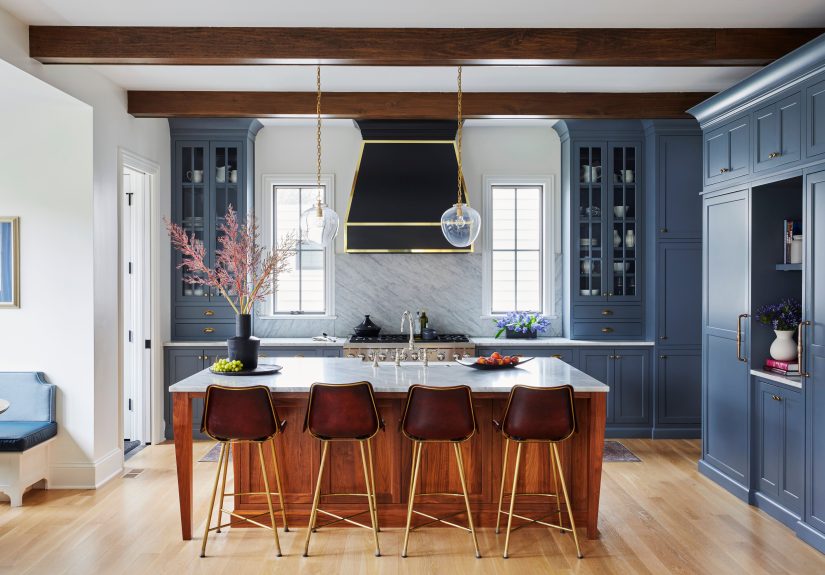
A painted island in navy, sage, charcoal, or warm wood adds depth without chasing a fad. Traditional design likes contrastjust not chaos. Keep the palette classic and the hardware consistent.
8) Symmetry where you can get it
Matching sconces, balanced cabinet runs, and centered focal points (like a range hood) make a kitchen feel calm and “correct.” Even in open layouts, a little symmetry creates that timeless, finished look.
Countertops and Surfaces That Age Gracefully
9) Marble for classic elegance (especially honed)
Marble is traditional for a reason: it’s bright, natural, and instantly elevates a room. A honed finish reads softer and can make inevitable wear feel like patina instead of “oh no.” If you choose marble, choose it like you choose a white T-shirt: accepting that life will happen.
10) Butcher block as a warm accent
Use butcher block on an island, a baking station, or a coffee nook for warmth. Traditional kitchens thrive on mixing materialsstone plus wood is a timeless combo that keeps the room from feeling sterile.
11) Soapstone for an Old-World, low-gloss mood
Soapstone offers a deep, velvety look that feels historic and grounded. It’s often associated with classic homes and traditional utility spacesperfect if you want drama without sparkle.
12) Simple, neutral granite that isn’t “busy”
Granite can read timeless when it’s calm: think subtle movement, warm neutrals, or charcoal tones. Traditional design favors materials that look natural and believable, not like a fireworks show made of stone.
Backsplashes and Wall Details That Don’t Date Fast
13) White subway tileclassic, but vary the execution
Subway tile became a staple because it’s clean, bright, and adaptable. To keep it from feeling overdone, change the layout (herringbone, vertical stack, or a taller tile), add a handmade-look edge, or use a soft off-white.
14) Marble mosaic (basketweave, herringbone, or hex)
A marble mosaic backsplash nods to traditional craftsmanship. Basketweave and herringbone patterns feel especially classic and pair beautifully with Shaker or inset cabinets.
15) Beadboard or tongue-and-groove for cottage-traditional warmth
Painted beadboard behind open shelves, in a breakfast nook, or on a pantry wall adds texture without fighting the rest of the room. It’s cozy, simple, and very “this house has always had character.”
16) Full-height backsplash behind the range
Taking tile or stone all the way up to the hood looks intentional and classic. It frames the cooking zone like a feature walltraditional, but still crisp and current.
The Sink and Faucet: Where Traditional Kitchens Show Off
17) Farmhouse (apron-front) sink as a centerpiece
The deep basin and exposed front feel grounded and functionalexactly the vibe traditional kitchens do best. It also plays well with classic finishes like polished nickel, aged brass, or oil-rubbed bronze.
18) Bridge faucet for instant heritage style
Bridge faucets connect hot and cold lines with an exposed “bridge,” creating a vintage silhouette that feels tailor-made for traditional kitchens. If your space leans classic, a bridge faucet looks like it belongs there, not like it arrived from the future.
19) A classic gooseneck faucet with a side sprayer
This is a practical traditional move: timeless shape, easy function, and the side sprayer keeps the main faucet profile uncluttered. It’s the kitchen equivalent of a good leather beltquietly doing its job for years.
20) Pot filler (or wall-mounted faucet) in a traditional finish
Pot fillers can be polarizing, but in traditional kitchens they often feel “estate” rather than “trend.” If you install one, choose a classic metal finish and keep the shape simple.
Floors That Look Better After Real Life Happens
21) Narrow-plank hardwood floors
Hardwood is a traditional staple because it warms up a space and connects the kitchen to the rest of the home. Narrower planks and natural stains tend to feel more classic than wide, ultra-rustic boards.
22) Brick or brick-look flooring
Brick floors bring instant age and texturegreat for traditional, colonial, or European-inspired kitchens. They hide crumbs like a champ, too. (That’s not design talk; that’s survival.)
23) Classic checkerboard tile
Black-and-white (or cream-and-charcoal) checkerboard floors have been around forever and still look sharp. Keep the scale appropriate to the room so it feels classic, not cartoonish.
24) Natural stone with a matte or tumbled finish
Limestone, travertine, and similar stones add soft variation and a lived-in look. Traditional kitchens love materials that feel like they’ve been there a whileeven when they’re brand new.
Lighting and Hardware: Small Details, Big Timeless Energy
25) Lantern-style pendants over the island
Lantern pendants are practically a traditional kitchen signature: structured shapes, classic lines, and enough presence to anchor the room. Choose proportions that fit the island (not tiny “earrings” or massive chandeliers that block your sightline to dinner).
26) Milk-glass or schoolhouse fixtures for soft vintage charm
Schoolhouse lighting feels nostalgic without being theme-y. It works especially well in traditional kitchens that want a clean, bright look with a hint of history.
27) Under-cabinet lighting that disappears
Traditional style is about what you seeand what you don’t. Warm, even under-cabinet lighting improves function and makes countertops glow, without adding visual clutter.
28) Unlacquered or aged brass hardware for character
Traditional kitchens shine when finishes develop depth over time. Unlacquered/aged brass can patina and soften, giving the room that “collected over years” feeling. If you prefer consistency, go polished nickel or antique bronze.
Architectural Details That Make It Feel Custom
29) A paneled or mantel-style range hood
A statement hoodwood-wrapped, plaster, or paneledcreates a focal point that feels architectural. Traditional kitchens often treat the range area like a fireplace: a “center of the room” moment that anchors everything else.
30) A butler’s pantry or dedicated beverage station
A butler’s pantry is a classic solution for storage, staging, and hiding the mess when guests arrive early. Even a small beverage nook with upper cabinets and a counter can deliver that same traditional functionality.
31) Plate racks or open shelves for “collected” display
Open shelves can feel trendy, but a classic plate rack or a short run of shelves styled with everyday ceramics reads traditional. Use thick shelves, classic brackets, and real-life items you actually use.
32) A comfortable seating moment: Windsor chairs or an upholstered banquette
Traditional kitchens aren’t just prettythey’re hospitable. Windsor chairs, ladder-backs, or a tailored banquette create a “sit and stay awhile” vibe that keeps the kitchen at the center of the home.
How to Combine These Ideas Without Overdoing It
The secret sauce of timeless kitchen design is balance. Traditional kitchens can handle detail, but they don’t need every detail. Think of it like seasoning: you want flavor, not a salt lick.
A simple formula that works
- Choose one cabinet “statement”: Shaker OR inset OR furniture-style details.
- Choose one classic surface: marble, soapstone, calm granite, or butcher block as an accent.
- Choose one heritage detail: a bridge faucet, lantern pendants, beadboard, or a mantel hood.
- Keep the palette quiet: warm whites, creams, soft blues/greens, wood, and classic metals.
Three specific traditional kitchen combos (steal these)
- “Bright Classic”: white Shaker cabinets, honed marble, subway tile in a vertical stack, polished nickel hardware, lantern pendants.
- “Warm Heritage”: cream inset cabinets, soapstone counters, beadboard accents, aged brass hardware, farmhouse sink.
- “Old-World Cozy”: painted perimeter cabinets + wood island, brick or tumbled stone floor, marble mosaic backsplash, bridge faucet in antique brass.
of Real-World Kitchen Experience (The Stuff You’ll Actually Notice)
Here’s what homeowners tend to discover once the paint is dry, the backsplash is grouted, and the kitchen starts doing what kitchens do: living a full life.
First, traditional kitchens feel calmer on busy days. That’s not magicit’s hierarchy. When your cabinets have classic proportions, your finishes are cohesive, and your colors are muted, your eyes don’t have to work overtime. You walk in, make coffee, and your brain doesn’t immediately scream, “Why is the backsplash doing that?”
Second, patina becomes your friend. In a hyper-trendy kitchen, every nick can feel like a crisis. In a traditional kitchen, small signs of use often look like “character.” A soft shine on a brass knob. A slightly worn spot on a wood floor where everyone stands to talk. Even marbleyes, marblecan become more charming as it develops a subtle lived-in surface. The trick is choosing materials and finishes that age honestly instead of pretending nothing ever happens in your home.
Third, the details you touch every day matter more than the ones you photograph. People fall in love with statement lighting on Pinterest, but they keep loving their kitchen because drawers glide smoothly, cabinet hardware feels good in the hand, and the faucet is easy to use when you’re elbow-deep in spaghetti night. Traditional kitchens have always prioritized function, which is why they don’t get tiresome. They’re not just “a look.” They’re a system.
Fourth, storage wins hearts. A butler’s pantry, a coffee station, deep drawers, and smart cabinet interiors aren’t glamorous until you host a holiday meal and realize your counters stayed clear. Traditional kitchens are often designed with entertaining in mindserving pieces, extra linens, big platters. Even if you never host, you’ll still appreciate a place for the air fryer that isn’t “living permanently on the counter like it pays rent.”
Finally, traditional doesn’t mean boring. The best traditional kitchens have personality: a vintage runner, a bowl of lemons, heirloom dishes behind glass, a slightly imperfect handmade tile, a wood island that warms up the space. Traditional design is basically the art of making a room feel finished without making it feel frozen. If you want a kitchen that looks good in five years and still feels like you, traditional is the long gameand it’s a smart one.
Conclusion
A traditional kitchen lasts because it’s built on classic forms, quality materials, and details that feel purposeful: Shaker or inset cabinetry, marble or wood surfaces, subway tile or timeless mosaics, warm floors, and hardware that adds character over time. Pick your favorites from these 32 traditional kitchen ideas, keep your palette calm, and you’ll end up with a kitchen that feels welcoming nowand still looks right when the next trend comes and goes.