Table of Contents >> Show >> Hide
- Why Silver Jewelry Tarnishes in the First Place
- Before You Clean: Figure Out What Kind of Piece You Have
- Method 1: Clean Silver Jewelry With Mild Dish Soap and Warm Water
- Method 2: Use a Silver Polishing Cloth or Jewelry-Specific Silver Cleaner
- Method 3: Try a Baking Soda and Aluminum Foil Bath
- What Not to Use on Silver Jewelry
- How to Keep Silver Jewelry From Tarnishing So Fast
- When to Take Silver Jewelry to a Professional
- Final Thoughts
- Real-Life Experiences With Cleaning Silver Jewelry
Silver jewelry has a talent for being both gorgeous and dramatic. One day your favorite ring is bright and reflective; the next day it looks like it has been rehearsing for the role of “mysterious Victorian heirloom.” The good news is that tarnish is normal, fixable, and usually not a reason to panic. The better news is that you do not need a chemistry degree, a jeweler’s loupe, or a questionable internet hack involving ketchup to make your silver look good again.
If you want to clean silver jewelry the right way, the trick is not to grab the harshest cleaner in the house and hope for the best. The trick is to match the cleaning method to the piece. Plain sterling silver can handle more than a delicate silver-plated necklace. A gemstone-studded ring needs a gentler touch than a plain silver chain. And an intentionally oxidized piece, the kind with darkened details in the grooves, absolutely does not want you buffing away its personality.
Below are three practical ways to clean your silver jewelry at home, plus the mistakes to avoid and the habits that help keep tarnish from coming back five minutes after you finish polishing.
Why Silver Jewelry Tarnishes in the First Place
Tarnish is not dirt, and it is not proof that your jewelry has given up on life. It is a surface reaction. Silver reacts with sulfur compounds in the air, along with moisture, skin oils, lotion, perfume, and everyday grime. Over time, that reaction creates a dark film that dulls the shine.
Most jewelry labeled as sterling silver is made with 92.5% silver and 7.5% other metals, usually copper. That blend makes silver stronger for everyday wear, but it also makes tarnish more noticeable over time. Silver-plated jewelry is even trickier because it has only a thin layer of silver over another metal. Clean it too aggressively and you may remove more than the tarnish. You may remove the finish too, which is a terrible twist ending for a ten-minute cleaning job.
Before You Clean: Figure Out What Kind of Piece You Have
This step is not glamorous, but it matters. Before you clean silver jewelry, take a close look at it and ask a few basic questions:
Is it sterling silver or silver-plated?
Sterling silver often carries a stamp such as “925” or “sterling.” Silver-plated pieces may not. If you are not sure, assume the piece is delicate and clean it gently.
Does it have gemstones, pearls, enamel, glue, or mixed materials?
If yes, avoid strong dips and aggressive scrubbing unless the product is clearly labeled as safe for that exact type of jewelry. Pearls, opals, turquoise, glued settings, and plated finishes are especially easy to damage.
Is the dark finish intentional?
Some silver jewelry is oxidized on purpose so the carved or engraved details stand out. If you polish it too enthusiastically, you can remove that contrast and flatten the design. In other words, do not buff away the jewelry’s good side.
Are any stones loose or clasps weak?
If the answer is yes, skip the home experiment and go to a professional jeweler. Tarnish is manageable. A missing stone is a headache with paperwork.
Method 1: Clean Silver Jewelry With Mild Dish Soap and Warm Water
This is the safest all-purpose method and the best place to start. If your silver jewelry is only mildly dull, lightly grimy, or coated in the sort of residue that comes from lotion, sunscreen, and everyday wear, dish soap and warm water are usually enough.
Best for:
Light tarnish, everyday grime, sterling silver, many gemstone-set silver pieces, and silver-plated jewelry that needs gentle cleaning.
What you need:
- A small bowl of warm, not hot, water
- A few drops of mild dish soap
- A soft-bristled toothbrush or baby-soft brush
- A lint-free or microfiber cloth
How to do it:
- Mix a few drops of dish soap into warm water.
- Let the jewelry soak for about 5 to 10 minutes if the piece can safely be submerged.
- Use a soft brush to gently clean around crevices, chain links, and settings.
- Rinse carefully in a bowl of clean water or with the sink drain fully closed.
- Pat dry with a microfiber or lint-free cloth.
This method works because it removes oils and residue without forcing you into scratch territory. It is the jewelry-care equivalent of taking the scenic route instead of driving through a fence.
What to watch out for:
Do not use hot water on delicate stones. Do not use rough brushes or scrub pads. Do not dry with paper towels, which can leave fine scratches. And if the piece is costume jewelry or plated and you are not sure how well it tolerates moisture, use a damp cloth instead of a full soak.
Method 2: Use a Silver Polishing Cloth or Jewelry-Specific Silver Cleaner
If your silver has real tarnish rather than ordinary grime, a polishing cloth or silver cleaner made specifically for jewelry can do a much better job than soap and water alone. This is where your piece goes from “clean enough” to “oh, there you are.”
Best for:
Sterling silver with visible tarnish, plain silver rings, bracelets, earrings, chains, and pieces that need shine restored fast.
What you need:
- A treated silver polishing cloth, or
- A silver cleaner clearly labeled for jewelry and for your specific piece
- A soft cloth for drying and buffing
How to use a polishing cloth:
- Hold the jewelry in one hand and gently rub with the cloth in back-and-forth motions.
- Focus on the tarnished areas first.
- Buff lightly until the shine comes back.
How to use a liquid silver cleaner:
- Read the label before the piece goes anywhere near the product.
- If the cleaner is safe for the piece, apply it with a soft cloth or use the dip time directed on the label.
- Rinse thoroughly if the instructions say to rinse.
- Dry completely and buff with a soft cloth.
The label matters because not every silver cleaner is safe for every type of silver jewelry. Some formulas are meant for sterling silver only and should not be used on gemstones, antiqued finishes, or plated pieces. That warning is not decorative. It is there because chemistry has no interest in your sentimental attachment to your grandmother’s pendant.
Why this method is useful:
It is targeted, fast, and good at removing actual tarnish. A polishing cloth is especially handy for pieces you wear often because it lets you spot-clean before tarnish builds up into a full project.
What to avoid:
Do not over-polish intentionally oxidized silver. Do not use harsh chemical dips on unknown metals. Do not assume every “jewelry cleaner” works for every jewelry type. Silver with pearls, porous stones, glued settings, or fragile plating deserves extra caution.
Method 3: Try a Baking Soda and Aluminum Foil Bath
This is the most dramatic method on the list, which is probably why people love it. It feels like a middle-school science experiment that actually pays rent. The foil-and-baking-soda bath helps lift tarnish through a chemical reaction, making it a strong choice for plain sterling silver pieces that have gone seriously dull.
Best for:
Heavily tarnished plain sterling silver jewelry without pearls, delicate gemstones, plated finishes, glued components, or intentional oxidation.
What you need:
- A bowl or dish lined with aluminum foil
- Baking soda
- Very hot or boiling water
- Tongs or a spoon
- A soft cloth
How to do it:
- Line a bowl with aluminum foil.
- Place the silver jewelry so it touches the foil.
- Sprinkle baking soda into the bowl.
- Pour in very hot water until the jewelry is covered.
- Let it sit for a few minutes.
- Remove the jewelry carefully, rinse, and dry with a soft cloth.
This method can be very effective on tarnish because it addresses the surface reaction instead of requiring lots of rubbing. That means less elbow grease and more “wow, that actually worked.”
But here is the catch:
This is not the universal answer for every silver item you own. Avoid it for silver-plated jewelry unless you are absolutely sure the finish can handle it. Skip it for gemstone-set pieces unless the stones are hard, secure, and clearly safe for the treatment. Never use it for pearls, opals, enamel, glued jewelry, or pieces with a deliberately dark oxidized finish. Those pieces should get gentler care or professional help.
What Not to Use on Silver Jewelry
A lot of silver-cleaning disasters begin with the sentence, “I saw a hack online.” Resist the urge.
- Toothpaste: Some cleaning guides still mention it, but expert advice is mixed, and it can scratch silver or damage finishes.
- Bleach, chlorine, ammonia, or acidic household cleaners: These can damage metals, finishes, and stones.
- Paper towels and rough sponges: Tiny scratches add up fast.
- Boiling unknown jewelry: Heat and moisture are bad roommates for glued stones, plated finishes, and delicate materials.
- Over-polishing: If you rub with the passion of someone trying to remove a parking ticket from existence, you may wear down details.
How to Keep Silver Jewelry From Tarnishing So Fast
Cleaning matters, but prevention is the real time-saver. Silver will still tarnish eventually, but a few smart habits slow the process down.
- Store each piece in a dry, low-humidity place.
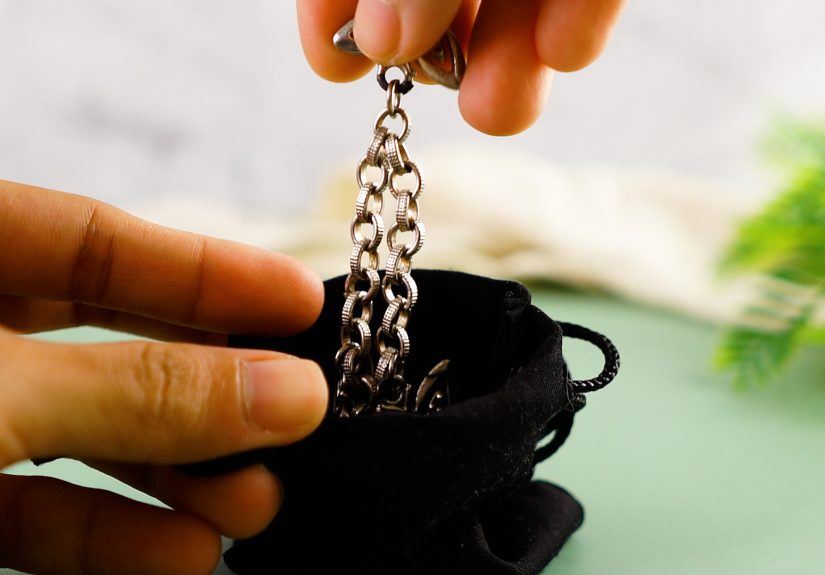
- Use soft pouches, anti-tarnish bags, or airtight containers.
- Keep pieces separated so they do not scratch each other.
- Put on silver after lotion, perfume, hairspray, and sunscreen.
- Do not leave silver jewelry in the bathroom where humidity hangs around like an uninvited guest.
- Wipe down frequently worn pieces with a soft cloth after wearing them.
- Wear your silver jewelry regularly. Oddly enough, frequent wear can help reduce noticeable tarnish buildup.
When to Take Silver Jewelry to a Professional
Home cleaning is great for maintenance, but some pieces should skip the DIY spa day. Bring silver jewelry to a jeweler if it is antique, highly valuable, heavily tarnished in intricate settings, set with delicate stones, or showing loose prongs, broken clasps, or peeling plating. Professional cleaning also makes sense if the piece still looks dull after careful home cleaning, since it may need repair, replating, or a deeper polish.
Final Thoughts
The best way to clean silver jewelry is not to chase the most dramatic hack. It is to choose the gentlest method that will actually solve the problem. For everyday maintenance, mild dish soap and warm water are usually enough. For visible tarnish, a polishing cloth or jewelry-specific silver cleaner is the smart next step. And for plain sterling silver that has gone fully gloomy, a baking soda and foil bath can be a satisfying rescue.
The real win, though, is knowing when to stop. Silver jewelry lasts longer when you clean it with patience instead of aggression. Treat it like jewelry, not like a burnt casserole dish, and it will keep its shine for years.
Real-Life Experiences With Cleaning Silver Jewelry
In real life, cleaning silver jewelry is rarely one tidy before-and-after moment. It is usually a series of tiny lessons learned while standing over a kitchen counter, wondering whether a necklace is sterling silver or just pretending very confidently. One of the most common experiences people have is pulling out a favorite silver chain after months of not wearing it and finding that it has gone from bright and reflective to oddly gray, almost like it is quietly offended. In that situation, the mild soap-and-water method is often enough to remove skin oils and residue, but not enough to erase deeper tarnish. That is usually the moment when people realize silver does not just need cleaning; it needs the right kind of cleaning.
Another familiar experience involves inherited jewelry. A small silver ring from a parent or grandparent often looks darker in the grooves, and many people assume the piece is dirty from age. Sometimes it is, but sometimes that darker finish is intentional oxidation that gives the design depth. People learn this the stressful way after over-polishing a ring and realizing they accidentally removed the contrast that made it beautiful in the first place. It is one of the best reminders to slow down, inspect the piece carefully, and never treat every dark spot like a villain.
Then there is the silver-plated lesson, which tends to be unforgettable. Someone cleans a plated bracelet the same way they cleaned a sterling ring and suddenly notices the finish looks patchy or thin. That experience teaches a very practical truth: silver-plated jewelry is not fragile in a dramatic, violin-music kind of way, but it does require a lighter touch. A damp cloth, a soft buff, and a bit of restraint often do more good than a long soak or aggressive rubbing.
People also discover that chains are sneaky. Rings and earrings are easy to inspect, but silver chains hide buildup in links and around clasps. A necklace may look tarnished when the real problem is body oil, lotion, or residue from hairspray and perfume. Once that grime comes off with a soft brush and mild soap, the chain often looks much better before any tarnish treatment even begins. That small result is encouraging because it reminds you that not every dull piece needs a full chemistry set.
One of the most satisfying experiences, though, is using a polishing cloth on a piece you wear all the time. It is quick, low-risk, and oddly relaxing. You can literally see the shine come back with each pass, which makes it feel less like housework and more like returning a small treasure to its proper form. It also turns many people into better jewelry owners. Once they see how much easier routine touch-ups are than heavy-duty cleaning, they start storing silver in pouches, keeping it out of steamy bathrooms, and putting it on after perfume instead of before.
In the end, the experience of cleaning silver jewelry tends to teach the same lesson over and over: the best results come from patience, soft materials, and knowing what you are handling. Most silver does not need force. It needs attention. And honestly, that is probably true of a lot of things in life, but silver jewelry gives you a much shinier reward for learning it.