Table of Contents >> Show >> Hide
- How This List Was Chosen
- 20 Best Sci-Fi Books of All Time
- 1. Dune by Frank Herbert
- 2. The Left Hand of Darkness by Ursula K. Le Guin
- 3. Foundation by Isaac Asimov
- 4. Neuromancer by William Gibson
- 5. Frankenstein by Mary Shelley
- 6. 1984 by George Orwell
- 7. Fahrenheit 451 by Ray Bradbury
- 8. The Hitchhiker’s Guide to the Galaxy by Douglas Adams
- 9. Kindred by Octavia E. Butler
- 10. The Three-Body Problem by Cixin Liu
- 11. Hyperion by Dan Simmons
- 12. Snow Crash by Neal Stephenson
- 13. Brave New World by Aldous Huxley
- 14. The Martian by Andy Weir
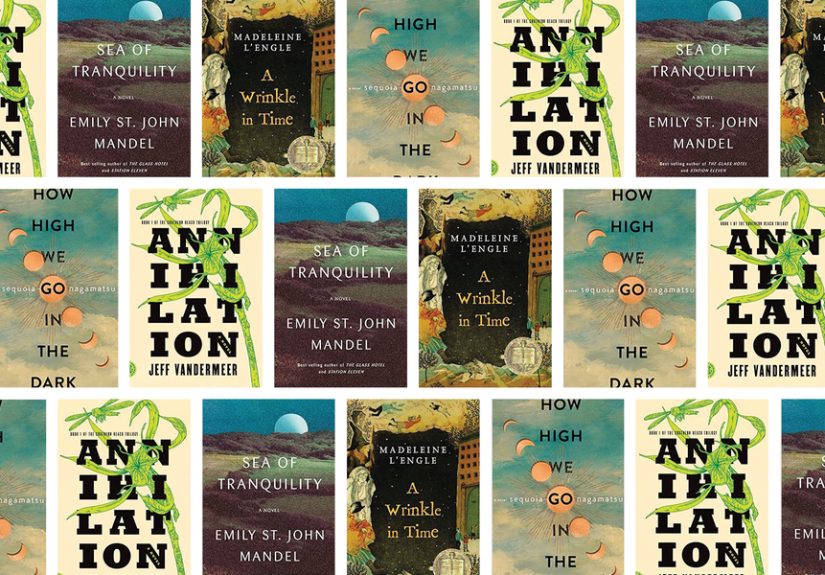
- 15. A Wrinkle in Time by Madeleine L’Engle
- 16. The Dispossessed by Ursula K. Le Guin
- 17. The Fifth Season by N. K. Jemisin
- 18. The Lord of the Rings by J. R. R. Tolkien
- 19. The Handmaid’s Tale by Margaret Atwood
- 20. Project Hail Mary by Andy Weir
- Why These Science Fiction and Fantasy Books Still Matter
- How to Choose the Right Sci-Fi or Fantasy Book for You
- Personal Reading Experiences: What It Feels Like to Explore the Best Sci-Fi Books
- Conclusion
Science fiction and fantasy are the two genres most likely to look you straight in the eye and say, “What if everything you know is only the loading screen?” The best sci-fi books of all time do not simply hand readers ray guns, starships, dragons, robots, and suspiciously dramatic prophecies. They ask big, beautifully inconvenient questions about power, identity, technology, survival, freedom, memory, and what it means to be human when humanity is busy making a mess of the furniture.
This guide gathers 20 essential science fiction and fantasy reads that have shaped the genre, influenced pop culture, earned major awards, sparked debates, inspired adaptations, and kept readers awake far too late on school nights, work nights, and “I swear I’m only reading one more chapter” nights. Some are hard sci-fi classics. Some are dystopian warnings. Some are fantasy landmarks. A few sit gloriously between categories, refusing to stay in one tidy box like a teleporting cat.
Whether you are building your first sci-fi reading list or upgrading your personal library into a miniature spaceship, these books are excellent places to start.
How This List Was Chosen
The following picks were selected by balancing literary influence, reader popularity, award recognition, cultural impact, originality, and long-term staying power. In other words, this is not just a “books with cool covers” list, although several of them absolutely do have cool covers. The goal is to highlight science fiction and fantasy books that continue to matter because they changed the conversation, expanded the imagination, or made readers whisper, “Wait, books can do that?”
20 Best Sci-Fi Books of All Time
1. Dune by Frank Herbert
Best for: readers who want politics, prophecy, ecology, religion, giant sandworms, and family drama with galactic consequences.
Dune is often treated as the Mount Everest of science fiction: intimidating from a distance, legendary up close, and full of sand in places you did not expect. Set on the desert planet Arrakis, the novel follows Paul Atreides as his noble family becomes entangled in a brutal struggle over spice, the most valuable substance in the universe. What makes Dune timeless is not just its world-building, but its understanding that resources, belief systems, and political power are never separate for long.
2. The Left Hand of Darkness by Ursula K. Le Guin
Best for: readers who love thoughtful, character-driven science fiction about society and identity.
Ursula K. Le Guin’s The Left Hand of Darkness is a masterclass in using an alien world to examine human assumptions. On the icy planet Gethen, gender works differently than it does on Earth, forcing the visiting envoy Genly Ai to rethink culture, trust, diplomacy, and belonging. Le Guin does not shout her ideas. She lets them quietly rearrange the furniture in your brain.
3. Foundation by Isaac Asimov
Best for: readers fascinated by empires, mathematics, history, and long games.
Foundation imagines a future Galactic Empire in decline and a group of thinkers trying to shorten the coming dark age through “psychohistory,” a fictional science that predicts the behavior of large populations. It is less about laser battles and more about ideas moving across centuries. If Dune is political desert opera, Foundation is civilization-level chess.
4. Neuromancer by William Gibson
Best for: cyberpunk fans, tech skeptics, and anyone who likes their future neon-lit and morally complicated.
Before the internet became a daily habit and the word “cyberspace” entered everyday conversation, Neuromancer gave readers a gritty vision of hackers, artificial intelligence, corporate power, and digital realities. Gibson’s style is sharp, smoky, and cool enough to wear sunglasses indoors. The book helped define cyberpunk and remains essential for understanding modern sci-fi’s relationship with technology.
5. Frankenstein by Mary Shelley
Best for: readers who want the roots of science fiction with a gothic heartbeat.
Published in the early 19th century, Frankenstein still feels startlingly modern. Victor Frankenstein creates life, then refuses responsibility for what he has made. That alone makes the novel a permanent resident in conversations about science, ethics, ambition, and parental neglect of the “I built a person and then panicked” variety. It is a gothic novel, a philosophical warning, and arguably one of the earliest great works of science fiction.
6. 1984 by George Orwell
Best for: readers drawn to dystopian fiction and political warnings.
1984 remains one of the most famous dystopian novels ever written because its central fears have never really packed up and moved away. Surveillance, propaganda, language control, and authoritarian power shape Winston Smith’s world. It is not a cheerful read, unless your idea of cheerful is a cold shower for the soul, but it is an essential one.
7. Fahrenheit 451 by Ray Bradbury
Best for: book lovers who enjoy irony so hot it needs oven mitts.
Ray Bradbury’s Fahrenheit 451 imagines a society where books are burned and distraction is a civic lifestyle. Fireman Guy Montag starts by destroying literature and slowly wakes up to what has been lost. The novel’s lasting power comes from how clearly it understands that censorship does not always arrive wearing a villain cape. Sometimes it arrives as convenience, noise, and the quiet decision to stop thinking deeply.
8. The Hitchhiker’s Guide to the Galaxy by Douglas Adams
Best for: readers who like absurd humor with their interstellar crisis.
Earth is demolished. Arthur Dent is confused. A towel becomes surprisingly important. Douglas Adams’ The Hitchhiker’s Guide to the Galaxy is one of the funniest science fiction books ever written, but it is not merely silly. Beneath the jokes is a sharp sense that the universe is huge, strange, bureaucratic, and not especially interested in your schedule. Bring curiosity. Also, yes, bring a towel.
9. Kindred by Octavia E. Butler
Best for: readers who want speculative fiction with emotional force and historical weight.
Kindred uses time travel not as a shiny gadget but as a brutal confrontation with American history. Dana, a Black woman in 1970s California, is repeatedly pulled back to the antebellum South, where survival requires impossible choices. Butler’s genius lies in making the speculative element feel urgent, intimate, and devastatingly real.
10. The Three-Body Problem by Cixin Liu
Best for: readers who enjoy big ideas, first contact, physics, and cosmic dread.
The Three-Body Problem begins with human history and expands toward one of the most ambitious alien-contact stories in modern science fiction. Cixin Liu blends scientific speculation, political trauma, virtual worlds, and existential risk into a novel that feels both intellectual and ominous. It is the kind of book that makes space seem less empty and much less relaxing.
11. Hyperion by Dan Simmons
Best for: readers who want literary structure, space opera, horror, and mystery in one package.
Hyperion follows pilgrims traveling to encounter the terrifying Shrike, with each character telling a story along the way. The structure nods to The Canterbury Tales, but the mood includes time tombs, interstellar politics, and enough weirdness to make your bookshelf glow faintly at night. It is ambitious, layered, and deeply rewarding for patient readers.
12. Snow Crash by Neal Stephenson
Best for: readers who like cyberpunk with satire, speed, and wild ideas.
Snow Crash gives us Hiro Protagonist, which is either the greatest character name ever or the result of a keyboard achieving consciousness. The novel combines virtual reality, corporate city-states, ancient language, hacking, and high-speed delivery work into a hyperactive cyberpunk ride. It is messy in the most entertaining way, like a futuristic pizza delivered by a philosopher with a sword.
13. Brave New World by Aldous Huxley
Best for: readers interested in dystopias built on comfort rather than fear.
Where 1984 imagines oppression through surveillance and terror, Brave New World imagines control through pleasure, conditioning, and consumer satisfaction. Huxley’s future is frightening because many people inside it seem perfectly happy not to ask hard questions. That makes the book feel less like a dusty warning and more like a mirror with excellent lighting.
14. The Martian by Andy Weir
Best for: readers who enjoy survival stories, science problem-solving, and smart jokes under pressure.
Mark Watney is stranded on Mars, which is bad. He is also funny, stubborn, and scientifically resourceful, which is good. The Martian turns botany, engineering, math, and duct-tape optimism into a page-turner. It proves that hard science fiction can be accessible, suspenseful, and weirdly inspiring when the potatoes are treated with proper dramatic respect.
15. A Wrinkle in Time by Madeleine L’Engle
Best for: younger readers, nostalgic adults, and anyone who loves cosmic adventure with emotional warmth.
A Wrinkle in Time blends science fiction, fantasy, family love, and moral courage into a story that has introduced generations of readers to speculative adventure. Meg Murry’s journey across space and time is imaginative, strange, and tender. It reminds us that intelligence matters, but love and bravery are also technologies of a sort.
16. The Dispossessed by Ursula K. Le Guin
Best for: readers who enjoy political philosophy disguised as an excellent novel.
In The Dispossessed, physicist Shevek moves between two societies: one anarchist and resource-poor, the other wealthy and hierarchical. Le Guin avoids easy answers. Instead, she explores how ideals become institutions, how institutions become cages, and how freedom can require both imagination and discomfort. It is one of science fiction’s finest novels about society itself.
17. The Fifth Season by N. K. Jemisin
Best for: fantasy readers who want seismic world-building and emotional intensity.
The Fifth Season opens with the end of the world, which is a bold way to skip small talk. Jemisin’s novel takes place on a geologically unstable planet where people with earth-shaping powers are feared, controlled, and exploited. It is fantasy with the weight of science fiction, examining oppression, survival, motherhood, disaster, and power with extraordinary force.
18. The Lord of the Rings by J. R. R. Tolkien
Best for: fantasy readers who want the grand old mountain that later fantasy keeps climbing.
No list of top science fiction and fantasy reads feels complete without The Lord of the Rings. Tolkien’s epic is not sci-fi, but its influence on fantasy is enormous. Middle-earth feels ancient, linguistic, mythic, and lived-in. The story of Frodo, Sam, Aragorn, Gandalf, and the One Ring continues to define what readers expect from high fantasy: fellowship, sacrifice, maps, songs, and at least one wizard who knows when to make an entrance.
19. The Handmaid’s Tale by Margaret Atwood
Best for: readers who prefer speculative fiction grounded in social and political reality.
The Handmaid’s Tale imagines a theocratic regime built on control, fear, and the systematic removal of rights. Atwood’s power lies in her restraint. The world of Gilead feels horrifying because it is assembled from recognizable pieces of history and human behavior. It is dystopian fiction that understands how quickly ordinary life can become unrecognizable.
20. Project Hail Mary by Andy Weir
Best for: readers who want modern sci-fi with heart, humor, and high-stakes science.
Project Hail Mary begins with a man waking up alone on a spaceship with missing memories and an urgent mission to save Earth. The setup sounds familiar, but Weir turns it into one of the most enjoyable modern science fiction adventures through clever puzzles, emotional surprises, and a memorable first-contact relationship. It is brainy, funny, and surprisingly wholesome for a book about potential extinction. Quite an achievement.
Why These Science Fiction and Fantasy Books Still Matter
The best sci-fi books of all time remain relevant because they do more than predict gadgets. In fact, predictions are often the least important part. Great speculative fiction builds a pressure chamber for ideas. It asks what happens when technology outruns ethics, when empires decay, when language is controlled, when ecology becomes destiny, when identity is redefined, or when humanity discovers it is not alone and immediately behaves awkwardly.
Fantasy performs a related magic trick. It uses invented worlds, ancient evils, impossible powers, and mythic quests to explore courage, temptation, grief, loyalty, and moral choice. A dragon may not appear in your kitchen tomorrow, which is probably good for your security deposit, but the emotional truths of fantasy are often painfully real.
Together, science fiction and fantasy train readers to think beyond the default settings. They make us better at asking, “Who benefits from this system?” and “What would happen if we changed the rules?” That is why these books stay alive across decades. They are not escape routes from reality. They are strange, glittering side doors back into it.
How to Choose the Right Sci-Fi or Fantasy Book for You
If You Want Big World-Building
Start with Dune, The Lord of the Rings, The Fifth Season, or Hyperion. These books reward readers who enjoy maps, history, politics, invented cultures, and the satisfying feeling that the author has built an entire world and remembered where the plumbing goes.
If You Want Accessible Page-Turners
Pick The Martian, Project Hail Mary, The Hitchhiker’s Guide to the Galaxy, or A Wrinkle in Time. These books are friendly entry points because they move quickly, offer clear emotional stakes, and do not require you to memorize twelve dynasties before breakfast.
If You Want Serious Social Questions
Choose Kindred, The Left Hand of Darkness, The Dispossessed, 1984, Brave New World, or The Handmaid’s Tale. These novels are ideal for readers who like speculative fiction with moral pressure, social critique, and ideas that linger after the last page.
If You Want Technology and the Future
Read Neuromancer, Snow Crash, Foundation, or The Three-Body Problem. These books explore artificial intelligence, virtual worlds, historical prediction, alien civilizations, and the uneasy relationship between human ambition and technological power.
Personal Reading Experiences: What It Feels Like to Explore the Best Sci-Fi Books
Reading the best science fiction and fantasy books is less like walking down a neat library aisle and more like opening a suspiciously humming door in the basement. You are never entirely sure what is on the other side. Maybe it is a desert planet full of political intrigue. Maybe it is a future government that has outlawed private thought. Maybe it is a cheerful spaceship computer with questionable priorities. Either way, your regular world feels slightly different when you come back.
One of the best experiences with classic sci-fi is discovering how modern many older books still feel. Frankenstein may come from another century, but its questions about scientific responsibility are alive and well in discussions about artificial intelligence, biotechnology, and climate engineering. Fahrenheit 451 may not describe our exact media environment, yet its worries about distraction and anti-intellectualism remain uncomfortably familiar. Great sci-fi has a way of arriving early and waiting patiently for reality to catch up.
Another joy is realizing that “science fiction” is not one flavor. It is a whole buffet, and yes, some dishes are glowing. The Martian offers the pleasure of problem-solving, where every crisis becomes a puzzle and every solution feels earned. Neuromancer offers atmosphere, style, and a future that feels dangerous around the edges. The Left Hand of Darkness moves more quietly, asking readers to sit with difference instead of rushing toward spectacle. These books prove that sci-fi can be funny, philosophical, terrifying, romantic, political, technical, poetic, or all of the above before lunch.
Fantasy adds its own kind of reading experience. The Lord of the Rings feels like entering a myth that existed before you opened the book. The Fifth Season feels urgent and volcanic, not only because of its unstable world but because of the emotional pressure beneath every scene. Fantasy can comfort, but it can also challenge. It can give readers heroes, then ask what heroism costs. It can give readers magic, then ask who gets punished for having it.
The most rewarding way to approach this reading list is not to treat it like homework. Nobody hands out a medal because you finished Dune while maintaining perfect posture and whispering “literary significance” every ten pages. Read according to mood. Want to laugh? Start with Douglas Adams. Want your brain stretched? Try Le Guin or Cixin Liu. Want adventure with science jokes? Andy Weir is waiting with duct tape and disaster. Want to feel small beneath the stars in a good way? Pick almost any book here and let it launch.
The true experience of reading the best sci-fi and fantasy books is the gradual expansion of your imagination. After enough of these stories, you start noticing systems, possibilities, warnings, and wonders everywhere. A phone becomes a tiny cyberpunk artifact. A government slogan sounds a little more Orwellian than it should. A desert looks like Arrakis if the sun is dramatic enough. That is the gift of speculative fiction: it does not let the world remain ordinary for long.
Conclusion
The best sci-fi books of all time are not only about spaceships, robots, dystopias, alien worlds, and magical lands. They are about us: our fears, dreams, mistakes, inventions, myths, and stubborn hope that the future might still be rewritten. From Dune and Foundation to Kindred, The Fifth Season, and Project Hail Mary, these science fiction and fantasy reads offer more than entertainment. They sharpen the imagination and make reality feel larger.
If you are new to the genre, start with the book that sounds most irresistible. If you are already a devoted fan, use this list to revisit a classic or fill a gap on your shelf. Either way, prepare for strange planets, dangerous ideas, unforgettable characters, and the occasional reminder that humanity should probably read the instruction manual before inventing things.