Table of Contents >> Show >> Hide
- What “Rosacea-Friendly” Skincare Usually Means
- A Simple Dermatologist-Style Routine Blueprint
- 15 Best Rosacea Skincare Products Dermatologists Commonly Recommend
- 1) Vanicream Gentle Facial Cleanser
- 2) CeraVe Hydrating Facial Cleanser
- 3) La Roche-Posay Toleriane Hydrating Gentle Cleanser
- 4) Bioderma Sensibio H2O Micellar Water
- 5) La Roche-Posay Toleriane Double Repair Face Moisturizer
- 6) CeraVe PM Facial Moisturizing Lotion
- 7) Vanicream Moisturizing Cream
- 8) Aveeno Calm + Restore Oat Gel Moisturizer
- 9) Clinique Redness Solutions Daily Relief Cream
- 10) Aveeno Calm + Restore Triple Oat Serum
- 11) SkinCeuticals Redness Neutralizer
- 12) Paula’s Choice 10% Azelaic Acid Booster
- 13) The Ordinary Azelaic Acid Suspension 10%
- 14) EltaMD UV Clear Broad-Spectrum SPF 46 (tinted or untinted)
- 15) La Roche-Posay Anthelios Mineral Tinted Sunscreen SPF 50
- How to Patch-Test Without Turning Your Face Into a Science Fair
- Common Rosacea Skincare Mistakes (A.K.A. Things Your Skin Would Like You to Stop Doing)
- Conclusion: Calm Skin Is a Strategy, Not a Miracle
- Real-World Experiences: What People Learn After Trying Rosacea-Friendly Products (Extra )
Rosacea is that “why is my face suddenly auditioning for a tomato commercial?” skin conditionexcept it’s not funny
when it’s your cheeks doing the comedy. The good news: while there’s no magical “delete rosacea” button,
dermatologists consistently say the right skincare routine can make your skin feel calmer, less reactive, and
generally more like itself.
This guide breaks down what board-certified dermatologists tend to recommend for rosacea-prone skinand why.
You’ll get 15 solid product picks (cleanser, moisturizer, sunscreen, and targeted “calm it down” helpers),
plus a simple routine blueprint and real-world “what people actually learn” experiences at the end.
What “Rosacea-Friendly” Skincare Usually Means
Dermatologists generally keep rosacea skincare boring on purpose. Rosacea loves drama; your routine shouldn’t.
Look for products that are:
- Fragrance-free (including essential oils)
- Gentle and non-stripping (no squeaky-clean feeling)
- Barrier-supportive (ceramides, glycerin, hyaluronic acid, colloidal oatmeal)
- Minimalist (fewer “extras” = fewer chances to irritate)
- Sun-protective (daily SPF is non-negotiable for many people with rosacea)
Also: technique matters. Using lukewarm water, fingertips (not washcloths), and patting dry can reduce irritation.
Think “handle skin like a ripe peach,” not “scrub a cast-iron pan.”
A Simple Dermatologist-Style Routine Blueprint
Morning (AM)
- Cleanse (or rinse with lukewarm water if you’re very dry/sensitive)
- Moisturize (barrier first, always)
- Sunscreen SPF 30+ (ideally gentle mineral or tinted mineral if you’re reactive)
Night (PM)
- Cleanse (remove sunscreen and makeup gently)
- Treat (optional) (start low and slowone active at a time)
- Moisturize (a slightly richer layer can help at night)
If you have persistent flushing, acne-like bumps, stinging, or eye irritation, it’s worth checking in with a
dermatologist. Prescription options can be extremely helpful, and the best OTC routine is the one that
supportsrather than fightsyour treatment plan.
15 Best Rosacea Skincare Products Dermatologists Commonly Recommend
Below, the products are grouped by role in a routine. For each pick, you’ll see what it does, who it tends to
work well for, and how to use it without accidentally starting a “Face vs. Product” feud.
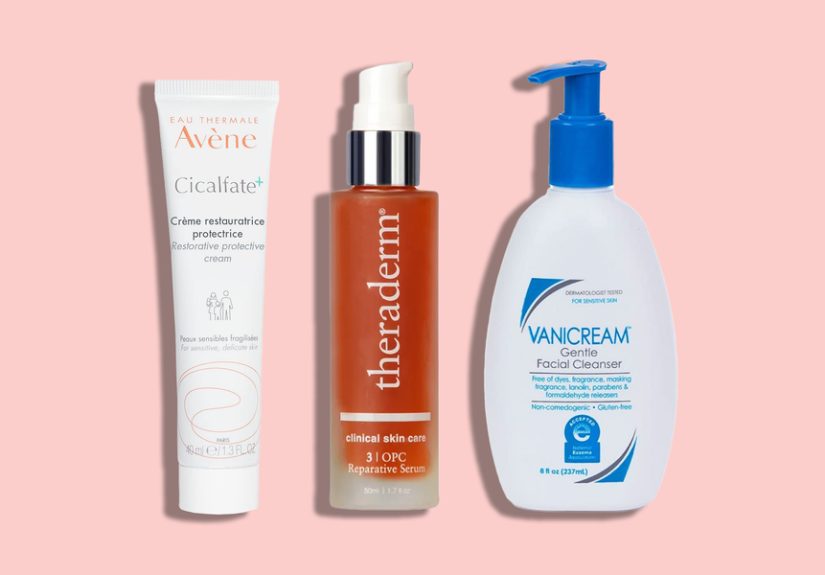
1) Vanicream Gentle Facial Cleanser
Why it’s rosacea-friendly: A classic “nothing fancy” cleanser that cleans without harsh surfactants,
heavy fragrance, or a parade of botanicals.
Best for: People who react to “sensitive skin” products that still somehow contain 47 surprise ingredients.
How to use: Massage lightly for 20–30 seconds, rinse with lukewarm water, pat dry.
2) CeraVe Hydrating Facial Cleanser
Why it’s rosacea-friendly: Designed to cleanse while supporting the barrier with ceramides and humectants.
It’s often recommended for dry or easily irritated skin.
Best for: Dry, tight, or “my skin feels smaller after washing” faces.
Pro tip: If you wear water-resistant sunscreen, you may need a gentle double cleanse (micellar water first,
then this).
3) La Roche-Posay Toleriane Hydrating Gentle Cleanser
Why it’s rosacea-friendly: A hydrating, sensitive-skin cleanser that tends to be well tolerated by people
who flush or sting easily.
Best for: Normal-to-dry skin that wants “clean” without the squeak.
Watch out: If you’re extremely reactive, introduce it when your skin is calm (not mid-flare).
4) Bioderma Sensibio H2O Micellar Water
Why it’s rosacea-friendly: Helps remove makeup and sunscreen with minimal rubbingkey when friction triggers redness.
Best for: Makeup wearers, sunscreen re-appliers, and anyone who hates scrubbing.
How to use: Soak a cotton pad, press and hold for a few seconds, then wipe gently; rinse if your skin prefers it.
5) La Roche-Posay Toleriane Double Repair Face Moisturizer
Why it’s rosacea-friendly: Barrier-focused hydration (ceramides + humectants) with a lightweight feel.
Many dermatologists like moisturizers that reduce dryness and help skin tolerate treatments better.
Best for: Combination skin or anyone who wants a daily moisturizer that doesn’t feel like frosting.
How to use: Apply to slightly damp skin after cleansing.
6) CeraVe PM Facial Moisturizing Lotion
Why it’s rosacea-friendly: A gentle, barrier-supportive moisturizer that’s often suggested for sensitive skin routines.
Best for: People who want a no-nonsense night moisturizer (or a light daytime layer under sunscreen).
Pro tip: If your skin flushes with certain actives, this can be your “buffer layer.”
7) Vanicream Moisturizing Cream
Why it’s rosacea-friendly: Thick, protective, and straightforwardpopular for compromised barriers and winter flares.
Best for: Very dry skin, cold-weather redness, or “my face hates indoor heating” season.
How to use: Nighttime is ideal; in the morning, use a smaller amount if you’re layering sunscreen.
8) Aveeno Calm + Restore Oat Gel Moisturizer
Why it’s rosacea-friendly: Colloidal oatmeal is a dermatologist favorite for soothing irritation and supporting comfort in sensitive skin.
Best for: Skin that stings, feels hot, or gets red from “normal” moisturizers.
Texture note: Gel-cream that feels cooling without being greasy.
9) Clinique Redness Solutions Daily Relief Cream
Why it’s rosacea-friendly: Formulated for visible redness and sensitivity, often mentioned in rosacea-focused roundups and derm discussions.
Best for: People who want a richer “comfort cream” when redness is the main complaint.
How to use: Apply after cleansing; keep the rest of your routine minimal to reduce irritation variables.
10) Aveeno Calm + Restore Triple Oat Serum
Why it’s rosacea-friendly: A soothing serum option that fits the “calm + hydrate + protect” strategy many dermatologists suggest.
Best for: Anyone who wants an extra calming step without strong acids or fragrance.
How to use: 1–2 pumps after cleansing, before moisturizer.
11) SkinCeuticals Redness Neutralizer
Why it’s rosacea-friendly: Often cited by dermatologists as a calming moisturizer-type product for reactive, redness-prone skin.
It’s a splurge, but some people like it when they want hydration plus a “calm-down” vibe.
Best for: Persistent visible redness and sensitivityespecially if you’ve already mastered a simple routine and want a targeted upgrade.
Budget note: If it’s out of range, you can still build an excellent routine with drugstore basics.
12) Paula’s Choice 10% Azelaic Acid Booster
Why it’s rosacea-friendly: Azelaic acid is one of the most commonly recommended ingredients for rosacea-prone skin because it can help with bumps,
uneven tone, and visible rednesswithout the punch-in-the-face intensity of many exfoliating acids.
Best for: Redness + acne-like bumps (papules/pustules) or texture concerns.
How to use: Start 2–3 nights a week. Mix a small amount into your moisturizer if you’re sensitive.
Watch out: Mild tingling can happen at first; stop if you get burning or worsening redness.
13) The Ordinary Azelaic Acid Suspension 10%
Why it’s rosacea-friendly: A widely used, budget-friendly azelaic acid option that many dermatology-focused guides mention for redness and texture.
Best for: People who want azelaic acid on a budget (and don’t mind a slightly silicone-y texture).
How to use: Pea-size amount at night, 2–3 times weekly to start; moisturize after if needed.
14) EltaMD UV Clear Broad-Spectrum SPF 46 (tinted or untinted)
Why it’s rosacea-friendly: Frequently recommended by dermatologists for redness-prone and acne-prone skin.
Many people like it because it’s lightweight and layers well.
Best for: Rosacea + breakouts, or anyone who hates the feel of heavy sunscreen.
Use it right: Apply generously (most people under-apply). Reapply every 2 hours outdoors.
Note: If chemical filters typically sting your skin, patch test first or consider a fully mineral option below.
15) La Roche-Posay Anthelios Mineral Tinted Sunscreen SPF 50
Why it’s rosacea-friendly: Mineral, tinted sunscreens are often suggested for rosacea because they can be gentler and also help cancel out redness.
Tints can reduce the dreaded white cast, too.
Best for: Reactive skin, redness camouflage, and anyone who wants SPF + “my skin looks more even” in one step.
How to use: Apply as the final step in your morning routine; give it a minute to set before makeup.
How to Patch-Test Without Turning Your Face Into a Science Fair
- Pick one product (not five) to introduce.
- Apply a small amount behind the ear or along the jawline.
- Use it once daily for 3–7 days (or every other day if you’re very sensitive).
- If burning, swelling, or worsening redness happens, stop and reset to basics.
Common Rosacea Skincare Mistakes (A.K.A. Things Your Skin Would Like You to Stop Doing)
- Scrubbing or exfoliating aggressively (rosacea often interprets this as a personal attack).
- Hot water (warm is fine; hot can trigger flushing).
- Too many actives at once (retinoids + acids + vitamin C + “mystery peel pads” = chaos).
- Skipping sunscreen (UV exposure is a common flare trigger).
- Switching products constantly (stability is underrated).
Conclusion: Calm Skin Is a Strategy, Not a Miracle
The best rosacea skincare routine is usually simple: a gentle cleanser, a barrier-supportive moisturizer,
and a sunscreen you’ll actually wear. Thenonly if your skin is stableadd a targeted ingredient like azelaic acid.
If you’re stuck in a cycle of flares, stinging, or acne-like bumps, a dermatologist can help tailor prescription
treatment and confirm you’re truly dealing with rosacea (and not something that looks similar).
Start boring. Stay consistent. Your skin will thank youquietly, by not freaking out.
Real-World Experiences: What People Learn After Trying Rosacea-Friendly Products (Extra )
If you ask a group of people with rosacea what finally helped, you’ll hear a surprisingly consistent theme:
the win often isn’t a single “holy grail” productit’s the moment they stopped treating their face like a battlefield.
Many describe a turning point when they cut their routine down to three basics (gentle cleanse, moisturize, SPF),
then stuck with it long enough to see patterns. The skin didn’t transform overnight, but it stopped feeling “on edge.”
One common experience: the “sting test.” People will say, “This product is for sensitive skin,” then their face
responds with immediate burning. Over time, many learn to treat stinging as useful information, not something to push through.
They’ll reset to a bland moisturizer (think barrier cream), keep water lukewarm, and avoid actives for a week or two.
When they reintroduce products slowly, they often discover it wasn’t skincare in general that was the problemit was
fragrance, strong acids, alcohol-heavy formulas, or too many steps at once.
Sunscreen stories are practically a rosacea subgenre. A lot of people report that “some sunscreens make me redder,”
especially if the formula is heavy on chemical UV filters or contains drying alcohols. Many find mineral or tinted mineral
formulas feel calmer and also make redness less noticeable (a “two birds, one tube” situation). The key lesson:
the best sunscreen isn’t the fanciest oneit’s the one your skin tolerates and you’ll apply generously, every day.
Then there’s the “I bought 12 products and now I’m worse” phaseshockingly common. People often start with the best intentions
(and a cart full of five-star reviews), but rosacea skin tends to prefer routine stability over constant experimentation.
A strategy that shows up again and again: introduce one new product every 10–14 days. That spacing makes it much easier to
identify what helps, what’s neutral, and what’s a troublemaker. It also keeps your skin from being hit with multiple new
ingredients at once, which can trigger a flare even if the products are “good.”
Another real-life pattern involves seasons. Many people say their rosacea behaves differently in summer versus winter.
In winter (or in dry, air-conditioned environments), the skin barrier can feel fragiletight, flaky, and reactive.
People often do better with a richer, fragrance-free cream at night and a hydrating cleanser that doesn’t strip.
In summer, sweat and heat may trigger flushing, so they’ll prefer lighter moisturizers and focus on gentle cleansing
after outdoor time. The takeaway: it’s normal to “seasonally edit” your routine without completely reinventing it.
Finally, people frequently mention the emotional side: feeling self-conscious about redness, avoiding photos, or worrying
a flare will show up at the worst time. Interestingly, having a simple “flare plan” can reduce stress. Many keep a short
list of known-safe products and return to them when skin gets reactive. That sense of control matters.
Rosacea management isn’t about perfectionit’s about learning your skin’s patterns and giving it the calm, consistent
support it responds to best.