Table of Contents >> Show >> Hide
- Why drought-tolerant landscaping works so well
- 1. Shrink the lawn and keep turf only where it earns its keep
- 2. Group plants by water needs instead of making them compete
- 3. Choose native and climate-adapted plants, not just “tough-looking” ones
- 4. Build the landscape around trees and shrubs first
- 5. Add mulch like you mean it
- 6. Switch to drip irrigation or micro-irrigation
- 7. Water deeply and less often
- 8. Use drought-tolerant groundcovers to fill space beautifully
- 9. Create a gravel garden or dry border for high-impact, low-water color
- 10. Harvest rainwater and direct runoff where it can help
- 11. Use rain gardens and dry creek beds for beauty plus function
- 12. Add shade, wind protection, and hardscape that reduces stress on plants
- A simple formula for designing a drought-tolerant garden
- What the experience is really like once you switch to a low-water garden
- Final thoughts
- SEO Tags
Note: This article is based on current U.S. EPA WaterSense guidance and university extension recommendations on water-wise landscaping, native and adapted plants, hydrozoning, mulch, drip irrigation, lawn reduction, rainwater harvesting, and rain gardens.
If your dream yard looks gorgeous in spring but turns into a high-maintenance water bill by July, it may be time for a smarter plan. Drought-tolerant landscaping is not about giving up beauty and settling for a yard that looks like a gravel parking lot with one brave cactus. A good low-water garden can be colorful, textured, pollinator-friendly, and surprisingly cozy. It just asks you to design with your climate instead of trying to out-argue it with a hose.
The best drought-tolerant gardens all share a simple idea: use water where it matters most, waste less where it does not, and let plants do what they were built to do. That usually means choosing climate-adapted plants, cutting back on thirsty turf, using mulch, watering deeply rather than constantly, and designing the yard in zones instead of treating every inch like it has the same needs.
Below are 12 drought-tolerant landscaping ideas that can help you create a garden that looks good, works hard, and does not behave like it needs a spa treatment every weekend.
Why drought-tolerant landscaping works so well
A water-wise landscape is not just a “plant choice” issue. It is a design issue. Many homeowners buy a few drought-tolerant plants, tuck them into a lawn-heavy yard, and wonder why the sprinkler system still sounds like it is clocking in for overtime. The real magic comes from combining the right plants with the right layout, irrigation method, soil care, and mulch strategy.
That is why the ideas below focus on the whole landscape, not just individual plants. Think of this as building a yard with better habits.
1. Shrink the lawn and keep turf only where it earns its keep
One of the fastest ways to cut outdoor water use is to stop growing lawn in places where nobody actually uses it. That narrow strip by the fence? The awkward patch near the mailbox? The square of grass your mower hates and your family ignores? Those are prime candidates for retirement.
Turf still has value when it supports recreation, kids, pets, or outdoor lounging. But drought-tolerant landscaping works best when lawn becomes a functional feature instead of the default setting. Use grass where you sit, play, or walk barefoot. Replace the rest with planting beds, mulch, groundcovers, gravel gardens, or permeable paths.
Practical example
A front yard can keep a small patch of turf near the entry for visual softness, while the side yards switch to low-water shrubs, ornamental grasses, and mulched planting beds. In some climates, turf alternatives such as buffalo grass or deep-rooted turf-type tall fescue may also be worth considering in the right spot.
2. Group plants by water needs instead of making them compete
This strategy is called hydrozoning, and it is one of the most useful drought-tolerant landscaping ideas out there. The concept is simple: plants with similar water needs should live together. That way, your irrigation matches the area instead of overwatering one plant to keep another alive.
For example, put your low-water perennials and shrubs in one zone, herbs and edibles in another, and any higher-moisture plants in a smaller, separate area. This makes watering more precise and saves a surprising amount of waste over the course of a season.
It also helps plants stay healthier. A drought-tolerant sage planted beside a thirsty hydrangea is basically in a bad roommate situation. Somebody always loses.
3. Choose native and climate-adapted plants, not just “tough-looking” ones
Not every silvery leaf or spiky shape is automatically the right choice for your yard. The best low-water plants are usually species that are native to your region or well adapted to your local climate, soil, and seasonal rainfall patterns. These plants are often better equipped to handle heat, drought, and local pests once they are established.
Depending on where you live, that might mean manzanita, ceanothus, and rockrose in parts of the West; baptisia, catmint, and switchgrass in many central and eastern regions; or rosemary, lavender, yarrow, salvia, and ornamental grasses in sunny, well-drained sites.
The key phrase here is once established. Even native plants need regular watering in the beginning. A drought-tolerant garden is not a no-effort garden in month one. It is a lower-effort garden in year two and beyond.
4. Build the landscape around trees and shrubs first
If you want a garden that still looks intentional in a dry season, start with woody plants. Trees and shrubs provide the bones of the landscape. They create structure, shade, screening, habitat, and visual stability even when flowers come and go.
That matters because many drought-tolerant landscapes look their best when the design leans into shape and texture rather than trying to recreate a thirsty cottage border that demands constant irrigation. Evergreen shrubs, small ornamental trees, and architectural plants can make the garden feel full without making your hose cry.
What this looks like in practice
Use a small drought-tolerant tree as a focal point, surround it with medium-height shrubs, and layer in perennials and groundcovers below. That kind of hierarchy creates depth and helps the yard look finished even with fewer plants overall.
5. Add mulch like you mean it
Mulch may not be glamorous, but it is one of the hardest-working elements in a drought-tolerant landscape. A good mulch layer helps soil hold moisture longer, reduces evaporation, moderates temperature swings, and keeps weeds from competing with your plants for water.
Organic mulches such as shredded bark, wood chips, or pine needles are often a strong choice around trees, shrubs, and perennial beds. Inorganic mulches like gravel can work beautifully with certain dry-garden styles, especially where plants prefer sharp drainage. Still, rock is not automatically better. In some hot sites, stone can reflect heat and stress nearby plants if used carelessly.
In other words, mulch is not just decoration. It is insurance.
6. Switch to drip irrigation or micro-irrigation
If your sprinklers are watering sidewalks, fences, and the lower third of your house, congratulations: your landscape has been very generous to non-plant surfaces. Drip irrigation and micro-irrigation systems deliver water more directly to root zones, where plants can actually use it.
That makes these systems especially helpful for planting beds, shrubs, perennials, and vegetable areas. They also reduce evaporation compared with broad overhead spray, especially when paired with mulch.
Even better, drip systems play nicely with hydrozones. You can give low-water beds less frequent irrigation and reserve more regular watering for new plantings or edibles.
Bonus tip
Water early in the morning when temperatures are lower and evaporation is reduced. Also check soil moisture before watering. Plants do not need a calendar as much as they need a gardener who pays attention.
7. Water deeply and less often
Frequent shallow watering encourages shallow roots. That means plants become more dependent on regular irrigation and less capable of riding out dry spells. Deep, less frequent watering encourages roots to move farther down into the soil profile, which improves drought resilience over time.
This idea works especially well for established shrubs and trees. Instead of a quick daily sprinkle, give the soil a more thorough soak, then allow the upper layers to dry somewhat before watering again. The exact schedule depends on soil type, sun exposure, plant type, and weather, but the principle remains the same: train roots to dig deeper.
Think of shallow watering as giving your garden snacks. Deep watering is a proper meal.
8. Use drought-tolerant groundcovers to fill space beautifully
Groundcovers are one of the smartest tools in low-water garden design because they cover bare soil, reduce weed pressure, and soften the look of a landscape without the thirst of a full lawn. They are especially useful on slopes, hellstrips, parking strips, and awkward corners where turf is more trouble than it is worth.
Good drought-tolerant groundcover options vary by region, but depending on your climate you might use creeping thyme, certain sedges, low-growing manzanita, hardy ice plant, trailing lantana, prostrate rosemary, or other locally adapted spreaders.
The best results come from choosing plants that suit the site. Hot west-facing exposure, dry shade, and windy slopes all behave differently. Groundcovers are not a one-size-fits-all fix, but in the right place they can do a remarkable amount of visual work with minimal irrigation.
9. Create a gravel garden or dry border for high-impact, low-water color
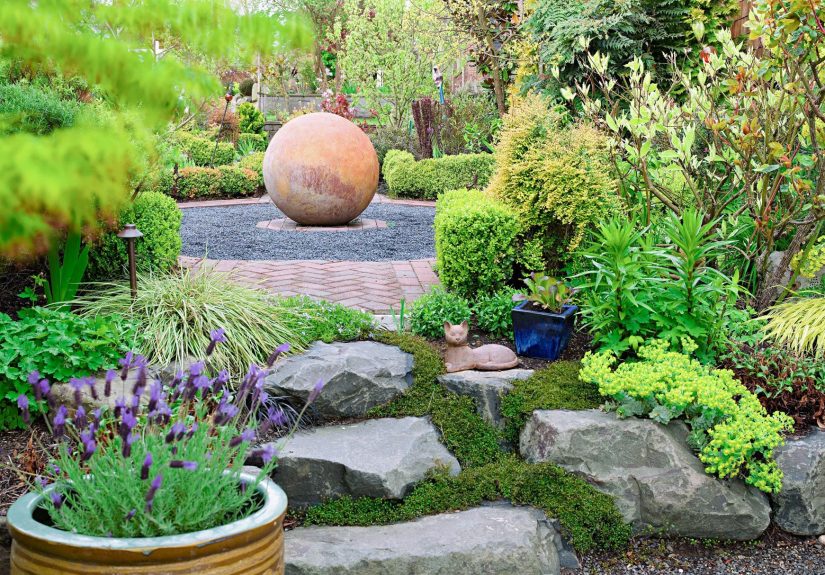
A gravel garden can be stunning when it is done well. This style usually combines drought-tolerant perennials, grasses, bulbs, and structural shrubs in a well-drained planting scheme that relies on generous spacing, strong forms, and a clean mineral mulch or gravel surface.
The effect is modern, airy, and much less needy than a flower border built around moisture-loving plants. It also tends to look good for more of the year because the design depends on foliage, seed heads, and silhouette as much as blooms.
Plants often used in this type of garden include salvia, yarrow, gaura, penstemon, catmint, lavender, agastache, and ornamental grasses, though exact choices should match your region and winter conditions.
10. Harvest rainwater and direct runoff where it can help
Drought-tolerant landscaping is not just about using less water. It is also about catching more of the water you already get. Rain barrels, cisterns, roof downspout redirection, and passive water harvesting features can all help move rainfall into useful parts of the landscape.
In practical terms, that might mean collecting roof runoff in a barrel for later hand watering, or shaping the yard so water flows into planted basins instead of racing down the driveway. In dry regions especially, land contouring and passive harvesting can make a noticeable difference.
This approach is especially smart because it makes the landscape more resilient without asking you to rely entirely on irrigation. You are basically teaching the yard to keep more of its own paycheck.
11. Use rain gardens and dry creek beds for beauty plus function
A rain garden may sound like the opposite of drought-tolerant design, but the two ideas actually work together well. Rain gardens are shallow planted areas designed to capture runoff from roofs, patios, or driveways and allow it to soak into the ground. When planted correctly, they can handle short wet periods and still include many tough, climate-adapted plants.
Dry creek beds can serve a similar purpose while adding a naturalistic design feature. They help guide water through the landscape, reduce erosion, and create visual rhythm with stone and planting. Used thoughtfully, these features make the yard look intentional during dry weather and useful during storms.
That is the sweet spot of smart landscaping: attractive when nothing is happening, helpful when everything is.
12. Add shade, wind protection, and hardscape that reduces stress on plants
Not all water savings come from irrigation equipment. Sometimes the smartest move is changing the microclimate. Trees, trellises, arbors, strategic fencing, and even well-placed boulders can reduce heat load, protect plants from drying winds, and help soil stay cooler longer.
Hardscape matters, too. Permeable paths, patios, and seating areas can reduce the amount of irrigated space while improving function. A bench under a small tree, a gravel sitting area edged with low-water plants, or a stepping-stone path through mulch can make the garden feel richer without adding water demand.
In other words, a great low-water landscape does not fill every square foot with plants. It balances plants with places to move, sit, and breathe.
A simple formula for designing a drought-tolerant garden
If all of this feels like a lot, here is a practical way to think about it: reduce thirsty space, improve planting efficiency, and make each gallon count. Start by identifying your highest-water areas. Then decide what truly needs regular irrigation and what can transition to a lower-water role. From there, build layers: structure plants first, filler plants second, and finishing touches last.
A successful drought-tolerant landscape usually looks more intentional than crowded. It trades constant mowing and panic watering for texture, contrast, and better long-term performance. The result is often calmer, cleaner, and easier to maintain than a conventional yard.
What the experience is really like once you switch to a low-water garden
There is a funny thing that happens when people convert part of their yard to drought-tolerant landscaping: at first, they worry the garden will look sparse. Then summer arrives, the water bill behaves itself for once, and suddenly “sparse” starts looking a lot like “peaceful.”
One of the most common experiences is realizing that a low-water garden changes your routine more than your style. You stop running outside every time the forecast says “hot.” You stop babysitting weak patches of lawn that never wanted to be there in the first place. You start noticing which plants hold their shape through heat waves, which ones bounce back after a dry spell, and which corners of the yard were always overplanted just because that seemed like the normal thing to do.
Another surprise is how much better the yard can age through the season. Traditional thirsty gardens often peak in late spring and then spend midsummer looking a little tired, a little dramatic, and a little too interested in your water meter. Drought-tolerant gardens are different. They often come into their own when temperatures rise. Foliage gets sharper. Gravel and mulch make the colors pop. Seed heads, grasses, and woody forms begin to carry the design. The whole space can feel more settled and less frantic.
Gardeners also tend to notice that they become more observant. When you water less often but more intentionally, you pay closer attention to the soil, the weather, and the behavior of each plant. You learn that one shrub needs a deep soak every few weeks while another is perfectly happy being ignored. You notice how much shade the young tree now casts in the late afternoon, and how that one patch near the fence dries out faster because of reflected heat. It is less about doing more and more about noticing better.
There is also a design lesson buried in the experience: restraint usually improves the garden. A low-water yard rarely rewards random plant shopping. It rewards repetition, thoughtful spacing, and choosing the right plant for the right location. Once people see how effective a limited palette can be, many never go back. Three great plants repeated with confidence often look better than fifteen unrelated plants having a loud disagreement.
And yes, there is still maintenance. A drought-tolerant landscape is not a magical “install it and disappear” situation. Plants need establishment water. Mulch needs refreshing. Drip lines need checking. Weeds, being eternal optimists, will still show up. But the work often feels more purposeful. Instead of constantly rescuing the landscape, you are fine-tuning it.
Perhaps the best part is the emotional shift. A good low-water garden feels like it belongs where it is. It stops fighting the climate and starts cooperating with it. That creates a different kind of beauty, one built on texture, timing, structure, and resilience rather than nonstop thirst. For many homeowners, that is the moment drought-tolerant landscaping stops sounding like a compromise and starts feeling like the smarter, more elegant way to garden.
Final thoughts
The best drought-tolerant landscaping ideas are not flashy tricks. They are sensible choices that add up: less unnecessary lawn, more climate-appropriate plants, smarter watering, better mulch, and a layout that respects how water actually moves through a yard. Put those together, and you get a garden that can handle dry conditions with more grace and far less drama.
If you are starting from scratch, begin small. Convert one lawn strip. Rebuild one planting bed. Install one drip zone. Add one rain barrel. Drought-tolerant landscaping does not have to happen all at once. But once you see how much beauty and sanity a lower-water garden can offer, you may wonder why you spent so many summers irrigating places nobody loved anyway.