Table of Contents >> Show >> Hide
- Why Do People Decorate Human Remains?
- The 10 Amazingly Decorated Human Remains
- 1) The Catacomb Saints (Europe’s Original “Bedazzled” Relics)
- 2) Saint Munditia (A Famous Jeweled Skeleton in a Glass Coffin)
- 3) The Capuchin Catacombs of Palermo (The Best-Dressed Residents of the Afterlife)
- 4) Sedlec Ossuary (The Bone Chandelier That Became World-Famous)
- 5) San Bernardino alle Ossa (A Rococo Bone Chapel in Milan)
- 6) Capela dos Ossos (Évora’s Chapel of Bones, Built to Make a Point)
- 7) Hallstatt’s Painted Skulls (A Family’s Love Letter in Paint)
- 8) The Jericho Plastered Skulls (One of Humanity’s Earliest Portrait Traditions)
- 9) Tibetan Kapala (Skull Cups Mounted in Precious Metals)
- 10) The Mixteca-Puebla Mosaic Skull (Turquoise, Shell, and Ancestor Veneration)
- Ethics and the Modern Lens
- Conclusion: What These Remains Reveal About Us
- Experiences Related to “10 Amazingly Decorated Human Remains” (Extra Section)
Decorated human remains sit at a strange crossroads: part art history, part archaeology, part religion, and part “wait… humans actually did that?” They can be tender acts of remembrance, bold statements of faith, or community solutions to a very practical problem (like: “Our cemetery is full, and the rent is not getting cheaper”).
Before we dive in, a quick note on tone: this topic is inherently heavy. So yes, we’ll keep it readable and occasionally wittybut never at the expense of the people behind the bones. The goal is to understand why humans decorate human remains, what it meant in its own time, and how we can talk about it respectfully today.
Along the way, you’ll see recurring themes: memento mori (remember you will die), ancestor veneration, relic culture, sacred protection, and the universal human need to turn loss into meaningsometimes with gold thread, sometimes with paint, and sometimes with an alarming quantity of femurs.
Why Do People Decorate Human Remains?
Across cultures and centuries, the reasons usually fall into a few big buckets:
- Honor and identity: preserving a person’s name, status, or story when a grave won’t last forever.
- Faith and devotion: relics, saints, blessings, and physical reminders of spiritual beliefs.
- Community memory: making the dead visibleliterallyso they remain part of the living world.
- Art and symbolism: transforming mortality into a visual language (flowers, laurel, gemstones, patterns).
- Practical space: ossuaries and charnel houses often started as storage that later became… decor with a message.
The 10 Amazingly Decorated Human Remains
1) The Catacomb Saints (Europe’s Original “Bedazzled” Relics)
If you’ve ever seen a jeweled skeleton displayed in a churchbones wrapped in ornate fabric, stitched with gold, glittering with gemsyou’ve likely encountered a catacomb saint. Many were removed from Roman catacombs and distributed across Europe during the Counter-Reformation era, presented as martyrs and devotional treasures.
What makes them “decorated” isn’t just the setting. The remains themselves were often dressed in elaborate garments and embellished with jewels and metallic thread, turning the skeleton into a high-impact spiritual symbol: a reminder of death, yes, but also of triumph, sainthood, and eternal life.
Why it mattered: These displays weren’t meant as horror. They were meant as reassurancefaith made visible, and mortality reframed as something meaningful rather than merely terrifying.
2) Saint Munditia (A Famous Jeweled Skeleton in a Glass Coffin)
One of the most talked-about examples of the catacomb saint tradition is Saint Munditia, displayed in Munich in a glass coffin. The presentation is striking: a carefully arranged skeleton, clothed and ornamented, created to be seen up close.
From an art-history angle, it’s fascinating: the decoration functions like a visual sermon. The body becomes a teaching toolan object that says, “Life is short, the soul is forever,” but with the theatrical flair of baroque devotion.
Why it’s memorable: It’s a perfect snapshot of how material culture (fabric, gems, craftsmanship) can turn human remains into an object of public reverence rather than private burial.
3) The Capuchin Catacombs of Palermo (The Best-Dressed Residents of the Afterlife)
The Capuchin Catacombs of Palermo contain thousands of preserved bodies arranged along corridorsmany displayed in clothing that reflects their roles and social identity. Think of it less as “decor” and more as an unusually literal form of memorial portraiture: garments and positioning communicate who someone was in life.
Some were dressed in uniforms or formalwear; others appear in attire that signals family status or profession. The clothing isn’t randomit’s part of a carefully curated identity after death.
Why it mattered: In Palermo, the display became a cultural record. You can read history through fabric choices, accessories, and the changing styles of different erasan archive in wool, linen, and solemn stillness.
4) Sedlec Ossuary (The Bone Chandelier That Became World-Famous)
When people say “bone church,” they often mean Sedlec Ossuary in Kutná Hora. The site famously includes a chandelier said to incorporate at least one of every bone in the human body, along with bone garlands, decorative arrangements, and heraldic designs.
It’s visually astonishing, but it’s also structured: bones become architecture, ornament, and symbol. The effect is both unsettling and oddly orderlylike mortality got a job in interior design and showed up with a spreadsheet.
Why it mattered: Sedlec’s artistry isn’t just shock value. It’s a devotional environment built from the remains of ordinary people, placing death inside a sacred space where reflection is the point.
5) San Bernardino alle Ossa (A Rococo Bone Chapel in Milan)
San Bernardino alle Ossa in Milan is known for an ossuary chapel decorated with skulls and bones arranged across the walls, blending the macabre with ornate religious art. The juxtaposition is the thing: you’re seeing remains framed by a style associated with elegance, movement, and decorative richness.
In other words, it’s not “bones in a cave.” It’s bones presented within a deliberate aesthetican intentional fusion of beauty and mortality.
Why it mattered: This is memento mori with taste. The message isn’t “be afraid.” It’s “remember what matters,” delivered in an environment designed to make you stop and actually think.
6) Capela dos Ossos (Évora’s Chapel of Bones, Built to Make a Point)
Portugal’s Capela dos Ossos in Évora is a classic example of human remains used to decorate a sacred interiorskulls and bones arranged across walls and columns. This wasn’t accidental. It was designed to confront visitors with mortality and encourage spiritual reflection.
Like many ossuaries, it grew from real constraints (limited burial space) and evolved into something that carries a clear philosophical message.
Why it mattered: The decoration is the sermon. You don’t need to read a pamphlet or understand Latin; the visual experience does the talking.
7) Hallstatt’s Painted Skulls (A Family’s Love Letter in Paint)
In Hallstatt, Austria, a charnel house holds hundreds of skullsmany hand-painted with names, dates, and symbolic motifs such as flowers, ivy, laurel, or crosses. This is one of the most humanly relatable examples on the list, because the “decoration” is clearly personal.
Instead of anonymity, families used paint to preserve identity. Instead of “unknown remains,” you get “this was Maria,” “this was Johann,” and here are the symbols that mattered to them.
Why it mattered: Painted skulls transform an ossuary from storage into storytellingan intimate, community-scale way to keep memory from fading.
8) The Jericho Plastered Skulls (One of Humanity’s Earliest Portrait Traditions)
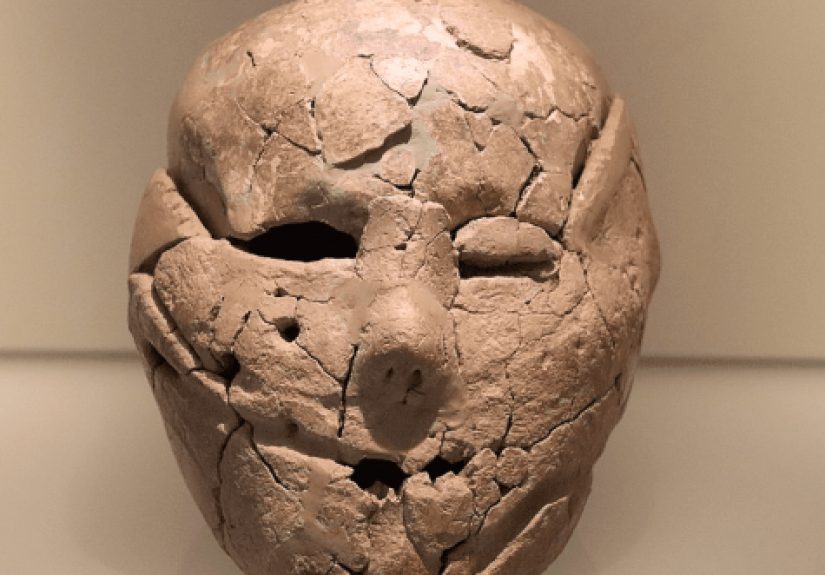
Some of the oldest known “decorated remains” come from the Neolithic Levant: plastered skulls in which human skulls were covered with plaster to model facial features, with shells sometimes used to form eyes. This isn’t decoration for decoration’s sakeit’s reconstruction, turning a skull into a face again.
Archaeologists interpret these as connected to ancestor veneration and household memoryremains kept near living spaces, suggesting an ongoing relationship between the living and the dead.
Why it mattered: These skulls show an early human impulse we still recognize: the desire to keep someone’s presence alive by preserving their “face,” not just their name.
9) Tibetan Kapala (Skull Cups Mounted in Precious Metals)
In Tibetan Buddhist contexts, a kapala is a ritual skull cup, often elaborately mounted in metals such as silver and decorated with materials like turquoise or coral. The decoration is purposeful: it signals ritual importance and frames the object within a symbolic system where impermanence is central.
To modern eyes, it can look startling. But in its own context, it’s not about gore or shockit’s about philosophy, transformation, and offerings. The beauty is part of the point: it draws focus, communicates sacred function, and embodies a teaching about reality’s changing nature.
Why it mattered: It’s decorated human remains functioning as a ritual instrumentart, religion, and meaning fused into one object.
10) The Mixteca-Puebla Mosaic Skull (Turquoise, Shell, and Ancestor Veneration)
One of the most visually dazzling examples of decorated human remains is a human skull inlaid with mosaic materialssuch as turquoise, jadeite, and shellassociated with Mixtec or related traditions in Mexico (often grouped under “Mixteca-Puebla” style).
This is decoration at a master-craft level: careful placement of materials transforms the skull into an object that reads as both art and ancestral relic. The shimmering surfaces don’t erase deaththey reframe it in a language of prestige, devotion, and memory.
Why it mattered: It demonstrates how decoration can elevate remains into a cultural emblemsomething meant to be seen, remembered, and respected.
Ethics and the Modern Lens
Today, decorated human remains raise important questions. Museums and religious sites increasingly emphasize respectful display, provenance research, and culturally appropriate care. What was once normal practice may now be debatedespecially where remains were moved without consent or where descendant communities have claims and concerns.
So if you’re reading this and thinking, “This is fascinating, but also complicated,” congratulations: you’re having the correct modern reaction.
Conclusion: What These Remains Reveal About Us
Across all ten examples, the common thread isn’t morbidityit’s meaning. Decoration is a way humans negotiate the hardest fact of life. Paint a name so it won’t be forgotten. Mount a skull in silver so it carries sacred weight. Arrange bones into a chandelier so every visitor stops, looks up, and remembers that time is not unlimited.
In the end, these sites and objects are less about death as an ending and more about the living trying to communicate with the inevitableusing the tools we’ve always used: art, ritual, community, and storytelling.
Experiences Related to “10 Amazingly Decorated Human Remains” (Extra Section)
People often assume that encountering decorated human remains is a single emotional notefear, discomfort, shock. In reality, visitor experiences tend to be layered, and they change depending on context, expectations, and how the site is presented.
What It Feels Like to Walk Into an Ossuary
For many visitors, the first sensation in a bone chapel isn’t “spooky”it’s quiet. Ossuaries are often sacred spaces with rules, hushed voices, and a kind of unspoken agreement that you’re a guest. Even if you arrived because a friend texted, “DUDE YOU HAVE TO SEE THIS,” the atmosphere typically pushes you toward reflection.
At places like Sedlec Ossuary or Évora’s Chapel of Bones, people often describe a shift: the brain starts in tourism mode (camera, checklist, angles), then slowly slides into something more personal. Bone décor is impossible to “unsee,” and it nudges you into bigger questionsabout time, about history, about how many lives had to exist for a wall to look like that.
The “Art Museum” Effect
Some decorated remainslike mosaic skulls or kapala skull cupsare frequently encountered in museum settings. The experience there can feel different: controlled lighting, labels, glass cases, and curatorial framing. You’re invited to look closely at craftsmanship, materials, and iconography.
That framing can help visitors process what they’re seeing. Instead of reacting only to the fact that the object contains human material, people often become absorbed by the detail: the precision of inlay, the metalwork, the symbolic motifs. It becomes an art-history encounter with ethical undertones, rather than a purely visceral moment.
When “Decorated” Means “Remembered”
The most emotionally accessible experiences often happen with traditions like Hallstatt’s painted skulls. Names and dates don’t just add informationthey create connection. A visitor might not relate to baroque relic culture or tantric ritual tools, but everyone understands the impulse to write a name so it won’t disappear.
Painted flowers, laurel, ivythese designs read like a family’s shorthand for love, pride, grief, and continuity. Many people report that this kind of decoration feels less like spectacle and more like a memorial practice, especially when the symbols are explained clearly.
Common Reactions (That Are All Normal)
- Awe: at the sheer scale of ossuaries or the artistry of relic presentation.
- Discomfort: especially for those unused to open display of the dead.
- Curiosity: “Who were they?” “Why did people do this?” “How old is this?”
- Reflection: many visitors leave thinking about family, time, and what they want remembered.
- Ethical questioning: “Was consent possible?” “Who gets to display remains?”
How to Engage Respectfully as a Visitor or Reader
If you ever visit a site or view a museum object involving human remains, a few practices tend to lead to a better, more respectful experience:
- Follow photography rules (some places restrict it to protect dignity and prevent spectacle).
- Read the context (labels, guides, or interpretive panels often explain the “why,” which changes the entire meaning).
- Avoid treating it like a prank backdrop (your future self will appreciate not turning someone’s memorial into a meme).
- Stay curious, not casualhumor is fine, but respect is the baseline.
Ultimately, experiences with decorated human remains tend to be memorable because they collapse distance. History stops being abstract. Mortality stops being theoretical. And whether the decoration is jewels, paint, plaster, or mosaic stone, the message usually lands in the same place: people have always tried to make death speakand they’ve been doing it with remarkable creativity for a very long time.