Table of Contents >> Show >> Hide
Most parents expect baby photos to reveal chubby cheeks, wild bedhead, or the world’s tiniest dramatic side-eye. What they do not expect is a strange white glow in one pupil. Yet that odd little flash-photo clue can sometimes be the first sign of retinoblastoma, a rare but serious form of children’s eye cancer. The good news is that when it is found early, retinoblastoma is often highly treatable, and many children go on to do very well.
This article breaks down what retinoblastoma is, the main retinoblastoma symptoms parents should know, the different types of the disease, how doctors diagnose it, and the treatments used today. We will also talk about what the family experience often looks like, because a diagnosis is never just a medical event. It is an emotional, logistical, sleep-stealing, Google-resisting family marathon. If you are here because something looked off in your child’s eye, take a breath. Information helps, and fast action matters.
What Is Retinoblastoma?
Retinoblastoma is a rare cancer that begins in the retina, the light-sensitive tissue at the back of the eye. The retina acts a bit like the camera sensor of the body: it receives light and helps send visual information to the brain. In retinoblastoma, immature retinal cells begin growing out of control and form a tumor.
This cancer usually develops in very young children, often before age 5, and many cases are diagnosed even earlier. In the United States, it is uncommon, but it is still the most common eye cancer in children. That combination makes it tricky: rare enough that most families have never heard of it, but important enough that recognizing its early signs can protect vision, health, and in some cases, a child’s life.
Retinoblastoma may affect one eye or both eyes. Some tumors stay inside the eye, while more advanced cases can spread beyond it. Doctors therefore focus on two big goals from the start: saving the child’s life and preserving as much vision as possible. That balance shapes almost every treatment decision.
Types of Retinoblastoma
There are a few useful ways doctors classify retinoblastoma. These categories help families understand why one child may need laser therapy while another may need chemotherapy, surgery, or more intensive monitoring.
1. Unilateral Retinoblastoma
Unilateral retinoblastoma means the cancer affects only one eye. This is the most common presentation overall. Many unilateral cases are non-hereditary, meaning the genetic change happened only in the retinal cells of that eye rather than in every cell of the body.
Some children with unilateral disease have small tumors that can be treated while preserving the eye. Others have a more advanced tumor in one eye, and if vision cannot realistically be saved, doctors may recommend enucleation, which is surgical removal of the eye. That sounds overwhelming at first, but in some cases it is the safest and most effective route.
2. Bilateral Retinoblastoma
Bilateral retinoblastoma means both eyes are affected. This form is strongly linked to hereditary disease. Children with bilateral tumors are often diagnosed at a younger age, and doctors usually work hard to preserve vision in at least one eye, and ideally in both, whenever it is medically safe to do so.
Bilateral disease does not automatically mean the same tumor burden in each eye. One eye may have a smaller, more treatable lesion while the other has more extensive disease. Treatment plans are often customized eye by eye, which can make the process feel medically precise and emotionally chaotic at the same time.
3. Hereditary vs. Non-Hereditary Retinoblastoma
Another major distinction is whether the retinoblastoma is hereditary or non-hereditary. Hereditary retinoblastoma is linked to a change in the RB1 gene, a tumor-suppressor gene that normally helps control cell growth. In hereditary cases, the RB1 mutation is present in all the body’s cells. That is why these children are more likely to develop tumors in both eyes and may also face a higher risk of other cancers later in life.
Non-hereditary retinoblastoma usually affects one eye and is not passed down through families. Still, genetics can be sneaky. A child with one-sided disease can sometimes still have the hereditary form, which is why genetic testing is such an important part of evaluation.
4. Trilateral Retinoblastoma
A much rarer form is trilateral retinoblastoma. This term is used when a child with retinoblastoma, usually bilateral disease, also develops a related tumor in the pineal gland area of the brain. It is uncommon, but it matters because it affects surveillance and treatment planning. For some children with hereditary retinoblastoma, doctors recommend periodic brain MRI screening during early childhood for this reason.
Symptoms of Retinoblastoma
The most talked-about sign of retinoblastoma is leukocoria, often described as a white pupil or white reflex in photos. Instead of the usual red-eye effect from a camera flash, one pupil may appear pale, yellowish, or bright white. It can show up in dim rooms, certain angles, or repeated photos. It is not a party trick. It is a medical clue.
Another common warning sign is strabismus, or eyes that do not line up properly. A child may seem to have a wandering eye, crossed eyes, or trouble tracking objects. Strabismus has many possible causes, and not all are cancer-related, but it still deserves professional attention.
Other possible retinoblastoma symptoms include:
- poor vision or reduced visual attention
- redness in the eye
- eye swelling or irritation
- eye pain or fussiness in younger children
- an enlarged-looking eye
- bulging of the eye in more advanced cases
- a change in iris color or pupil appearance
Because many affected children are babies or toddlers, they cannot explain blurry vision or eye discomfort. Parents and caregivers usually notice something visual first. That is why routine checkups, family attention, and even everyday snapshots can play an unexpected role in early detection.
If the cancer spreads beyond the eye, symptoms may become more general, such as headaches, vomiting, poor appetite, or lumps in the neck. Those signs are less common and usually indicate more advanced disease. Parents do not need to panic over every strange photo, but they should not ignore persistent changes either.
How Doctors Diagnose Retinoblastoma
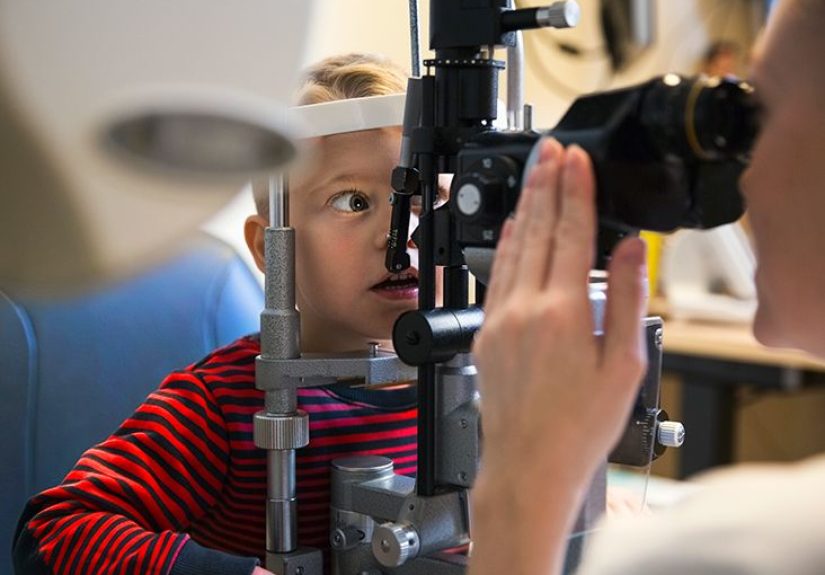
When retinoblastoma is suspected, the first major step is usually a dilated eye exam by an ophthalmologist. Eye drops widen the pupils so the doctor can look deep into the retina and assess whether a tumor is present. In some children, especially very young ones, the exam may need to be done under anesthesia so the doctor can get a careful view without movement turning the appointment into a wrestling match nobody asked for.
Imaging tests often follow. These may include ultrasound, fundus photography, and MRI of the eyes and brain. MRI is especially useful because it helps evaluate the area around the eye and can screen for related brain tumors in higher-risk situations. Doctors often avoid routine biopsy for classic retinoblastoma because the tumor’s appearance on exam and imaging is usually distinctive enough, and biopsy may create extra risk.
Genetic testing is also a key part of diagnosis. It helps determine whether the case is hereditary, guides screening for siblings or future children, and influences long-term follow-up. For families, this is one of those moments where medicine suddenly becomes family math, future planning, and genetics counseling all at once.
Treatment Options for Retinoblastoma
Retinoblastoma treatment depends on the size and location of the tumor, whether one or both eyes are involved, whether vision can be preserved, and whether the cancer has spread beyond the eye. Modern care often combines pediatric oncology, ophthalmology, radiology, genetics, and supportive care into one coordinated plan.
Focal Therapies
Small tumors may be treated with focused local methods designed to destroy cancer while sparing as much healthy tissue as possible. These can include:
- laser therapy or photocoagulation
- thermotherapy, which uses heat
- cryotherapy, which freezes the tumor
- plaque brachytherapy, a form of localized radiation placed near the tumor
These treatments sound futuristic, and honestly, some of them do feel like medicine borrowed from science fiction. But the goal is very grounded: kill the tumor while saving the eye and useful vision when possible.
Chemotherapy
Chemotherapy is often used when tumors are too large for local therapy alone or when doctors want to shrink tumors first so focal treatment can work better. This approach is sometimes called chemoreduction. Chemotherapy may be given through a vein, directly into the artery feeding the eye (intra-arterial chemotherapy), or in some situations directly into the eye for stubborn vitreous seeds (intravitreal chemotherapy).
These newer delivery methods allow doctors to target the eye more directly while reducing some whole-body exposure. That does not mean chemotherapy is easy. Families still face anesthesia days, bloodwork, side effect monitoring, and a calendar that suddenly starts acting like it owns the house.
Radiation Therapy
Radiation is less commonly the first choice than it once was, but it still has an important role in selected cases. Doctors may use internal radiation with a temporary plaque near the tumor or, less commonly, external-beam radiation therapy. In children with hereditary retinoblastoma, doctors think carefully about radiation because of the increased long-term risk of second cancers.
Enucleation
When the tumor is very advanced in one eye and useful vision is unlikely to be saved, enucleation may be the best option. This procedure removes the affected eye to prevent the cancer from spreading and to protect the child’s overall survival. After healing, many children receive a prosthetic eye that matches the other eye remarkably well.
No parent dreams of hearing that eye removal is necessary. But for some families, enucleation is the treatment that brings the most clarity, the best safety margin, and the fastest path away from ongoing disease. It is not a failure. It is a life-saving decision.
Treatment for Extraocular Disease
If retinoblastoma has spread outside the eye, treatment becomes more intensive and may include systemic chemotherapy, radiation, surgery, and in selected advanced cases high-dose chemotherapy with stem cell rescue. These cases are harder to treat, which is one more reason early diagnosis matters so much.
Outlook and Long-Term Follow-Up
The outlook for retinoblastoma is often very good when the cancer is diagnosed before it spreads outside the eye. In the United States, most children with intraocular retinoblastoma are cured, and survival rates are high. That said, cure is not the end of the story. Follow-up matters.
Children who have had retinoblastoma may need regular eye exams, imaging, prosthetic eye care if an eye was removed, and long-term monitoring for treatment effects. Those with hereditary retinoblastoma may need lifelong attention for the risk of second cancers. This is especially important for survivors treated with radiation or those with a confirmed RB1 mutation.
Parents sometimes hope follow-up means, “Good news, see you never.” In reality, it often means, “Good news, now we keep watching carefully.” That is not bad news. It is how modern survivorship works.
What Families Often Experience After a Retinoblastoma Diagnosis
A retinoblastoma diagnosis rarely arrives with perfect timing, emotional preparation, or a color-coded life plan. More often, it begins with confusion. A parent notices a strange reflection in a photo, or a grandparent says one eye looks different, or a pediatrician spots something during a routine checkup. Then comes the referral, the urgent appointment, and the jarring moment when ordinary parenting concerns turn into oncology language.
Many families describe the first days as a blur of new vocabulary: retina, RB1, MRI, focal therapy, enucleation, hereditary disease, sedation, prosthesis. It can feel like learning a new language while standing in a moving hallway. One appointment leads to five more. A child who looked perfectly fine at breakfast may be under anesthesia by afternoon. Parents are asked to make major decisions while still trying to understand what, exactly, just happened.
There is also the emotional split-screen that many caregivers feel. On one side is fear: fear of cancer, fear of vision loss, fear of surgery, fear of the unknown. On the other side is intense focus. Parents become note-takers, schedulers, medication trackers, snack packers, and accidental mini-experts in pediatric eye cancer. It is amazing what people can do when love and adrenaline form a temporary business partnership.
Families with hereditary retinoblastoma often face an added layer of concern because the diagnosis can affect siblings, future children, and extended family members. Genetic testing may answer important questions, but it can also create new ones. Some parents feel guilty even when they have done nothing wrong. That is a hard but common emotional response, and it helps to hear this clearly: genes are not a moral failure. They are biology.
Children respond in different ways depending on age and treatment intensity. Infants may mostly react to disrupted routines, hunger from fasting before anesthesia, and the general insult of being examined by strangers. Toddlers may become clingier, sleepier, or more resistant to appointments. Older children may ask direct questions that stop adults in their tracks: “Will I still be able to see?” “Will I look different?” “Did I do something bad?” Honest, age-appropriate answers matter a lot.
When a child needs enucleation, families often grieve in stages. The recommendation may first sound devastating. Later, after the risk is explained clearly, some parents feel relief that there is a decisive plan. Over time, many children adapt astonishingly well to a prosthetic eye, and many families say the anticipation was worse than the adjustment. That does not make the process easy. It just means children are often more resilient than adults expect.
Long treatment courses can also affect work schedules, childcare for siblings, finances, sleep, and relationships. Parents may alternate between feeling strong and feeling completely wrung out. Support from social workers, genetic counselors, survivorship teams, and other parents can make a real difference. Sometimes the most comforting person in the room is the one who can say, “Yes, we have been there too.”
After treatment, many families say the outside world expects instant celebration, while they are still living with scans, follow-ups, and low-level worry. Survivorship can feel grateful and anxious at the same time. That is normal. Over time, many families settle into a new rhythm. The hospital stops feeling like foreign territory. The child grows. Photos become joyful again. And the story, while still marked by cancer, begins to include more than cancer.
Final Thoughts
Children’s eye cancer is frightening, but retinoblastoma is also one of those conditions where early detection can make a profound difference. A white pupil in a photo, an eye that drifts, or sudden changes in appearance should never be brushed off as “probably nothing” without a proper exam. Most eye changes in children are not cancer, but the ones that are deserve fast expert attention.
For families facing this diagnosis, the path may involve genetics, imaging, repeated exams, and carefully tailored treatment. It may also involve hope, because the outlook for many children is strong, especially when the disease is caught early. The best next move is not panic. It is prompt evaluation, specialized care, and a team that understands both the medicine and the family behind the diagnosis.