Table of Contents >> Show >> Hide
- Quick Tudor Context (So the Darkness Makes Sense)
- The 15 Most Disturbing Henry VIII Facts
- 1) He turned a “marriage problem” into a national religious rupture
- 2) He helped create an atmosphere where disagreement could become a crime
- 3) He made an example of elitesbecause terror works better when it’s bipartisan
- 4) Thomas More’s execution showed that “conscience” could be treated like rebellion
- 5) He executed Anne Boleyn after charges that many historians view with deep skepticism
- 6) Catherine Howard’s downfall highlights how little protection a queen truly had
- 7) The Pilgrimage of Grace ended with mass executions
- 8) The Dissolution of the Monasteries wasn’t just “reform”it dismantled communities
- 9) He authorized an execution by boiling alive
- 10) He punished religious “wrongthink” even after breaking with Rome
- 11) His rebellion policy shows how the state can criminalize collective desperation
- 12) His health problems became a political problemand a national anxiety
- 13) The 1536 jousting accident may have changed more than his ability to ride
- 14) Researchers have seriously explored traumatic brain injury as a factor in his later behavior
- 15) “It was treason to say the wrong thing” wasn’t a metaphorit was a survival strategy
- What These Disturbing Henry VIII Facts Reveal About Power
- 500-Word Experiences Section: How People Encounter Henry VIII’s Dark Side Today
- Conclusion
Henry VIII is usually served to us in bite-size pop culture portions: the swagger, the wives, the “divorced, beheaded, died…” mnemonic that makes Tudor
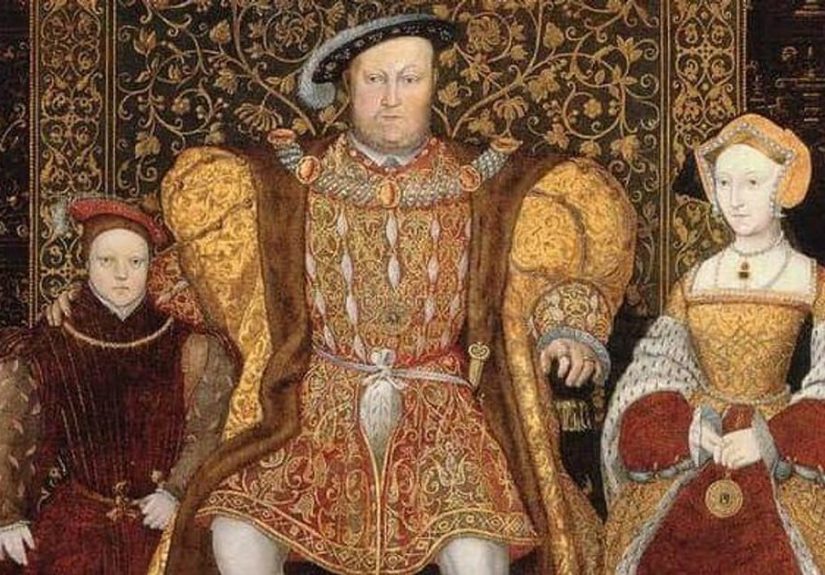
history sound like a very expensive reality show. But if you zoom inpast the portraits and the costumesHenry’s reign can feel less like a drama and more
like a caution sign with a crown on it.
The disturbing part isn’t only the bloodshed (though yes, there’s plenty of that). It’s the way Henry normalized fear as policyhow laws, religion, and
personal vendettas could merge into a single, very sharp tool. Below are 15 unsettling, historically grounded facts about Henry VIII that reveal what
happens when absolute power meets a fragile ego and a nation that can’t exactly “mute” its king. (References: [1]–[12])
Quick Tudor Context (So the Darkness Makes Sense)
Henry VIII ruled England from 1509 to 1547, a period when religion and politics were welded together. Challenging the king’s authority wasn’t just rudeit
could be legally interpreted as treason. And because the monarchy was tied to the stability of the realm, Henry’s personal life (especially producing a
male heir) quickly became a national emergency with government paperwork.
The 15 Most Disturbing Henry VIII Facts
1) He turned a “marriage problem” into a national religious rupture
Henry’s determination to end his marriage to Catherine of Aragon didn’t stay in the family group chat. When the pope wouldn’t grant what Henry wanted,
Henry drove England toward a break with Rome and asserted royal authority over the English church. That wasn’t just a theological shiftit was a political
earthquake with real consequences for anyone whose faith or conscience didn’t line up neatly with the king’s new rules. [1]
2) He helped create an atmosphere where disagreement could become a crime
Under Henry, “loyalty” wasn’t merely a vibe; it was enforceable. Treason law expanded in ways that made speech and opinion far riskier, especially when
those opinions touched the king’s supremacy or legitimacy. The unsettling part is how quickly legal definitions can stretch when a ruler is determined to
punish not only actions, but also attitudes. [9][10][12]
3) He made an example of elitesbecause terror works better when it’s bipartisan
Disturbing power move: Henry didn’t reserve harsh outcomes for the powerless. High-profile figures who resisted himor simply outlived their usefulness
could fall fast. The lesson was clear to everyone watching: if a well-known statesman can lose his head, so can you (figuratively… until it’s not).
[12]
4) Thomas More’s execution showed that “conscience” could be treated like rebellion
Sir Thomas More, once close to Henry, refused to endorse the king’s supremacy over the church in the way required. The result was a trial and execution
that has echoed through legal and moral debates for centuries: what happens when the state demands a public oath that a person’s conscience can’t sign?
More’s death is disturbing not just for the violence, but for the precedent: belief becomes prosecutable. [12]
5) He executed Anne Boleyn after charges that many historians view with deep skepticism
Anne Boleyn was accused of adultery, incest, and conspiracy against the kingcharges that led to her execution in 1536. Beyond the tragedy, the disturbing
detail is the sheer efficiency: once the royal narrative hardened into a legal case, the system moved quickly. Even the methodbeheading by swordsmanadds
an eerie note of ceremonial “precision” to something profoundly personal and political. [7]
6) Catherine Howard’s downfall highlights how little protection a queen truly had
Catherine Howard, Henry’s fifth wife, was executed in 1542. The darker takeaway isn’t only that she died, but how exposed she was: a young woman in a court
that treated queens like strategic assets, where scandal could become state business overnight. Her story reads like a warning about what happens when a
person’s private life becomes evidence. [11]
7) The Pilgrimage of Grace ended with mass executions
The Pilgrimage of Grace was a major northern uprising against Henry’s religious policies and the attack on monasteries. After negotiations and a collapse
of the rebellion, the government executed large numbers of participants and leaders. It’s disturbing because it shows how “forgiveness” in politics can be
temporaryespecially when the crown needs to reassert dominance in public, on purpose, at scale. [2]
8) The Dissolution of the Monasteries wasn’t just “reform”it dismantled communities
When Henry’s government dissolved monasteries, it didn’t only seize buildings. It ripped up a network of religious life, charity, education, and local
support. Even if you ignore the theology, the human impact is hard to overstate: institutions that fed people, housed travelers, and anchored communities
were stripped and shut downoften to enrich the crown and its allies. [1][12]
9) He authorized an execution by boiling alive
Yes, boiling. A poisoning case involving Richard Roose became the basis for a statute that treated poisoning as treason and prescribed boiling to death as
punishment. This is disturbing on two levels: first, the brutality itself; second, how swiftly law can be shaped around royal fearespecially Henry’s
well-documented paranoia about poisoning. [3]
10) He punished religious “wrongthink” even after breaking with Rome
Henry didn’t become a modern-style religious liberal after the split. In fact, he could be harsh toward people on multiple sides of the religious divide,
defending certain traditional doctrines while rejecting papal authority. The disturbing thread is that control mattered more than consistency: the “right”
belief was often whichever one kept Henry firmly in charge. [8]
11) His rebellion policy shows how the state can criminalize collective desperation
During unrest, thousands could be treated as a threat to national survivaleven when motivated by economic anxiety, religious conviction, or fear of change.
Henry’s response to rebellion demonstrates a classic authoritarian pattern: reduce a complex social crisis to “traitors,” then use punishment to restore
order and discourage copycats. [2][12]
12) His health problems became a political problemand a national anxiety
Henry’s later years included severe health decline: chronic leg ulcers, significant weight gain, pain, and reduced mobility. When the king’s body is also
the symbol of the state, illness isn’t privateit’s destabilizing. The disturbing part is how physical suffering can amplify fear, suspicion, and harsh
decision-making at the highest level. [6]
13) The 1536 jousting accident may have changed more than his ability to ride
In January 1536, Henry suffered a serious jousting accident. Sources describe injuries that affected him long-term. Even without psychologizing too much,
it’s unsettling to see how one violent moment can ripple outward: pain, immobility, and frustration can reshape a rulerand then reshape a country.
[5]
14) Researchers have seriously explored traumatic brain injury as a factor in his later behavior
Scholars have proposed that repeated head trauma could help explain Henry’s apparent personality changesanger, impulsivity, paranoiaparticularly after the
most severe injuries. This doesn’t “excuse” anything, but it does add a chilling dimension: a kingdom’s fate may have hinged partly on a fall from a horse.
[4][6][12]
15) “It was treason to say the wrong thing” wasn’t a metaphorit was a survival strategy
In Henry’s England, people learned to speak in careful circles, especially about the king’s supremacy, succession, and legitimacy. Over time, that kind of
fear becomes cultural: you don’t just fear punishment, you begin editing yourself automatically. That’s one of the most disturbing legaciesbecause it can
outlive the tyrant who inspired it. [9][10][12]
What These Disturbing Henry VIII Facts Reveal About Power
The through-line isn’t simply “Henry was cruel.” It’s that he operated in a system where law, religion, and personal will could be fusedthen broadcast as
national necessity. Henry’s reign shows how easily institutions can become instruments when one leader has enough authority, enough fear, and enough people
motivated to keep the machine running.
And yes, history is messy: Tudor politics involved real threats, competing factions, and international pressure. But “complex times” don’t erase the moral
weight of policies that used terror as governance. If anything, they remind us how often cruelty arrives wearing a reasonable-sounding argument.
500-Word Experiences Section: How People Encounter Henry VIII’s Dark Side Today
If you’ve ever watched a Tudor series and felt your stomach drop when the music changes and a character realizes they’re “out of favor,” you’ve had a tiny,
modern version of the Henry VIII experience: that creeping sense that logic won’t save you if power has already decided the ending. For many people, the
first encounter with Henry’s disturbing legacy happens exactly like thatthrough entertainmentbecause the sheer drama is hard to resist.
But the experience changes when you move from plot to place. Visit exhibits about Tudor England, and you’ll notice how the artifacts don’t feel theatrical.
They feel administrative. Seals, proclamations, court records, and religious objects make the brutality feel disturbingly “paperwork-shaped.” It’s one thing
to hear that monasteries were dissolved; it’s another to realize those closures were executed through audits, inventories, and legal language that could
sound almost polite while dismantling a way of life.
Reading primary-source excerpts (even in translation) can be equally unsettling. You start to recognize the emotional math people had to do every day:
deciding what to say, what not to say, who to trust, and which opinions could be fatal. Modern readers often report a strange tensionfascination mixed with
dreadbecause so much of the danger came from normal social interactions. A casual comment becomes a rumor; a rumor becomes a charge; a charge becomes a
trial; a trial becomes a scaffold. The horror is how quickly “ordinary” life can be pulled into the gears.
There’s also the experience of confronting Henry’s physical decline. Many people imagine him as permanently robustbroad-shouldered, athletic, larger than
life. Learning about the chronic ulcers, pain, and limited mobility in his later years reframes everything. You begin to picture a court where the king’s
health isn’t just a medical issue but a political weather report everyone studies. In that environment, flattery isn’t merely vanityit’s career insurance.
Silence isn’t merely awkwardit’s self-defense.
And then there’s the most modern experience of all: realizing how Henry VIII became a brand. You can buy “Henry’s wives” mugs, read snappy memes, and watch
clever musicals that reclaim the women’s narratives (often brilliantly). That cultural remix can be empowering and educationalbut it can also blur the
violence into trivia. A key part of engaging with the “15 most disturbing Henry VIII facts” is resisting the urge to treat real suffering as a fun fact
collection. The point isn’t to wallow in gore; it’s to understand the mechanics of fear, control, and institutional power.
If you walk away unsettled, that’s not a failure of enjoymentit’s a sign your brain is doing something healthy: refusing to normalize what shouldn’t be
normal. Henry VIII’s story still matters because it reminds us that tyranny doesn’t always announce itself with a villain speech. Sometimes it arrives as
a law, a loyalty oath, a “necessary reform,” or a quiet warning: be careful what you say.
Conclusion
Henry VIII remains one of history’s most magnetic figures because his reign mixes spectacle with real human cost. These disturbing Henry VIII facts aren’t
just historical shock valuethey’re a look at how quickly a society can be pressured into compliance when power controls law, belief, and punishment.
Remembering the darkness doesn’t mean rejecting the fascination. It means keeping the fascination honest.