Table of Contents >> Show >> Hide
- What Is a Cootie Catcher?
- Supplies You Need
- How to Fold a Cootie Catcher Step by Step
- How to Decorate a Cootie Catcher
- How to Play With a Cootie Catcher
- Creative Cootie Catcher Ideas
- Common Mistakes and How to Fix Them
- Why Cootie Catchers Are Still Fun
- Advanced Tips for a Better Cootie Catcher
- Experience Notes: What Folding a Cootie Catcher Teaches You
- Conclusion
Few paper crafts have the magical power to turn one ordinary sheet of paper into a fortune-telling machine, a classroom game, a party icebreaker, and a tiny triangular comedy club. That, dear reader, is the humble cootie catcher. Also known as a paper fortune teller, chatterbox, salt cellar, or “that thing everybody made during indoor recess,” this classic origami toy is simple, nostalgic, and surprisingly useful.
Learning how to fold a cootie catcher is not just about making neat creases. It is about transforming flat paper into something interactive. You fold, flip, tuck, write, wiggle your fingers, ask dramatic questions, and suddenly the paper has opinions. Will you become a famous chef? Will your dog learn algebra? Will you have pizza for dinner? The cootie catcher does not promise scientific accuracy, but it does deliver fun with a very low supply budget.
In this guide, you will learn exactly how to make a cootie catcher step by step, how to decorate it, how to play with it, how to avoid the most common folding mistakes, and how to use it for learning, parties, road trips, classroom activities, and rainy-day entertainment. Grab a piece of paper and prepare for your future to be folded into four tiny pockets.
What Is a Cootie Catcher?
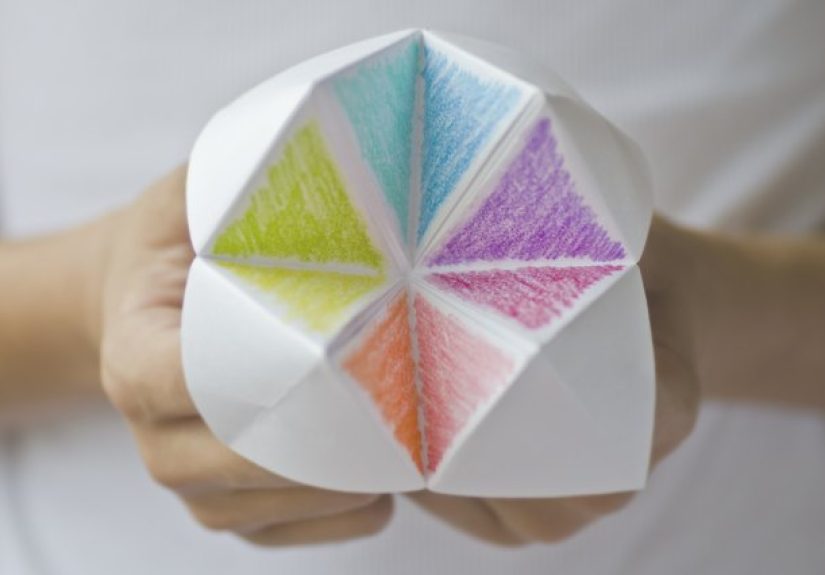
A cootie catcher is a folded paper toy made from a square sheet of paper. Once folded, it has four outside flaps where you can write colors, numbers, words, or symbols. Inside, it has hidden panels where you can write fortunes, jokes, dares, questions, compliments, or learning prompts. Players choose an outside option, then the person holding the cootie catcher opens and closes it while counting or spelling words. After a final choice, a hidden message is revealed.
It is a small craft with big playground energy. Kids use it to tell silly fortunes. Teachers use it for spelling practice, math review, reading games, vocabulary drills, and icebreakers. Parents use it when everyone is bored and the tablet battery is at 2 percent, which is basically a modern emergency.
The best part? You only need one square piece of paper. Markers help. Scissors may help if you are starting with rectangular printer paper. A dramatic fortune-teller voice is optional, but highly recommended.
Supplies You Need
You do not need a craft store shopping cart full of glitter, feathers, stickers, and mysterious foam shapes. A basic cootie catcher is wonderfully simple.
Basic Materials
- One square sheet of paper
- Pencil, pen, crayons, or markers
- Scissors, if you need to cut printer paper into a square
- A flat surface for clean folding
Best Paper Size
A square around 8 inches by 8 inches is easy for beginners. Standard origami paper works beautifully because it is already square and folds neatly. If you only have regular letter-size paper, that works too. You can turn it into a square by folding one corner diagonally to the opposite edge, then trimming off the extra rectangle.
Thinner paper is easier to fold than thick cardstock. Cardstock may look sturdy, but it can become bulky and stubborn. If your cootie catcher refuses to open smoothly, it is probably not being rude; the paper may simply be too thick.
How to Fold a Cootie Catcher Step by Step
Follow these steps slowly the first time. After one or two tries, your hands will remember the process. That is the secret power of classic paper crafts: one minute you are confused, and the next minute you are folding one from a napkin at a restaurant like a wizard with appetizers.
Step 1: Start With a Square
Place your square sheet of paper on the table. If one side has color or a pattern, place that side face down. The side facing the table will become part of the outside design later.
If you are using rectangular paper, fold one corner diagonally so the top edge lines up with the side edge. You will see a triangle with a rectangle left over. Cut or carefully tear off the rectangle. Open the triangle, and you have a square.
Step 2: Make the First Diagonal Crease
Fold the square in half diagonally, corner to corner, so it forms a triangle. Line up the corners as neatly as possible. Press the crease firmly with your finger, then unfold the paper.
This crease is a guide. It helps you find the center, which matters because cootie catchers are happiest when their corners meet politely in the middle.
Step 3: Make the Second Diagonal Crease
Fold the paper diagonally in the opposite direction, corner to corner. Press the crease well, then unfold it again. You should now see an “X” crease pattern crossing through the center of your square.
If your X looks a little wobbly, do not panic. Paper crafts are forgiving. The goal is not museum-level perfection; the goal is a cootie catcher that opens, closes, and reveals whether someone is destined to own twelve cats.
Step 4: Fold Each Corner to the Center
Take one corner of the square and fold it into the center point where the diagonal creases meet. Press the fold flat. Repeat with the other three corners. When finished, you should have a smaller square made from four triangular flaps.
Try to make the corners meet without overlapping too much. A small gap is fine. A giant paper traffic jam in the center can make later folds bulky.
Step 5: Flip the Paper Over
Carefully turn the paper over so the folded flaps are now facing down. You should be looking at a plain square side with crease lines visible.
This flip is the step many beginners miss. If your cootie catcher starts looking like a sad envelope instead of a paper toy, there is a good chance you forgot to flip before folding the corners again.
Step 6: Fold the Corners to the Center Again
Just like before, fold each of the four corners into the center point. Press each crease firmly. You will now have an even smaller square.
This second round of corner folding creates the pockets where your fingers will go. It also creates the hidden flaps where the fortunes or messages will live.
Step 7: Fold the Square in Half
Fold the square in half horizontally to make a rectangle. Press the crease, then unfold it. Fold it in half vertically the other way, press the crease, and unfold it again.
These final creases loosen the structure and make it easier to shape. Think of them as the warm-up stretches before your cootie catcher begins its athletic career.
Step 8: Slide Your Fingers Into the Pockets
Turn the paper over. You should see four square pockets. Slide your thumbs and index fingers into those pockets. Gently push your fingers toward the center while bringing the corners together. The cootie catcher should pop into shape with four points on top.
Open and close it a few times. Move your fingers up and down, then side to side. If it feels stiff, reinforce the creases by pressing them again. If it collapses like a tired sandwich, check that your pockets are on the correct side.
How to Decorate a Cootie Catcher
Once the folding is done, the real personality begins. A blank cootie catcher is useful, but a decorated one has charisma. It walks into the room wearing sunglasses.
Write on the Outside Flaps
On the four outside flaps, write simple choices. Traditional cootie catchers often use colors such as red, blue, green, and yellow. You can also use animals, foods, seasons, planets, sports, favorite characters, or funny categories.
Examples include:
- Pizza, tacos, sushi, burgers
- Cat, dog, dragon, penguin
- Spring, summer, fall, winter
- Moon, star, sun, comet
Add Numbers Inside
Open the cootie catcher slightly so you can see the inner triangle sections. Write numbers on the visible inside flaps. Most people use numbers 1 through 8 because there are eight small triangle areas.
Keep the numbers clear and easy to read. This helps the game move smoothly and prevents players from staring at the paper like it is a math test written by a squirrel.
Write Hidden Fortunes Under the Flaps
Lift each numbered flap and write a hidden message underneath. These can be funny, kind, mysterious, educational, or completely ridiculous.
Here are some fortune ideas:
- You will laugh so hard today that someone asks what is happening.
- A snack will improve your mood. Science probably agrees.
- You will discover a new favorite song.
- Your socks are luckier than they look.
- A surprise compliment is coming your way.
- You will become extremely good at folding paper things.
- Someone nearby owes you a high-five.
- Your future contains homework, but also cookies.
How to Play With a Cootie Catcher
Now that you have folded and decorated it, it is time to play. The rules are simple enough for kids but flexible enough for older players to turn the game into jokes, trivia, classroom review, or party entertainment.
Basic Game Rules
- Hold the cootie catcher with your fingers inside the four pockets.
- Ask the player to choose one outside word, color, or symbol.
- Open and close the cootie catcher once for each letter in the chosen word.
- Show the inside numbers and ask the player to choose one.
- Open and close the cootie catcher that many times.
- Ask the player to choose one final number.
- Lift the flap and read the hidden message underneath.
For example, if the player chooses “blue,” you open and close the cootie catcher four times while spelling B-L-U-E. Then the player chooses a number, maybe 6. You count six moves. Then they choose the final number, and you reveal the fortune. Add a serious face for maximum comedy.
Creative Cootie Catcher Ideas
A cootie catcher does not have to be limited to fortunes. Once you understand the folding pattern, you can turn it into almost anything: a study tool, a kindness game, a joke machine, a party favor, or a mini decision-maker for people who cannot choose what movie to watch.
Classroom Review Cootie Catcher
Teachers can use cootie catchers to review vocabulary words, math facts, spelling patterns, science terms, history questions, or reading comprehension prompts. Instead of writing fortunes under the flaps, write questions. The player chooses a number and must answer what is hidden underneath.
Example prompts include:
- Define the word “habitat.”
- Solve 7 x 8.
- Name one cause of the American Revolution.
- Use the word “curious” in a sentence.
Kindness Cootie Catcher
Instead of predictions, fill the hidden flaps with kind actions. This works well for families, classrooms, camps, and after-school programs.
- Give someone a sincere compliment.
- Help clean up without being asked.
- Tell a friend one thing you appreciate about them.
- Write a kind note and leave it somewhere surprising.
Joke Cootie Catcher
Write jokes under each flap. The cootie catcher becomes a portable comedy show, which is excellent for road trips, birthday parties, and waiting rooms where everyone needs a distraction before boredom starts doing push-ups.
- Why did the paper go to school? To become a little sharper.
- What do you call a folded joke? A crease-piece of comedy.
- Why was the pencil calm? It had a good point.
Decision-Maker Cootie Catcher
Use your cootie catcher to make tiny decisions. Write options like “read,” “draw,” “take a walk,” “play a game,” “clean your desk,” “call a friend,” “make a snack,” and “try again.” It is not a replacement for responsible decision-making, but it is perfect for low-stakes choices.
Common Mistakes and How to Fix Them
Even a simple paper fortune teller can go sideways if the folds are rushed. The good news is that most problems are easy to fix.
The Paper Will Not Open Properly
This usually means the final pockets were not shaped correctly. Check that your fingers are inside the four square pockets, not under the wrong flaps. Gently push the corners toward the center and crease the middle folds again.
The Corners Do Not Meet in the Center
Your starting square may not be even, or the first diagonal creases may be slightly off. For beginners, use origami paper or carefully cut printer paper into a true square. A tidy square makes every later fold easier.
The Cootie Catcher Feels Too Thick
The paper may be too heavy. Try thinner printer paper or standard origami paper. Avoid thick construction paper for your first attempt unless you enjoy wrestling stationery.
The Writing Is Upside Down
This happens to almost everyone once. Before decorating, fold the cootie catcher completely and lightly mark where each section appears. Then unfold just enough to write. Pencil first, marker second. Future you will be grateful.
Why Cootie Catchers Are Still Fun
The cootie catcher has survived generations because it is hands-on, social, and customizable. It does not need a battery, app update, Wi-Fi password, or privacy policy longer than a novel. It asks only for paper, imagination, and someone willing to hear that their destiny involves pancakes.
It also sneaks in useful skills. Folding encourages careful sequencing, following directions, hand coordination, spatial awareness, symmetry, and patience. Decorating it adds writing practice, humor, creativity, and decision-making. Playing with it builds conversation and turn-taking. Not bad for one square of paper.
Advanced Tips for a Better Cootie Catcher
Use Strong Creases
Sharp creases make the toy easier to control. Press each fold with your fingernail or the side of a ruler. Do not tear the paper; just make the fold crisp.
Decorate Before Final Shaping
It is often easier to write fortunes before the cootie catcher is fully popped into shape. Fold it once to understand where everything goes, then flatten it gently and decorate.
Match Your Theme
A themed cootie catcher feels more polished. For a birthday party, use birthday fortunes. For Halloween, use spooky jokes. For Valentine’s Day, use compliments. For a classroom, use review questions. For a family game night, use silly challenges.
Make a Giant Version
Once you master the regular size, try making a giant cootie catcher from poster paper. It is harder to fold but hilarious to use. Giant paper crafts have a way of making everyone suddenly interested, especially if the fortunes are dramatic.
Experience Notes: What Folding a Cootie Catcher Teaches You
Folding a cootie catcher feels simple, but the experience teaches more than the steps suggest. The first thing you notice is that accuracy matters, but perfection does not. When you fold the corners toward the center, every tiny mismatch affects the final shape. At first, that can feel annoying. Your corners may overlap, the center may bulge, or one pocket may look like it is trying to escape. But after a few attempts, you learn to slow down, line up edges, and press clean creases. It is a small lesson in patience, disguised as a playground toy.
Another enjoyable part is how quickly the project becomes personal. Two people can follow the same instructions and end up with totally different cootie catchers. One might be covered in bright colors and goofy fortunes. Another might become a math quiz. Another might be full of compliments, jokes, or secret messages. That customization is what makes the craft feel alive. You are not just folding paper; you are building a tiny interactive object with your own voice inside it.
The social side is just as important. A finished cootie catcher practically begs to be shared. Someone chooses a color, everyone watches the paper open and close, and then the hidden answer appears. Even when the fortune is silly, the suspense is real. There is something funny about watching people take a folded paper square very seriously for ten seconds. That little moment of anticipation makes it perfect for classrooms, parties, family nights, or any situation where people need an easy way to laugh together.
From experience, the best cootie catchers are not the ones with the neatest handwriting or fanciest paper. The best ones have messages that fit the audience. For younger kids, simple fortunes like “You will get a surprise” or “You are super lucky today” work well. For older kids, jokes and challenges are more fun. For classroom use, questions should be short enough to read quickly. For family use, inside jokes make the game much better. A cootie catcher with personal humor always beats a generic one.
It is also a great reminder that creativity does not need expensive tools. A single piece of paper can become a toy, a game, a learning activity, and a memory. That is probably why cootie catchers keep coming back. They are easy to make, easy to customize, and hard to resist. Once someone at a table folds one, another person usually says, “Wait, show me how to make that.” Then suddenly everyone is folding paper, comparing fortunes, and acting like a square sheet just unlocked ancient wisdom. Honestly, for the cost of one piece of paper, that is a pretty excellent deal.
Conclusion
Learning how to fold a cootie catcher is quick, affordable, and endlessly entertaining. Start with a square sheet of paper, fold the corners to the center, flip, fold again, crease both ways, open the pockets, and decorate it with colors, numbers, jokes, fortunes, questions, or challenges. Once you understand the basic pattern, you can create cootie catchers for parties, classrooms, study sessions, family games, holiday activities, and rainy afternoons.
The cootie catcher proves that simple crafts still have plenty of charm. It is part origami, part game, part conversation starter, and part tiny fortune-telling theater. Whether your hidden message predicts fame, snacks, homework, or a mysterious future involving glitter, the fun is in the folding and sharing.