Table of Contents >> Show >> Hide
- What Are Periodical Cicadas?
- Why Do They Stay Underground for 17 Years?
- Where Are Cicadas Creating Chaos in the US?
- Why Cicadas Are So Loud
- Are Cicadas Dangerous?
- Can Cicadas Harm Trees?
- Why Pets Suddenly Become Cicada Connoisseurs
- Can People Eat Cicadas?
- The Ecological Benefits of a Cicada Emergence
- Why Cicada Photos Go Viral
- 30 Cicada Photo Ideas and Captions
- How to Survive Cicada Season Without Losing Your Mind
- Experience Section: What It Feels Like When Billions of Cicadas Take Over
- Conclusion
If spring in parts of the United States suddenly sounds like a blender full of tiny maracas, congratulations: you may be living through a periodical cicada emergence. After spending 13 or 17 years underground, depending on the brood, these red-eyed insects climb out of the soil in staggering numbers, shed their old skins, fill trees with alien-looking wings, and begin the loudest dating season in the neighborhood.
The phrase “billions of cicadas” sounds like internet exaggeration, but with periodical cicadas, the numbers really can feel absurd. During major emergences, sidewalks, lawns, fence posts, tree trunks, porch railings, and even unsuspecting people can become temporary cicada real estate. The chaos is real: dogs try to snack on them, homeowners sweep up crunchy shells, kids collect exoskeletons like trading cards, and anyone hoping for a quiet afternoon outdoors may discover that nature has other plans.
But here is the twist: the cicada invasion is not an invasion at all. It is a native, ancient, highly synchronized natural event. The bugs are not here to destroy civilization. They are here to molt, sing, mate, lay eggs, feed birds, enrich soil, mildly annoy everyone, and then disappear almost as suddenly as they arrived.
What Are Periodical Cicadas?
Periodical cicadas are insects in the genus Magicicada, a name that feels appropriate because their life cycle looks like something nature designed after reading a fantasy novel. Unlike annual cicadas, which appear every summer in smaller numbers, periodical cicadas emerge in huge synchronized groups called broods.
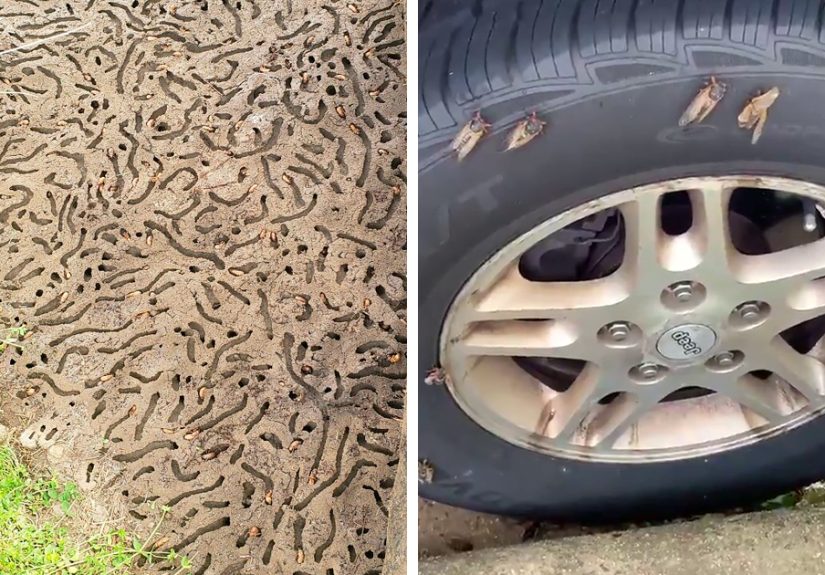
Most of their lives are spent underground as nymphs. There, they feed on fluids from tree roots, grow slowly, and wait for the right environmental cues. When the soil warms enough in spring, they tunnel upward, crawl out through dime-sized holes, climb a vertical surface, and split open their old exoskeletons. What emerges is pale, soft, and almost ghostly. Within hours, the adult darkens into the familiar black-bodied, orange-veined, red-eyed form that makes people either reach for a camera or calmly decide to move indoors.
Why Do They Stay Underground for 17 Years?
The 17-year cycle is one of the great curiosities of the insect world. Scientists know what cicadas do during that time, but exactly how they keep such precise schedules remains an active area of study. One leading idea is that these long, prime-numbered life cycles help cicadas avoid predictable predator patterns. If predators cannot reliably time their own population booms to match cicada appearances, the insects gain a survival advantage.
Another key strategy is called predator satiation. In plain English, cicadas survive by showing up in such ridiculous numbers that birds, mammals, reptiles, fish, and even curious humans cannot possibly eat them all. Predators feast until they are full, then full again, and then perhaps emotionally done with cicadas for the day. Enough insects survive to reproduce, and the next generation drops to the ground to begin another long underground chapter.
Where Are Cicadas Creating Chaos in the US?
Different cicada broods appear in different regions and different years. Some of the most discussed recent and current emergences include Brood X, Brood XIII, Brood XIX, and Brood XIV.
Brood X: The Famous 17-Year Spectacle
Brood X is one of the best-known and largest 17-year cicada broods. It has appeared across parts of the Mid-Atlantic, Midwest, and South, including areas of Maryland, Delaware, Indiana, Ohio, Tennessee, Pennsylvania, Virginia, and Washington, D.C. When Brood X emerges, it does not politely RSVP. It arrives in force, leaving shells on tree bark, bugs on windshields, and a chorus that can make suburban streets sound like a sci-fi airport.
Brood XIII and Brood XIX: A Rare Double Emergence
In 2024, two major broods emerged in the same season: Brood XIII, a 17-year brood concentrated mainly around northern Illinois and nearby areas, and Brood XIX, a 13-year brood spread through parts of the Midwest and Southeast. The two broods were not generally piled on top of each other everywhere, but parts of Illinois saw overlap. This unusual timing created a national cicada moment, especially for photographers, bug lovers, and anyone who had just washed their car.
Brood XIV: The 17-Year Return
Brood XIV has also made headlines as billions of periodical cicadas emerged across parts of the Eastern United States, including areas such as Georgia, Kentucky, southern Ohio, Cape Cod in Massachusetts, and Long Island in New York. These events remind people that cicada years are not random. They are mapped, tracked, studied, and sometimes celebrated with T-shirts, recipes, phone apps, and neighborhood group chats full of “What is on my porch?” photos.
Why Cicadas Are So Loud
The noise comes from males trying to attract females. Instead of vocal cords, male cicadas use structures called tymbals, which rapidly flex to create sound. Multiply that by thousands or millions of insects in one area, and you get a chorus that may reach lawnmower-level intensity in dense hotspots.
The good news is that cicadas usually sing during the day, not all night. The bad news is that “during the day” includes the exact moment you try to take a work call on the patio. Their sound can be described as buzzing, whirring, screaming, or “my neighbor’s power tool has joined a cult.” It is annoying, impressive, and strangely thrilling all at once.
Are Cicadas Dangerous?
No. Periodical cicadas do not bite or sting people. They are not venomous. They do not destroy houses. They do not attack gardens like a villainous salad army. In fact, federal environmental guidance notes that cicadas are generally not harmful to humans, pets, household gardens, or crops.
That said, “not dangerous” does not mean “zero inconvenience.” Cicadas can land on people, bump into windows, cover outdoor furniture, and leave behind piles of papery shells. Their short adult lives can also create odor issues when large numbers die and decompose in one place. If you have a sensitive nose, a big emergence can briefly make parts of the yard smell like nature forgot to take out the trash.
Can Cicadas Harm Trees?
Healthy mature trees usually handle cicada activity well. The bigger concern is young trees, newly planted trees, and fruit trees. Female cicadas lay eggs by making small slits in tender twigs and branches, especially branches about the width of a pencil. This can cause twig tips to brown, break, or “flag.”
For homeowners and growers in heavy emergence zones, the best protection is physical barrier netting with a fine mesh. Young trees can be wrapped before egg-laying begins and uncovered once the danger has passed. Spraying pesticides is generally not recommended because cicadas emerge in such large numbers that chemicals are not very effective, and they can harm beneficial insects, pets, wildlife, and people.
Why Pets Suddenly Become Cicada Connoisseurs
To many dogs, cicadas are crunchy flying snacks delivered directly to the lawn. A few cicadas are usually not a disaster for most dogs, but overeating them can cause vomiting, diarrhea, or digestive trouble because the exoskeleton is tough to break down. If your dog treats the yard like an all-you-can-eat cicada buffet, supervision is wise.
Cats may also chase or eat cicadas, though many quickly learn that the buzzing entrée comes with legs. Pet owners should monitor animals during peak emergence and call a veterinarian if a pet appears sick, lethargic, or distressed after gorging on insects.
Can People Eat Cicadas?
Yes, cicadas are edible, and some people treat emergence years as a once-in-17-years culinary event. Newly molted cicadas, sometimes called tenerals, are considered more tender than fully hardened adults. Adventurous cooks have sautéed, fried, roasted, and even chocolate-covered them.
However, eating cicadas is not for everyone. People with shellfish allergies should be cautious because cicadas are arthropods, and allergy concerns may overlap. It is also smart to avoid collecting insects from lawns treated with pesticides, herbicides, fertilizers, or other chemicals. In other words, do not harvest dinner from a yard that has been chemically pampered like a putting green.
The Ecological Benefits of a Cicada Emergence
For all the noise and mess, cicadas do a lot of ecological good. They provide a temporary protein feast for birds, fish, foxes, squirrels, turtles, raccoons, and many other animals. Their emergence holes help aerate soil and improve water movement. After adults die, their bodies return nutrients to the earth, feeding plants and microorganisms.
Even the tree pruning caused by egg-laying can have a natural role in forests. While it may be inconvenient for orchard managers and homeowners with young trees, mature trees often recover. In the bigger picture, cicadas are not pests in the usual sense. They are part of a long-running forest cycle that began long before suburbs, lawn chairs, and viral photo galleries existed.
Why Cicada Photos Go Viral
Periodical cicadas are made for the internet. They have ruby-red eyes, dramatic wings, movie-monster timing, and a talent for appearing in absurd places. People photograph them on tires, mailboxes, wedding dresses, baseball caps, baby strollers, restaurant patios, school playgrounds, and occasionally someone’s face at the exact moment that person loses all dignity.
The best cicada photos often capture contrast: a delicate wing beside rough bark, a newly emerged pale adult beside its empty brown shell, or a carpet of exoskeletons under a tree glowing in morning light. Other photos are pure comedy, like a cicada clinging to a windshield wiper as if it has a meeting downtown.
30 Cicada Photo Ideas and Captions
- Cicadas covering a tree trunk: The classic “nature has entered mass production” shot.
- Empty shells on bark: A perfect close-up of the molt left behind.
- A pale newly emerged cicada: Soft, ghostly, and surprisingly beautiful.
- Cicadas on a porch screen: When your house becomes a bug hotel.
- A cicada on a car tire: Road trip energy, but make it insect.
- A sidewalk full of shells: Crunchy season has officially begun.
- Kids observing cicadas: Outdoor science class with extra squealing.
- A bird eating a cicada: The buffet is open.
- A dog sniffing cicadas: Curiosity meets crunchy temptation.
- A cicada on a garden fence: Tiny red-eyed gatekeeper reporting for duty.
- Cicadas on flowers: Beauty, bugs, and springtime chaos.
- Molting at sunset: The dramatic transformation shot.
- Close-up of red eyes: Small insect, big science-fiction attitude.
- Wings drying after molting: Nature’s stained-glass moment.
- Cicadas on a park bench: Seating unavailable due to tiny musicians.
- A lawn dotted with emergence holes: Proof that the underground party has moved upstairs.
- Cicada shells on a mailbox: Special delivery from 17 years ago.
- Cicadas climbing weeds: Any vertical surface will do.
- A cicada on a bicycle handlebar: Free passenger, no helmet.
- Dozens on a young tree with netting nearby: A practical homeowner moment.
- A cicada on a person’s sleeve: Harmless, but emotionally loud.
- Dead cicadas feeding the soil: The circle of life, slightly crunchy edition.
- A cicada beside its shell: Before and after, insect style.
- A streetlight covered at night: The sci-fi scene nobody ordered.
- Cicadas in tall grass: Hidden chorus section warming up.
- A tree branch with egg-laying marks: The next generation begins.
- A cicada on a picnic table: Lunch guest with poor boundaries.
- Cicadas in a nature preserve: Wild timing on full display.
- A child holding an exoskeleton: Equal parts science and treasure hunt.
- A wide shot of cicada-covered ground: Billions may be an estimate, but it feels personal.
How to Survive Cicada Season Without Losing Your Mind
First, accept that cicadas are temporary. Most adult activity lasts only a few weeks. They emerge, molt, sing, mate, lay eggs, and die. By midsummer, the frenzy fades, leaving memories, photos, and perhaps a strange new respect for insects that can keep an appointment for 17 years.
Second, protect young trees with netting instead of chemicals. Third, supervise pets if they are enthusiastic cicada snackers. Fourth, keep outdoor drains, patios, and walkways clear if dead cicadas pile up. Fifth, try to enjoy the spectacle. A periodical cicada emergence is rare on a human timeline. You may see one only a few times in your life, depending on where you live.
Experience Section: What It Feels Like When Billions of Cicadas Take Over
Living through a major cicada emergence is part nature documentary, part neighborhood comedy, and part test of your relationship with outdoor furniture. The first sign is often not the sound but the holes. Small, round openings appear in the soil near trees, as if the lawn has developed pores. Then come the nymphs, usually after a warm rain, climbing up trunks, fence posts, porch steps, and anything that looks even vaguely vertical.
The molting stage is the most fascinating. A nymph grips a surface, the back of its shell splits, and a pale adult slowly works its way out. At first, it looks fragile and almost unreal, with folded wings and a body that has not yet darkened. If you watch closely, the wings expand like tiny glass panels. It is quiet, slow, and strangely elegant. Then, a few days later, the entire neighborhood sounds like a thousand tiny leaf blowers arguing in the trees.
Daily life changes in small, funny ways. You check chairs before sitting. You close the car door quickly. You learn that cicadas are not graceful pilots; they fly like they recently downloaded the instructions and skipped the tutorial. They bump into people, bounce off windows, land on shoulders, and cling to shirts with complete confidence. Even people who are not afraid of insects may perform an impressive little dance when one lands near the neck.
Children often become the unofficial scientists of cicada season. They collect shells, compare sizes, count holes, and ask excellent questions adults may not know how to answer. Why are the eyes red? How do they know when 17 years have passed? Do they sleep underground? Can we keep one? The emergence turns ordinary yards into living classrooms, with no admission fee and plenty of surprise guests.
For gardeners, the experience is more complicated. Mature trees usually handle cicadas well, but young trees need attention. Wrapping small trees in fine netting can feel like preparing for a very tiny medieval siege. Still, it is usually worth the effort in areas with heavy populations. The goal is not to eliminate cicadas; it is simply to protect vulnerable branches until the egg-laying period passes.
Pet owners have their own version of cicada season. Some dogs ignore the insects. Others discover them with the joy of a food critic at a buffet. The crunching sound alone is enough to make many owners reconsider every life choice that led to that walk. Most pets will be fine after a few, but too many can upset their stomachs, so cicada patrol becomes part of the daily routine.
The smell arrives later, after adults begin dying in large numbers. It is not glamorous, but it is part of the cycle. Those bodies feed soil and plants, and soon the evidence disappears. The noise fades. The sidewalks clear. The shells crumble. The next generation has already dropped from branches, burrowed into the ground, and begun its long wait.
That is the magic of cicadas: the chaos is temporary, but the story is enormous. They remind us that nature runs on schedules older and stranger than ours. While we are checking calendars, charging phones, and complaining about meetings, cicadas are quietly counting years underground. Then, without apology, they return all at once, turn the volume up, and make spring unforgettable.
Conclusion
Billions of cicadas emerging after 17 years underground may look like chaos, but it is actually one of America’s most remarkable natural events. These insects are loud, clumsy, dramatic, and occasionally inconvenient, yet they are also harmless to people, useful to ecosystems, and fascinating examples of synchronized survival. Whether you photograph them, study them, protect your young trees from them, or simply wait for the chorus to end, cicadas offer a rare chance to see time itself crawl out of the ground with red eyes and transparent wings.