Table of Contents >> Show >> Hide
- Why “The Devil’s Hands Are Idle Playthings” Still Hits So Hard
- The Plot: Fry, Leela, the Robot Devil, and One Very Dangerous Talent Upgrade
- Fry’s Real Problem Is Not TalentIt Is Vulnerability
- Leela’s Final Choice Is the Emotional Center
- Why Futurama’s Emotional Episodes Feel Different
- The Episode Balances Comedy and Sincerity Without Breaking Either
- The Holophonor Is the Perfect Futurama Metaphor
- Why Fans Keep Returning to This Episode
- How This Episode Shows Futurama at Its Best
- Specific Examples That Make the Emotion Work
- Experiences Related to the Episode: Why It Feels Personal for So Many Viewers
- Conclusion
Futurama has always been the rare animated comedy that can make you laugh at a robot, a lobster doctor, a severed presidential head, and thenwithout warningmake you stare quietly at the ceiling like you just received a heartbreaking message from the year 3000. That emotional ambush is part of the show’s magic. It hides sincerity inside absurdity, then delivers the feeling at exactly the moment your defenses are down.
Among the many beloved emotional Futurama episodes, “The Devil’s Hands Are Idle Playthings” remains one of the clearest examples of why the series is at its best when it lets its characters feel something real. The episode is funny, strange, musical, romantic, and completely ridiculous. It also works beautifully as a love story about expression: what happens when a person has more feeling than skill, more devotion than confidence, and more heart than finger coordination.
In other words, it is very much a Fry episode.
Why “The Devil’s Hands Are Idle Playthings” Still Hits So Hard
Originally airing as the final episode of Futurama’s Fox run, “The Devil’s Hands Are Idle Playthings” had the weight of a possible farewell. The show had not yet become the endlessly revivable sci-fi cockroach we now know and love. At the time, this could have been the final bow for Fry, Leela, Bender, Professor Farnsworth, Zoidberg, Amy, Hermes, and the entire beautifully deranged future.
That context matters because the episode feels like a finale without behaving like a funeral. It does not spend its runtime waving goodbye with misty eyes. Instead, it throws Fry into a deal with the Robot Devil, gives him miraculous musical hands, turns his feelings for Leela into a full opera, and then dares to end on something small, imperfect, and sincere.
That is the secret. The episode does not say, “Please cry now.” It says, “Here is a silly man trying to make art because love has made him brave and stupid.” Somehow, that is much worse. In the best way.
The Plot: Fry, Leela, the Robot Devil, and One Very Dangerous Talent Upgrade
The story begins with Fry trying to master the holophonor, a futuristic instrument that creates both music and holographic images. It is beautiful, difficult, and completely unforgiving. Unfortunately, Fry plays it about as well as a raccoon operating a fax machine during an earthquake.
Fry wants to impress Leela, and more importantly, he wants to communicate what he feels for her. The problem is not that Fry lacks emotion. If anything, Fry is basically 90 percent emotion and 10 percent delivery pizza. The problem is that he cannot translate what is inside his head into something elegant enough for Leela to understand.
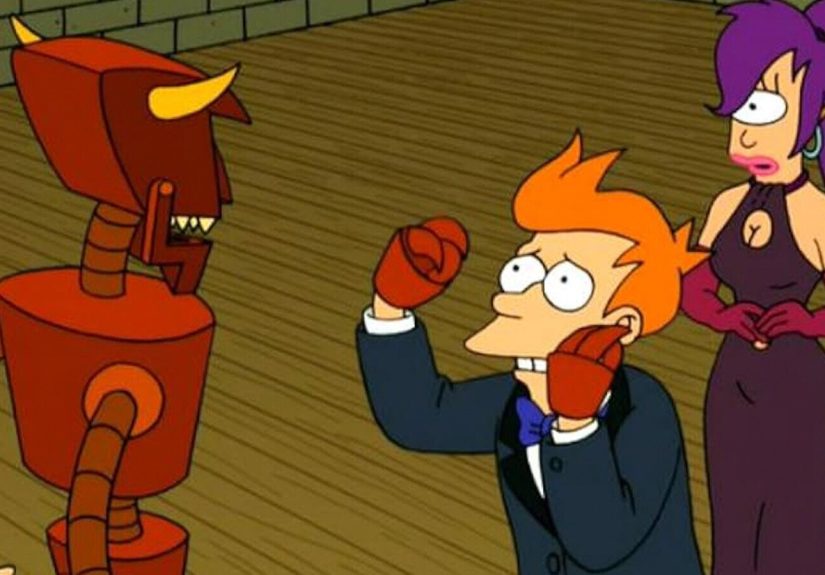
Enter the Robot Devil, one of Futurama’s best recurring characters. Fry makes a deal to swap hands with a random robot, and through a suspiciously convenient spin of fate, he receives the Robot Devil’s own hands. Suddenly, Fry becomes a holophonor genius. He can play with beauty, precision, and dramatic flair. He can finally turn feeling into art.
Of course, because this is Futurama, artistic success comes with demonic contract complications, a deafening air horn, a musical villain, and Bender making everything worse with the confidence of a toaster that found a law degree.
Fry’s Real Problem Is Not TalentIt Is Vulnerability
What makes “The Devil’s Hands Are Idle Playthings” more than a clever comedy episode is the emotional logic underneath the chaos. Fry believes that if he can become talented enough, Leela will finally see him the way he sees her. He assumes love needs to be proven through brilliance.
That is painfully human. Many people have felt some version of it: If I become impressive enough, polished enough, funny enough, successful enough, maybe the person I care about will understand me. Fry’s holophonor becomes a sci-fi symbol for the fantasy of perfect self-expression. He wants to play the exact shape of his heart, with no awkward pauses, no clumsy words, no “I accidentally destroyed the office again” energy.
But the episode’s ending gently rejects that fantasy. When Fry gives up the Robot Devil’s hands to save Leela from a terrible bargain, he loses the technical brilliance that made his opera possible. The audience leaves. The grand performance collapses. The masterpiece becomes a shaky little tune.
And Leela stays.
Leela’s Final Choice Is the Emotional Center
Leela’s role in this episode is easy to underestimate because Fry is the one chasing the big romantic gesture. But her final decision gives the story its soul. She does not stay because Fry is suddenly a genius. She stays after the genius is gone.
That distinction is everything. Leela asks to hear how the story ends, not because the performance is perfect, but because Fry is finally being honest without the magical upgrade. His crude holophonor images of himself and Leela are simple and almost childlike. They are not technically impressive. They are emotionally clear.
That is why the ending works. Fry’s best expression of love arrives only after he loses the tool he thought he needed. The show suggests that sincerity may be awkward, unfinished, and a little off-keybut it can still be enough.
Why Futurama’s Emotional Episodes Feel Different
Futurama is often praised for its sci-fi intelligence, and rightly so. This is a show that can build jokes out of time travel, quantum theory, bureaucracy, alien biology, and the eternal question of whether Bender counts as a person or an appliance with criminal hobbies. But its most memorable episodes often combine big ideas with intimate feelings.
“Jurassic Bark” uses a fossilized dog to explore loyalty and loss. “The Luck of the Fryrish” turns sibling jealousy into a gut-punch about memory and legacy. “The Late Philip J. Fry” wraps cosmic time travel around regret and missed chances. “Meanwhile” freezes the universe so Fry and Leela can live inside one impossible romantic pause.
“The Devil’s Hands Are Idle Playthings” belongs in that emotional tradition, but it has its own flavor. It is not as devastating as “Jurassic Bark,” and it is not as bittersweetly mythic as “The Luck of the Fryrish.” Instead, it is hopeful. It argues that love does not require perfection. It requires presence, sacrifice, and the courage to keep playing even when everyone else has left the room.
The Episode Balances Comedy and Sincerity Without Breaking Either
One reason the episode works so well is that it never stops being funny. The Robot Devil is not softened into a tragic figure. He remains theatrical, petty, musical, and gloriously annoyed. Bender is still Bender, which means his friendship is real but his ethics are somewhere in a ditch wearing sunglasses. Hedonismbot appears because, frankly, no opera about Leela’s life would be complete without a gold robot making everything weirdly luxurious.
The jokes keep the sentiment from becoming heavy. That balance is essential to Futurama. The show does not usually ask viewers to sit in pure drama. It lets comedy carry the emotion until the moment emotion can safely stand on its own.
That is also why the ending lands. The episode earns the quiet moment by surrounding it with absurdity. After robot deals, musical numbers, legalistic chaos, and hellish showmanship, the final image is disarmingly small: Fry playing badly, Leela listening, and two simple holographic figures walking away together.
The Holophonor Is the Perfect Futurama Metaphor
The holophonor may be one of the show’s smartest inventions. It is silly enough to belong in a cartoon future and poetic enough to carry a serious theme. As an instrument, it does not merely produce sound; it turns music into images. That makes it a perfect metaphor for emotional communication. It is not just about saying something. It is about making someone see what you mean.
For Fry, the holophonor represents the gap between feeling and expression. He knows what he feels, but he cannot shape it. That frustration is relatable, especially in relationships where words can seem too small, too risky, or too clumsy. Fry’s deal with the Robot Devil is an exaggerated version of a simple wish: to be understood without messing it up.
But Futurama is too smart to let borrowed perfection solve the problem. Fry’s borrowed hands create a dazzling opera, but his real emotional victory comes when he chooses Leela’s safety over his own success. The art becomes less impressive, but the person becomes more honest.
Why Fans Keep Returning to This Episode
Fans return to “The Devil’s Hands Are Idle Playthings” because it captures so many versions of Futurama at once. It is a sci-fi fantasy, a comedy of contracts, a musical episode, a romance, and a possible series finale. It gives the supporting cast room to appear, lets the Robot Devil steal scenes with Broadway-level villainy, and pushes Fry and Leela’s relationship forward without forcing a tidy conclusion.
It also has the rare confidence to end softly. Many comedies finish big, with a final joke, a loud reset, or a gag that undercuts the emotion. This episode allows the feeling to breathe. It does not punish sincerity. It does not wink too hard. It lets Fry’s imperfect little tune be the point.
That restraint is why the episode still feels special. It understands that emotional storytelling does not always need volume. Sometimes the most powerful ending is one character asking another to continue.
How This Episode Shows Futurama at Its Best
At its best, Futurama is not simply “smart comedy.” It is smart comedy with a pulse. The show can make a joke about robot theology and then ask whether divine silence is mercy. It can turn a delivery boy into the most important person in the universe and still make his deepest desire painfully ordinary: he wants to matter to the people he loves.
“The Devil’s Hands Are Idle Playthings” proves that the show’s emotional strength comes from contrast. Fry is ridiculous, so his sincerity surprises us. Leela is guarded, so her tenderness matters. Bender is selfish, so his flashes of loyalty feel strangely precious. The future is insane, so small human feelings shine brighter inside it.
The episode does not abandon the show’s comic DNA. Instead, it uses comedy to sneak emotion past the security gate. By the time the story reaches its final scene, the viewer has laughed enough to forget how vulnerable the whole thing has become. Then Fry plays, Leela listens, and suddenly a cartoon about robot hands feels more emotionally honest than many live-action romances with better lighting and fewer murderbots.
Specific Examples That Make the Emotion Work
1. Fry’s bad recital establishes the emotional problem
Early in the episode, Fry’s terrible playing is funny on the surface, but it also shows his deeper insecurity. He has something meaningful to express and no graceful way to express it. The joke is about bad music; the emotion is about feeling inadequate.
2. The Robot Devil’s deal externalizes Fry’s wish
Instead of simply practicing, Fry takes a supernatural shortcut. That is classic sitcom logic, but it also reveals how desperate he is. He does not just want talent. He wants the power to become the version of himself he thinks Leela could love.
3. The opera turns Leela’s life into art
Fry’s opera is not just a flex. It is his attempt to understand Leela, honor her history, and show her that he sees more than her tough exterior. The grandeur is comic, but the intention is sincere.
4. The ending removes the shortcut
By forcing Fry to give up the Robot Devil’s hands, the episode strips away the fantasy of perfect performance. What remains is Fry himself: flawed, loyal, embarrassed, and still trying.
5. Leela listens anyway
Leela’s choice to stay gives the episode its emotional resolution. She does not need Fry to be brilliant. She wants him to finish the story. That is more intimate than applause.
Experiences Related to the Episode: Why It Feels Personal for So Many Viewers
Part of the reason “The Devil’s Hands Are Idle Playthings” resonates is that almost everyone has experienced the Fry problem in real life. Maybe not the exact version involving a mechanical Satan and legally questionable hand ownership, but the emotional version is familiar. You want to tell someone something important. You want it to come out beautifully. Instead, your brain trips over a chair, your mouth files a complaint, and your confidence leaves the building through an emergency exit.
That is why Fry’s journey feels oddly personal. Many viewers know what it is like to believe they need a perfect speech, perfect talent, perfect timing, or perfect version of themselves before they can be honest. The episode gently argues against that fear. It says the imperfect attempt may be the truest one.
For fans who grew up with Futurama, the episode can also feel tied to the experience of saying goodbye. When it first aired, it carried the strange energy of a possible ending. Viewers did not know the show would later return through movies, Comedy Central seasons, and eventually Hulu. So the final moment between Fry and Leela felt like a door closing softly. Not slammed. Not locked. Just closed with enough tenderness to make people remember the sound.
On rewatch, that feeling changes. The episode is no longer the final ending of Futurama, but it still feels like one of its emotional peaks. Watching it now is like finding an old note in a jacket pocket. You know life continued after it, but the feeling inside the note is still real. Fry’s little tune still works because it is not dependent on the show ending forever. It is dependent on the truth of the moment.
The episode also speaks to anyone who has tried to make something creative for someone else. A song, a letter, a drawing, a meal, a video, a handmade giftthese things can feel terrifying because they reveal effort. And effort is vulnerable. It says, “I cared enough to try,” which is beautiful and also slightly horrifying, like handing someone your heart in a gift bag and hoping they do not ask for a receipt.
Fry’s opera is the exaggerated version of that experience. He creates something huge because his feelings are huge. But the ending suggests the smaller, rougher version may be more meaningful. When the crowd leaves, the performance stops being public and becomes personal. That shift is powerful. The point is no longer whether Fry can impress everyone. The point is whether Leela understands him.
That is a lesson beyond the episode. Emotional honesty is rarely polished. Apologies stumble. Confessions wobble. Creative gifts have crooked edges. The people who matter most are often the ones who stay long enough to hear how the story ends.
And maybe that is why Futurama keeps coming back, both as a series and in the minds of fans. Under the robots, mutants, aliens, time machines, and deeply alarming workplace safety standards, the show understands longing. Fry longs for connection. Leela longs to be seen. Bender longs for attention, money, and possibly a casino named after himself. The jokes are wild, but the emotional needs are recognizable.
“The Devil’s Hands Are Idle Playthings” proves that Futurama is funniest when it is clever, but it is unforgettable when it is sincere. The episode shows that comedy does not have to avoid emotion to stay sharp. Sometimes, the funniest shows become the most powerful ones because they know exactly when to stop joking and let a small, imperfect song play.
Conclusion
“The Devil’s Hands Are Idle Playthings” remains a fan-favorite Futurama episode because it captures the show’s greatest strength: the ability to turn absurd sci-fi comedy into genuine emotional storytelling. Fry’s bargain with the Robot Devil is hilarious, but his real journey is about learning that love cannot be outsourced to better hands. Leela’s quiet decision to stay and listen gives the episode its lasting warmth, proving that sincerity can matter more than spectacle.
At its best, Futurama does not choose between jokes and feelings. It lets them orbit each other until they create something rare: a comedy episode that makes you laugh, think, and maybe get suspiciously interested in the dust levels near your eyes. This episode proves that the show’s emotional side is not a detour from its brilliance. It is one of the main reasons that brilliance still lasts.
Note: This article is written in original wording for web publication and is based on real Futurama episode history, public episode summaries, and critical discussion.