Table of Contents >> Show >> Hide
- What Was the Béton Brut Residency at Paul Smith?
- Why “A Change of Stripes” Is the Perfect Title
- The Setting: Paul Smith’s No. 9 Albemarle Street
- Inside the Curation: Furniture with Character, Not Furniture with Stage Fright
- Why the Residency Felt Fresh
- The Fashion-Interior Connection
- Design Lessons from Béton Brut at Paul Smith
- Why Collectible Vintage Furniture Keeps Gaining Attention
- How to Bring the Spirit of the Residency Home
- Experience: Walking Through the Idea of Béton Brut at Paul Smith
- Conclusion
- SEO Tags
Some design collaborations feel like a polite handshake. Others feel like two wildly interesting dinner guests sitting next to each other and accidentally inventing a new language between the salad and dessert. Béton Brut in residence at Paul Smith’s flagship store belongs firmly in the second category. It brought together Sophie Pearce’s disciplined eye for rare, sculptural vintage furniture and Paul Smith’s famously playful world of color, stripes, tailoring, art, and charming visual mischief.
The residency at No. 9 Albemarle Street in Mayfair, London was not simply a furniture display tucked into a luxury fashion store. It was a conversation between fashion and interiors, between raw materiality and vivid color, between collectible design and the everyday pleasure of walking into a room that makes your eyebrows go up in the best possible way. Launched around the London Design Festival in 2022 and later documented by Béton Brut as running until January 31, 2024, the project remains a rich case study in how a flagship store can become more than a place to buy a jacket. It can become a living gallery.
What Was the Béton Brut Residency at Paul Smith?
Béton Brut is a London-based gallery founded by design dealer Sophie Pearce in 2013. The gallery is known for rare, design-led furniture and lighting from Europe and Japan, with a collection that favors functional art, sculptural forms, and pieces with a strong architectural personality. The name “Béton Brut” comes from the French term for raw concrete, a phrase associated with modernist and Brutalist architecture. That sounds seriousand it isbut the gallery’s best pieces are not cold or stiff. They have presence. They look like they were designed by someone who had strong opinions, a ruler, and possibly an espresso.
Paul Smith, meanwhile, is practically a masterclass in controlled eccentricity. The brand grew from a tiny Nottingham shop opened in 1970 into an international design name recognized for tailoring, color, wit, and the signature stripe. At the Albemarle Street flagship, those ideas are expressed not only through clothing but through architecture, interiors, art, objects, and the store’s famous cast-iron façade designed with 6a Architects.
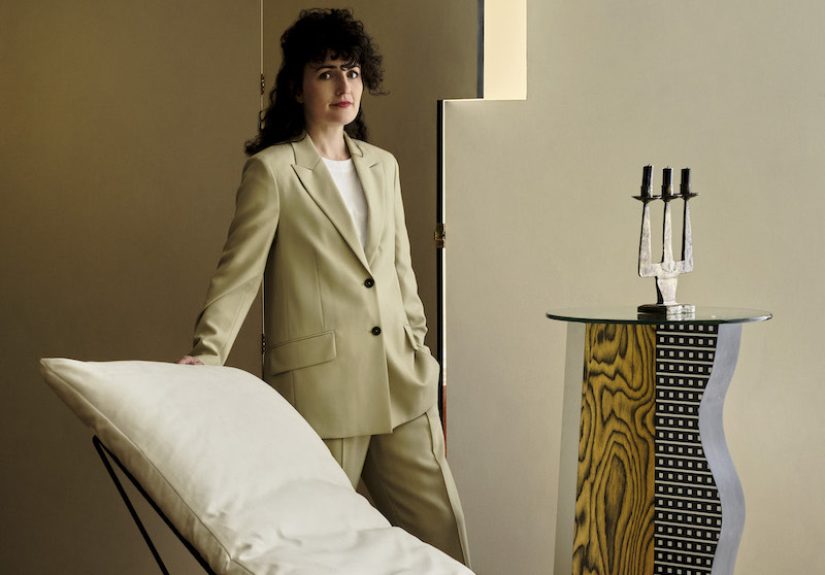
The residency placed Béton Brut in the dedicated furniture and art space on the lower ground floor of Paul Smith’s Mayfair flagship. The edit included rare and unusual pieces dating from the 18th to the 20th century: desks, lighting, sofas, screens, chairs, sculptures, tables, and art objects. Rather than arranging them like museum specimens behind invisible glass, the installation treated them as part of a living interior. The message was clear: collectible design is not just for whispering around. It can be sat near, studied, loved, and occasionally used as the world’s most sophisticated conversation starter.
Why “A Change of Stripes” Is the Perfect Title
The phrase “a change of stripes” works beautifully because both brands arrived with strong visual identities. Béton Brut had long been associated with a restrained, often monochrome palette. Paul Smith, on the other hand, has never met a stripe, color accent, or witty surprise he could not make feel elegant. The residency asked a compelling question: what happens when a gallery rooted in sculptural restraint steps into a flagship store built on colorful eclecticism?
The answer was not chaos. It was chemistry. Sophie Pearce’s curation absorbed the Paul Smith spirit without abandoning Béton Brut’s core philosophy. The pieces remained thoughtful, architectural, and rare, but the presentation became more open to color and contrast. A red lacquered flower stand could share space with a blue tapestry. A geometric carpet could sit near a soft sofa. A classic modernist table could meet an art object with the confidence of two stylish strangers at a cocktail party.
The Setting: Paul Smith’s No. 9 Albemarle Street
To understand the residency, you have to understand the store. Paul Smith’s flagship at No. 9 Albemarle Street is one of Mayfair’s most recognizable retail spaces. Its bespoke cast-iron façade, developed with 6a Architects, reinterprets historic London materials through a contemporary lens. The façade’s interlocking pattern can appear almost woven when seen from an angle, a clever architectural nod to fabric, tailoring, and craft.
That makes the store an ideal host for Béton Brut. The building already speaks the language of material transformation. Iron behaves like textile. A retail façade behaves like sculpture. A shop behaves like a cabinet of curiosities. The lower-ground furniture and art space then becomes a natural extension of the idea: a place where visitors encounter objects that blur the boundary between furniture, architecture, and art.
Inside the Curation: Furniture with Character, Not Furniture with Stage Fright
One of the most compelling aspects of the residency was the range of objects selected. The display included pieces connected to major names and movements in 20th-century design: Mario Bellini, Angelo Mangiarotti, Carlo Scarpa, Cini Boeri, Isamu Noguchi, Kazuhide Takahama, Andrea Branzi, and others. These are not background pieces. They are furniture with posture.
Italian Design as the Quiet Star
Italian modern and postmodern design played a strong role in the residency. A Mario Bellini table, for example, brings a sense of grounded geometry. Bellini’s work often feels architectural without becoming severe. It has weight, but also confidence. Angelo Mangiarotti’s designs are similarly powerful, with forms that often appear simple at first and increasingly intelligent the longer you look.
Carlo Scarpa’s presence adds another layer. Scarpa’s work is beloved for its sensitivity to material, proportion, and detail. In an environment like Paul Smith’s, where tailoring and craftsmanship are part of the brand DNA, Scarpa’s design language feels especially appropriate. A Scarpa sofa in this setting does not merely say “sit.” It says, “Yes, sit, but please appreciate the line first.”
Lighting as Sculpture
Lighting was another essential part of the edit. Vintage lighting has a special magic because it changes the mood of a room instantly. A Kazuhide Takahama lamp, an Isamu Noguchi Akari paper pendant, or an expressive Italian floor lamp does more than illuminate. It sets the temperature of the space emotionally. It tells the eye where to pause.
In a fashion flagship, lighting also carries a second meaning. Fashion relies on atmosphere. Fabric changes under light. Color changes under light. A stripe can look crisp or soft depending on how it is lit. By placing collectible lighting in the store, Béton Brut emphasized that interiors and clothing share a common concern: how form, surface, and shadow behave in real life.
Why the Residency Felt Fresh
The most interesting retail experiences today do not treat shopping as a simple transaction. They treat it as discovery. That is why this collaboration felt so timely. A customer might enter Paul Smith for tailoring, accessories, fragrance, or a gift, then find themselves downstairs looking at a rare vintage sofa, a sculptural lamp, or a 20th-century chair that appears to have wandered out of an architecture monograph.
This is experiential retail at its best because it does not shout. It invites. The objects are not props pretending to have meaning. They are meaningful pieces in their own right, carefully placed within a larger brand world. For Paul Smith, the residency deepened the store’s reputation as a destination for design lovers. For Béton Brut, it opened the gallery’s collection to a broader audience beyond the traditional design collector or interiors professional.
The Fashion-Interior Connection
Fashion and interiors have always been close cousins. Both are about proportion, texture, color, silhouette, and identity. A tailored jacket and a sculptural chair may seem different, but both ask the same questions: How does this object meet the body? How does it hold shape? What does it communicate before anyone says a word?
Béton Brut’s pieces often have the visual strength of architecture. Paul Smith’s clothing often has the discipline of tailoring softened by wit. When the two meet, the result feels surprisingly natural. A chair can behave like a blazer: structured, elegant, and just eccentric enough to be memorable. A lamp can behave like a pocket square: small in footprint, enormous in personality.
Design Lessons from Béton Brut at Paul Smith
1. Mix Eras Without Making the Room Look Confused
The residency showed that mixing centuries can work when the selection is unified by shape, material, and mood. An 18th-century object can sit near a 1970s Italian sofa if both share a sculptural seriousness or tactile richness. The trick is not matching. The trick is editing.
2. Let Color Be an Accent, Not a Panic Button
Béton Brut’s shift toward color did not mean abandoning restraint. It meant allowing color to punctuate the space. A red tabletop, a blue textile, or a playful Paul Smith object could wake up the room without turning it into a circus. Color works best when it has a job.
3. Choose Pieces with a Point of View
The strongest rooms rarely come from buying everything in one afternoon from one catalog. They come from objects with stories, patina, and tension. A vintage chair with a strong silhouette can do more for a room than a dozen polite accessories lined up like they are waiting for a school photo.
4. Treat Retail Space Like Cultural Space
Paul Smith’s flagship already had architectural character, but the Béton Brut residency made the store feel even more layered. It demonstrated how a retail environment can host design dialogue, not just inventory. That is a useful lesson for boutiques, galleries, hotels, restaurants, and even ambitious home offices.
Why Collectible Vintage Furniture Keeps Gaining Attention
Vintage furniture has moved far beyond nostalgia. For many design lovers, it offers what new mass-produced furniture often cannot: individuality, craftsmanship, provenance, and material depth. A vintage piece has already survived decades of changing taste. That alone gives it a certain authority. It has seen trends come and go and is still sitting there calmly, perhaps with better legs than most of us.
Collectible design also appeals because it bridges function and art. You can live with it. You can arrange a room around it. You can study it as an object and also place a book on it. Béton Brut understands this balance well. Its collection does not treat furniture as anonymous utility. It treats furniture as evidence of ideas: about modernism, craft, architecture, material honesty, and the pleasure of form.
How to Bring the Spirit of the Residency Home
You do not need a Mayfair flagship or a museum-grade Italian sofa to learn from this project. The spirit of the residency can translate into real homes with a few practical principles.
Start with one sculptural anchor. That could be a vintage chair, a stone coffee table, a low-slung sofa, a carved wooden stool, or a lamp with a strong silhouette. Let that piece carry the room. Then add contrast: a colorful textile, a striped cushion, a modern artwork, or a warm rug. The goal is not to copy Paul Smith or Béton Brut directly. The goal is to create a room with discipline and surprise.
Next, pay attention to materials. Raw wood, patinated metal, stone, paper, leather, wool, and lacquer all bring different kinds of visual energy. A room becomes more interesting when surfaces talk to one another. Smooth beside rough. Matte beside glossy. Heavy beside light. This is where interiors become less like decorating and more like composing music, except nobody has to practice the violin.
Experience: Walking Through the Idea of Béton Brut at Paul Smith
Imagine arriving at No. 9 Albemarle Street on a gray London afternoon. The street has that polished Mayfair confidence: elegant façades, discreet doorways, and the feeling that even the pigeons have private banking. Then the Paul Smith storefront appears with its dark cast-iron surface, patterned and tactile, serious at first glance but full of movement when the light hits it. It is a perfect first clue. This is not a normal shopfront. It behaves like fabric, architecture, and sculpture at once.
Inside, the Paul Smith world does what it does best. Color appears in controlled flashes. Tailoring sits beside wit. Objects are arranged with the ease of someone who has collected interesting things for decades and somehow remembers where everything came from. Then, as you move toward the lower-ground furniture and art space, the mood shifts. The pace slows. The room begins to feel less like retail and more like a private apartment belonging to a collector with superb taste and absolutely no interest in boring chairs.
The Béton Brut pieces change the way you look. A chair is no longer just a chair; it becomes a line drawing in space. A table becomes a small architectural event. A lamp becomes a sculpture that happens to glow. The most enjoyable part is the tension between restraint and playfulness. You can sense Béton Brut’s love of monochrome, mass, geometry, and material honesty, but Paul Smith’s chromatic personality keeps nudging the room toward delight. It is like watching a minimalist agree to wear striped socks and secretly enjoy it.
For design lovers, the experience offers a reminder that rooms do not need to be filled with newness to feel alive. In fact, many of the most exciting rooms are built from objects that have already had a life elsewhere. A 1970s sofa, an Italian table, a Japanese paper light, a French rope piece, or a curious sculpture can carry memory into a contemporary setting. The result is not old-fashioned. It is layered.
For anyone designing a home, boutique, studio, or hospitality space, the residency suggests a useful approach: choose fewer things, choose stronger things, and let contrast do some of the heavy lifting. Pair a disciplined form with a joyful color. Place a rough material near a refined textile. Let one unexpected object interrupt the room politely. Good design does not always need to explain itself. Sometimes it only needs to make people stop, smile, and ask, “Wait, what is that?”
Conclusion
A Change of Stripes: Béton Brut in Residence at Paul Smith’s Flagship Store is more than a stylish footnote in London design culture. It is an example of how a fashion flagship can become a stage for collectible furniture, how vintage pieces can feel contemporary, and how two strong design identities can meet without one swallowing the other. Béton Brut brought sculptural restraint, rare furniture, and architectural clarity. Paul Smith brought color, wit, stripes, and a retail world already alive with curiosity.
Together, they created a residency that still feels relevant because it points toward the future of interiors and retail: more personal, more layered, more tactile, and far less interested in looking like everything else. In a world full of fast furniture and predictable showrooms, that is a change of stripes worth celebrating.