Table of Contents >> Show >> Hide
- What Is a Bank Run, Really?
- Why Banks Are Especially Vulnerable to Panic
- Then: The Age of Classic Bank Panics
- The Long Middle: Bank Runs Never Fully Disappeared
- Now: The Digital Bank Run
- What Has Not Changed
- How the System Tries to Stop a Run
- What Bank Runs Teach Us
- Experiences Related to Bank Runs: What Panic Feels Like, Then and Now
- Conclusion
- SEO Tags
Bank runs are one of those financial phrases that sound old-fashioned until suddenly they are not. The words can conjure sepia photos of anxious crowds in overcoats, hats tilted low, waiting outside neighborhood banks with the grim energy of people who would rather be anywhere else. But the modern version does not need a sidewalk, a teller window, or even pants. It can happen through banking apps, group chats, and a whole lot of frantic refreshing.
That is what makes bank runs so fascinating and so unnerving. The core drama has barely changed in more than a century: depositors lose confidence, rush to pull out their money, and a bank that might have survived under calmer conditions can buckle under the speed of the exit. What has changed is the tempo. Yesterday’s run moved at the pace of shoe leather. Today’s can move at the pace of Wi-Fi.
This is the story of bank runs then and now: what they are, why they happen, what history teaches, and why a problem that looks like a dusty relic can still show up in a very modern suit.
What Is a Bank Run, Really?
A bank run happens when large numbers of depositors try to withdraw their money at the same time because they fear the bank may fail. That fear matters because banks do not keep every deposited dollar sitting in a giant vault like a movie prop. They keep reserves and liquid assets, yes, but they also lend money out, buy securities, and otherwise do what banks exist to do: transform short-term deposits into longer-term assets.
That structure works well in normal times. It is one of the reasons the banking system can support business loans, mortgages, payrolls, and everyday spending. But it also creates a fragile truth: even a fundamentally sound bank can struggle if too many depositors demand cash all at once. Banking, in other words, runs on confidence almost as much as capital.
This is why bank runs can become self-fulfilling. If enough people believe trouble is coming, they create the trouble by rushing for the exits. It is a bit like yelling “fire” in a crowded theater, except the theater also owes people their checking balances.
Why Banks Are Especially Vulnerable to Panic
Bank runs are not random lightning strikes. They usually emerge when several vulnerabilities line up at once. One is a mismatch between short-term funding and long-term assets. Another is uncertainty about whether those assets can be sold quickly without major losses. A third is concentration risk, meaning a bank depends heavily on a narrow group of customers, industries, or funding sources.
Then comes the emotional accelerant: uncertainty. Depositors rarely wait around for a seminar on asset-liability management. If they suspect others are leaving, they often prefer to be early rather than polite. That instinct may be rational for an individual depositor, even if it is destructive for the system as a whole.
Uninsured deposits make the problem worse. When balances exceed FDIC insurance limits, customers have a stronger incentive to move fast. A depositor with a few thousand dollars in a fully insured account does not feel the same pressure as a company with millions sitting in one bank to cover payroll on Friday morning. In moments of stress, the second group tends to sprint.
Then: The Age of Classic Bank Panics
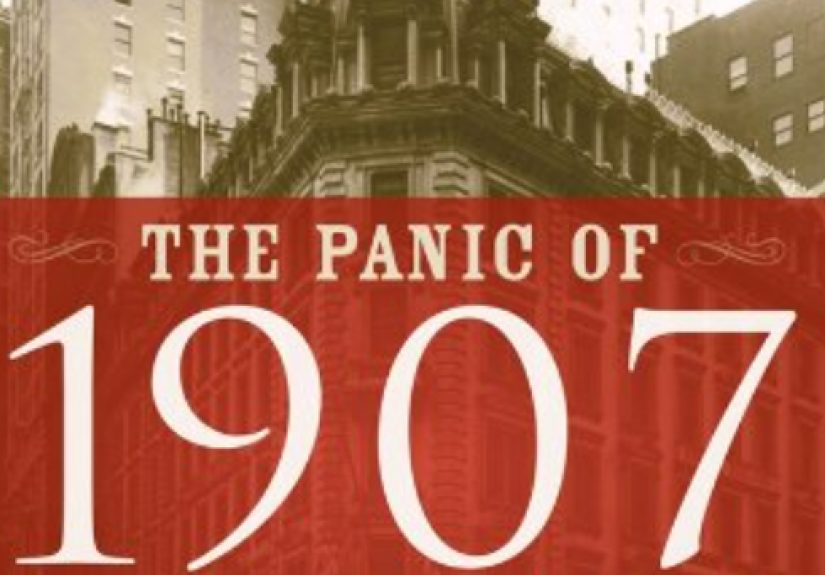
The Panic of 1907
Long before smartphones, America had an impressive talent for financial panic. The Panic of 1907 was a major example. Trust companies, which held lower reserves than national banks, became a focal point of fear. Once confidence cracked, withdrawals surged, credit tightened, and the crisis spread well beyond one institution.
The 1907 panic mattered not only because it was severe, but because it changed how Americans thought about crisis management. The country lacked a central bank capable of acting as a lender of last resort in the modern sense. Private financiers, most famously J.P. Morgan, helped coordinate emergency responses, but the episode exposed how shaky the system was without a stronger institutional backstop.
In plain English: the nation learned that relying on one very rich man with a library and a sense of civic duty was not an ideal permanent financial architecture. The panic helped build momentum for the creation of the Federal Reserve.
The Great Depression and the Bank Holiday
If 1907 was a warning shot, the early 1930s were the full alarm bell. Waves of banking panics in 1930, 1931, and 1933 turned economic weakness into something far worse. As banks failed, credit shrank. As credit shrank, businesses and households suffered. As suffering spread, confidence fell further. It was a vicious loop with very bad manners.
The human cost was brutal. Families lost savings. Businesses lost operating funds. Communities lost local lenders. By 1933, the banking system was in such rough shape that President Franklin Roosevelt declared a national bank holiday, temporarily shutting banks to stop the panic and buy time for examination and reorganization.
Out of that crisis came one of the most important institutional answers to bank runs in American history: federal deposit insurance. The creation of the FDIC changed depositor psychology. If people believed their insured money was safe even if a bank failed, they had much less reason to line up at dawn and demand cash before everyone else.
That shift was enormous. Deposit insurance did not eliminate all banking problems, but it dramatically reduced the everyday incentive for ordinary depositors to panic. It replaced rumor-driven stampedes with a clearer promise from the state: your insured deposits are protected.
The Long Middle: Bank Runs Never Fully Disappeared
It is tempting to think deposit insurance solved the problem once and for all. Not quite. Bank runs became less common among insured retail customers, but they did not vanish. They changed shape.
During the 1980s and 1990s, banking stresses often involved wholesale funding, institutional withdrawals, and more complex forms of liquidity pressure. Then, in the 2008 financial crisis, the old logic of flight returned in new packaging. Washington Mutual, for example, became the largest failure of an insured depository institution in FDIC history. Depositors withdrew billions over days, not months, and authorities had to move quickly to contain the damage.
The key lesson from that period was simple: when fear spreads, size does not guarantee safety, and speed matters more than anyone wants it to. A bank can look large, established, even boring, and still find itself in serious trouble if depositors begin to doubt its ability to meet withdrawals.
Now: The Digital Bank Run
Silicon Valley Bank and the New Speed of Panic
If you want the modern case study, look at Silicon Valley Bank in March 2023. SVB was not a classic Depression-era neighborhood bank. It was a large institution with a concentrated customer base, deep ties to the tech and venture capital ecosystem, and a deposit structure that included a very high share of uninsured balances.
Its vulnerability was not mysterious in hindsight. Rising interest rates had reduced the market value of long-term securities. The bank also faced liquidity stress as its customers drew down deposits. When confidence broke, the run moved with astonishing speed. There were no cinematic lines wrapping around the block. Depositors used apps, online portals, wires, texts, emails, and social media-fueled conversation to move money fast.
That is what made SVB such a powerful symbol. It looked like a twenty-first-century run because it was one. The mechanics were old, but the velocity was new. The panic was amplified by tightly networked customers who could talk to one another in real time and act on those conversations instantly. A whisper campaign no longer needed whispers.
Contagion and First Republic
Once one bank fails in dramatic fashion, the market starts hunting for similarities elsewhere. That is how contagion works. First Republic became one of the most visible follow-on casualties in 2023. It had a customer base with substantial uninsured deposits and faced severe outflows after SVB and Signature Bank failed.
Even extraordinary support efforts, including a temporary infusion of deposits from large U.S. banks, only slowed the bleeding. Confidence, once cracked, is notoriously hard to reglue. First Republic eventually failed as well, showing that bank runs do not need identical balance sheets to rhyme. Sometimes the market hears one verse and assumes it knows the chorus.
What Makes Modern Runs Different
The biggest difference is speed. Historical runs often played out over days as people physically went to branches. Modern runs can erupt in hours because the removal of friction changes behavior. When moving money takes a few taps instead of a drive across town, fewer people pause to reflect. Technology turns anxiety into action with very little downtime in between.
Another difference is network structure. Many recent runs involved concentrated groups of depositors who were unusually connected to one another. Venture capital firms, startup founders, corporate treasurers, and wealthy clients can exchange information quickly and respond almost as a herd. In banking, herds are rarely adorable.
A third difference is visibility. Social media can spread accurate warnings, overblown rumors, half-truths, and total nonsense with equal enthusiasm. In the digital age, the challenge is not just whether a bank has enough liquidity. It is whether confidence can survive a public panic cycle that unfolds faster than official statements.
What Has Not Changed
For all the talk of digital transformation, the oldest truths still do the heavy lifting. Bank runs still happen when depositors doubt a bank’s ability to convert assets into cash quickly enough. They still feed on uncertainty. They still spread when people believe other people are about to move first.
And they still expose the awkward but unavoidable reality that banking is built on maturity transformation. Deposits can leave today. Loans mature later. Securities may lose value when sold quickly. Confidence bridges that gap until it does not.
So yes, the smartphone changed the choreography. But the plot remains gloriously, terrifyingly familiar.
How the System Tries to Stop a Run
Deposit Insurance
The first line of defense is FDIC insurance. For ordinary depositors, it is the most important anti-panic device in the modern banking system. The basic idea is powerful because it is simple: if your insured deposits are protected, your incentive to join a run collapses. That is not flashy policy. It is just effective policy.
Emergency Liquidity
The second line of defense is liquidity support. The Federal Reserve can lend to banks against eligible collateral, giving institutions a way to meet withdrawal demands without dumping assets in a fire sale. After the March 2023 turmoil, the Fed also launched the Bank Term Funding Program, which was designed to help banks borrow against certain high-quality securities valued at par. That was a technical fix, but behind the jargon was a straightforward goal: slow the panic by making liquidity easier to reach.
Supervision and Resolution
The third line of defense is supervision before the crisis and resolution after it. Regulators are supposed to identify weak risk management, excessive reliance on uninsured deposits, large unrealized losses, or dangerous growth patterns before those vulnerabilities become tomorrow’s headline. When a bank does fail, authorities try to resolve it in a way that protects the broader system and reduces chaos for depositors.
The 2023 failures also revived a difficult policy debate: should the system do more to limit run-prone funding structures, especially at midsize and regional banks? That debate is not settled, and probably never will be, because banking regulation lives in the permanent tension between safety, profitability, competition, and innovation. It is the financial equivalent of trying to design a sports car, an armored truck, and a family minivan all at once.
What Bank Runs Teach Us
Bank runs are not just about weak banks. They are about weak confidence. A bank can have problems on its balance sheet, of course, but the tipping point often comes when depositors lose faith in time rather than capital. Can the bank get cash fast enough? Will regulators step in? Are my deposits insured? What do other customers know that I do not? These questions have sparked panics for generations.
The lesson from “then” is that unchecked runs can wreck entire economies. The lesson from “now” is that technology can compress that danger into an incredibly short window. The modern system is safer in important ways than the one Americans faced in 1907 or 1933. Deposit insurance exists. The Fed exists. Resolution tools are better. Supervision is more developed. But none of those advances repeal human psychology.
That may be the most important point of all. A bank run is partly a financial event and partly a social event. It is about solvency and liquidity, but it is also about rumor, trust, coordination, and fear. Balance sheets matter. So do vibes. Economists may not love that sentence, but history certainly does.
Experiences Related to Bank Runs: What Panic Feels Like, Then and Now
One reason bank runs remain so memorable is that they are experienced physically, even when they happen digitally. In the early 1930s, panic had a sound and a shape. People stood in lines before sunrise. Coats were buttoned tight. Faces were drawn. Neighbors searched one another’s expressions for clues. A person might arrive hoping the rumors were exaggerated, only to realize from the length of the crowd that rumor had already become reality. The experience was communal, public, and humiliating in a way modern people may underestimate. No one wanted to be seen begging for access to their own money, but not showing up could mean losing it.
Bank employees lived a different version of the same dread. Tellers were not villains in this story; they were often frightened clerks trying to stay calm while customers demanded answers they did not have. Managers made speeches from staircases, counters, and sidewalks, insisting the bank was sound. Sometimes they were right and the bank survived. Sometimes they were wrong, or it no longer mattered. Once enough people doubted the institution, reassurance sounded less like leadership and more like theater.
Fast-forward to the modern era, and the emotional structure is oddly similar even if the visuals have changed. A startup founder in 2023 did not need to stand in a line outside Silicon Valley Bank. Instead, that founder stared at a laptop, a treasury dashboard, a Slack channel, and a phone vibrating every ten seconds. The question was not whether to grab a place at the front of the queue. The question was whether the payroll account would clear before everyone else hit “transfer.” The panic was quieter, but no less intense. It was fluorescent-lit, caffeinated, and deeply online.
For business customers with large uninsured balances, the experience could be brutally practical. This was not abstract fear about “the economy.” It was, “Can I pay my engineers on Monday?” or “Will my vendors ship if the wire does not land?” That is part of what made recent bank runs feel so modern: they turned institutional liquidity stress into immediate operational anxiety for thousands of companies.
Ordinary consumers experienced it differently. Many were spectators rather than victims, reading headlines and wondering whether their own bank was safe. That uncertainty matters. Even people with fully insured deposits can feel a powerful urge to act when news coverage gets dramatic enough. The genius of deposit insurance is not just financial protection; it is psychological containment. It gives people a reason not to panic, which is worth a great deal when panic is trying to become contagious.
Perhaps the strangest part of a bank run, past or present, is how ordinary it can feel while it is happening. The coffee still gets poured. Emails still arrive. Traffic still moves. Yet underneath all of that normal life is a raw realization: confidence is one of the most important assets in the financial system, and once it slips, even very modern institutions can look alarmingly old-fashioned. One minute you are managing money. The next minute you are participating in a chapter of financial history.