Table of Contents >> Show >> Hide
- The Short Answer: A Giant Asteroid Did the Heavy Lifting
- How Scientists Solved the Dinosaur Extinction Mystery
- How One Asteroid Turned into a Global Extinction Event
- Did Volcanoes Help Kill the Dinosaurs Too?
- Were the Dinosaurs Already Dying Out?
- Not All Dinosaurs Died
- So, What Really Killed the Dinosaurs?
- Why This Story Still Fascinates Us
- Experience Section: Standing at the Edge of the Dinosaur Story
- Conclusion
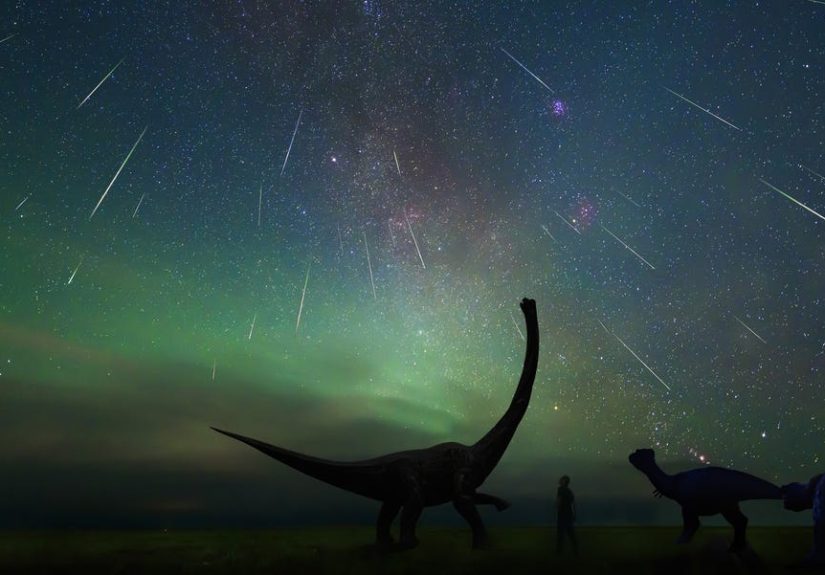
If Earth’s history were a movie, the final scene of the non-avian dinosaurs would not be subtle. It would be loud, fiery, dusty, and deeply rude. For years, people tossed around all kinds of ideas about what killed the dinosaurs: disease, climate change, bad luck, volcanoes, cosmic bad manners, or perhaps the universe simply deciding it was time for the giant lizards to clear the stage. But today, the clearest scientific answer is this: a massive asteroid hit Earth about 66 million years ago, triggering a chain reaction of environmental disasters that wiped out the non-avian dinosaurs and around three-quarters of life on the planet.
That does not mean the story is simple. In fact, the real tale is part detective novel, part disaster documentary, and part lesson in how fragile even the most dominant creatures can be. The asteroid was the main event, but it may not have acted alone. Huge volcanic eruptions in India, known as the Deccan Traps, were already reshaping the climate around the end of the Cretaceous. So the best modern version of the story is not “one rock, the end.” It is more like “one giant rock hit an already stressed planet, and everything went sideways at planetary speed.”
The Short Answer: A Giant Asteroid Did the Heavy Lifting
The strongest scientific consensus says that an asteroid roughly six to seven miles wide slammed into what is now the Yucatán Peninsula in Mexico. That impact created the Chicxulub crater, one of the largest known impact structures on Earth. It was not a minor fender-bender. It was the kind of collision that rewrites biology textbooks.
The impact itself was catastrophic near ground zero, but the real killer was the aftermath. Dust, soot, sulfur, and vaporized rock were blasted high into the atmosphere. Sunlight was blocked. Temperatures plunged. Photosynthesis crashed. Food chains on land and in the oceans buckled. Large animals that depended on stable ecosystems suddenly found themselves living in the geologic equivalent of an unplugged freezer full of misery.
So when people ask, “What killed the dinosaurs?” the best answer is: the Chicxulub asteroid impact and the brutal global climate disruption that followed it. The dinosaurs did not simply get bonked on the head by a space rock. They were wiped out by a worldwide environmental collapse set in motion by that impact.
How Scientists Solved the Dinosaur Extinction Mystery
The Iridium Clue
One of the most famous clues is a thin layer of clay found around the world at the boundary between the Cretaceous and Paleogene periods, often called the K-Pg boundary. That layer contains unusually high levels of iridium, an element that is rare in Earth’s crust but much more common in meteorites. In plain English: Earth rocks usually do not carry that much iridium, but space rocks do. That was a major hint that something from outer space had crashed into the planet at exactly the same time as the mass extinction.
Scientists also found shocked quartz and tiny glassy spheres called spherules. These are classic calling cards of a massive impact. Shocked quartz forms under enormous pressure, the kind you do not get from an ordinary volcanic tantrum. The spherules formed from molten material blasted into the air and cooled into droplets. Together, these clues pointed toward a huge impact event rather than a slow, mysterious fade-out.
The Chicxulub Crater
Finding the crater was the scientific equivalent of locating the smoking cannon after hearing the explosion. Buried under younger rock and sediment near the Yucatán Peninsula, the Chicxulub crater matched the right age and the right scale. It also sat in exactly the sort of sulfur-rich target rock that could make the aftermath far worse by injecting climate-wrecking material into the atmosphere.
Later drilling projects pulled up core samples from the crater and gave scientists an extraordinary look at what happened during and after the impact. These cores helped confirm that the crater formed at the same time as the extinction event and that the blast had the power to send enormous quantities of debris into the sky. In short, the crater did not just fit the case. It practically signed the confession.
How One Asteroid Turned into a Global Extinction Event
First Came the Blast
At the site of impact, the destruction was immediate and overwhelming. The asteroid struck with mind-bending energy, excavating a crater more than 100 miles wide. The collision triggered earthquakes, tsunamis, intense heat pulses, and wildfires. If you happened to be standing nearby, your day was not going to improve.
But local devastation alone does not explain a global mass extinction. Dinosaurs lived all over the world, on landscapes far from the Yucatán. To kill them on a planetary scale, the atmosphere had to become the real weapon.
Then Came the Darkness
When the asteroid slammed into sulfur-rich rocks, it launched dust, soot, and sulfate aerosols high into the atmosphere. This material reflected and blocked sunlight, reducing the amount that reached Earth’s surface. The result was a sharp cooling episode often described as an “impact winter.” Photosynthesis, the process that powers most life on Earth, took a major hit.
Plants struggled. Plankton crashed. Herbivores lost their food supply. Carnivores lost the herbivores. Entire ecosystems began collapsing from the bottom up. That is the key point. The extinction was not just about fire and shockwaves. It was about losing the biological machinery that kept life fed.
Why the Food Web Fell Apart
The non-avian dinosaurs were impressive, but being enormous is not always a survival advantage when the pantry disappears. Big animals need reliable food, stable habitats, and time to reproduce. The post-impact world offered none of those things. Long periods of darkness and cooling would have disrupted plant growth, migration patterns, nesting, and access to prey.
Marine ecosystems suffered, too. The extinction was not only a dinosaur problem. Plankton communities were hit hard, and that rippled upward through ocean food webs. This is one reason the asteroid theory became so persuasive: it explains both land and sea extinctions in one brutal package.
Did Volcanoes Help Kill the Dinosaurs Too?
Here is where the story gets more interesting. Around the same time, India was experiencing enormous volcanic eruptions called the Deccan Traps. These eruptions released lava over vast areas and pumped gases into the atmosphere. Over long timescales, volcanic activity can warm or cool the climate, acidify oceans, and stress ecosystems.
For decades, scientists debated whether the Deccan Traps were the real killer and the asteroid got too much fame because, frankly, asteroids have better publicists. The debate is not totally over, but the balance of evidence now favors the asteroid as the primary cause of the extinction, with volcanism possibly making conditions worse before, during, or after the impact.
Some research suggests the impact may even have influenced volcanic activity by shaking the planet hard enough to alter eruption rates. That possibility turns the end-Cretaceous into less of a single disaster and more of a catastrophic combo platter: a stressed climate, a giant impact, prolonged atmospheric disruption, and ecosystems that never really got a chance to recover before the next punch landed.
Were the Dinosaurs Already Dying Out?
This is one of the most argued-over questions in paleontology. Were dinosaurs already fading away before the asteroid hit, or were they still thriving? Recent evidence leans toward the second option. Some newer fossil studies suggest dinosaur communities were still diverse and active right up to the end, which weakens the idea that they were simply limping toward extinction anyway.
That said, the fossil record is not perfect. It is patchy, uneven, and occasionally as annoying as a mystery novel with missing chapters. Some lineages may have been under pressure. Some regions may have been less diverse than before. But the bigger picture increasingly suggests that the asteroid did not just push a doomed group over the edge. It interrupted living, functioning ecosystems with extreme force.
Not All Dinosaurs Died
This is the part that always deserves a dramatic pause: birds are dinosaurs. More precisely, birds are avian dinosaurs, and they survived. So when we say the dinosaurs went extinct, what we really mean is that the non-avian dinosaurs went extinct.
That survival story matters because it helps explain how extinction works. The event was devastating, but it was selective. Crocodilians, turtles, frogs, small mammals, and some birds made it through. Why? Scientists think small body size, flexible diets, freshwater habitats, burrowing behavior, seed-eating ability, and sheer ecological luck all played roles. In a world where sunlight faded and complex food chains collapsed, creatures that could eat whatever was left, hide, wait, or recover quickly had better odds.
So yes, the dinosaurs still exist in one sense. Every pigeon strutting across a parking lot with too much confidence is carrying a little piece of the Mesozoic forward. That is both scientifically accurate and emotionally delightful.
So, What Really Killed the Dinosaurs?
If we strip away the drama, the best modern answer is this: the non-avian dinosaurs were killed by the environmental consequences of the Chicxulub asteroid impact. The impact caused rapid, global disruptions including darkness, cooling, collapse of photosynthesis, ecosystem failure, wildfires, tsunamis, and atmospheric chemistry changes. Deccan Traps volcanism may have added background stress or amplified the crisis, but the asteroid remains the lead culprit.
In other words, the dinosaurs were not defeated by weakness, laziness, or some evolutionary paperwork error. They were hit by an event so extreme that it reshaped life on Earth. Mammals later expanded into many of the ecological roles the dinosaurs once held, and eventually one branch of mammals learned how to wear glasses, make documentaries, and ask what happened to the dinosaurs while feeding breadcrumbs to surviving avian cousins in the park.
Why This Story Still Fascinates Us
The extinction of the dinosaurs is not just a prehistoric trivia answer. It is one of the clearest examples of how life on Earth can be transformed by sudden environmental change. It reminds us that dominance is temporary, ecosystems are interconnected, and the difference between “ruler of the planet” and “fossil in a museum case” can be one terrible day followed by a few terrible years.
It also fascinates us because the evidence is so cinematic. There is a global iridium layer. There is a buried giant crater. There are rocks that record tsunamis, wildfire signals, and atmospheric chaos. There are fossils above and below the boundary that let us compare life before and after the catastrophe. It is a scientific mystery with a spectacular trail of clues, and unlike many old mysteries, this one actually has a solid ending.
Experience Section: Standing at the Edge of the Dinosaur Story
There is something strangely personal about learning what killed the dinosaurs, even though the event happened 66 million years ago and none of us were there unless someone has a very unusual passport stamp. The reason is simple: this story is one of the few prehistoric events that can feel almost immediate. You can stand in a museum under the skeleton of a Tyrannosaurus rex, look up at that giant skull, and suddenly the extinction stops feeling abstract. It becomes a before-and-after story. Before: giant animals ruled the land. After: silence, ash, and a world trying to restart itself.
Many people first encounter this topic as kids, usually while holding a plastic dinosaur that is anatomically questionable but emotionally perfect. At that age, the question feels thrilling: what could possibly kill a T. rex? A bigger T. rex? A volcano? Alien lasers? Then you grow older, and the answer gets both more scientific and more haunting. It was not one bigger monster. It was a collapse of systems. Sunlight dimmed. Plants failed. Oceans changed. Food disappeared. The strongest creatures in the room were suddenly living in the wrong version of Earth.
Visiting a natural history museum deepens that feeling. You move from towering skeletons to small rocks and core samples, and that shift is powerful. The giant bones capture your imagination, but the tiny details solve the mystery. A thin line of clay. A spike of iridium. A fragment of shocked quartz. A drilled sample from a buried crater. It is humbling to realize that Earth keeps receipts.
There is also a strange emotional twist in seeing birds after reading about dinosaur extinction. A sparrow on a sidewalk or a hawk on a telephone pole suddenly feels different. These are not just birds. They are survivors from a line that made it through one of the worst days in Earth’s history. The next time a pigeon judges your lunch choice from three feet away, remember that you are being stared down by a dinosaur with urban confidence.
For people who love science, the dinosaur extinction story also delivers a special kind of satisfaction: it shows how knowledge is built. No single fossil solved it. No single crater did either. Scientists pieced the story together from chemistry, geology, paleontology, sediment cores, and climate modeling. It is detective work on a planetary scale. That makes the answer more impressive, not less. We did not guess what killed the dinosaurs. We followed the evidence.
And maybe that is why the topic never gets old. It is dramatic enough for movies, but real enough to carry a serious lesson. The extinction reminds us that life can be resilient, but also vulnerable; that Earth is stable until it is not; and that even the biggest creatures can depend on tiny things like sunlight, plankton, and seeds. The dinosaurs may be gone in their non-avian form, but their ending still gives us one of science’s greatest stories: a mystery solved by clues buried in stone, waiting millions of years for curious mammals to come along and ask the right question.
Conclusion
So, what killed the dinosaurs? The most accurate answer is a giant asteroid impact at Chicxulub and the global environmental catastrophe that followed. Volcanoes may have contributed to the chaos, but the asteroid was the decisive blow. The extinction was swift in geologic terms, global in reach, and devastating in effect. Yet it was not total. Birds survived. Life recovered. Evolution got back to work.
That mix of destruction and survival is what makes the story unforgettable. The dinosaurs did not vanish because they were failures. They vanished because Earth experienced one of the most violent ecological resets in its history. And in a twist no screenwriter would dare make subtler, the dinosaurs are still with us every morning in birdsong, feathers, beaks, and flapping wings. The age of dinosaurs ended, but it also never fully left.