Table of Contents >> Show >> Hide
- Why Squirrels Go After Sunflowers in the First Place
- How to Protect Sunflowers from Squirrels: 13 Steps
- Step 1: Protect the Bed the Minute You Plant
- Step 2: Secure Every Edge Like a Squirrel Has Tiny Locksmith Skills
- Step 3: Use Temporary Cages or Baskets Over Young Plants
- Step 4: Remove Squirrel Highways Near the Patch
- Step 5: Stop Running a Side Business Feeding Squirrels
- Step 6: Cover Seed Heads as Soon as the Petals Start Fading
- Step 7: Choose Breathable Covers, Not Moisture Traps
- Step 8: Remove a Few Leaves Near the Head
- Step 9: Fence Small, High-Value Areas
- Step 10: Stake Tall Sunflowers Before Trouble Starts
- Step 11: Use Repellents Carefully, Not Recklessly
- Step 12: Use Visual Scares Sparingly and Ignore Ultrasonic Hype
- Step 13: Harvest Early and Finish Drying Indoors
- Common Mistakes That Make Squirrel Damage Worse
- The Best Long-Term Strategy
- Experience from the Garden: What Actually Worked for Me
- Conclusion
Sunflowers are the golden retrievers of the garden world: cheerful, tall, friendly, and somehow convinced that every day is worth smiling about. Unfortunately, squirrels feel the same way. To them, a ripening sunflower patch is not a charming summer scene. It is an all-you-can-eat buffet with free entertainment.
If you have ever walked outside to admire your giant blooms only to find shredded seed heads, half-eaten petals, and one suspicious squirrel pretending it has never seen you before in its life, you are not alone. Protecting sunflowers from squirrels takes timing, strategy, and a willingness to outthink an animal whose entire personality is built around snacks and audacity.
The good news is that you do not need to turn your backyard into a fortress from a spy movie. The best squirrel control for sunflowers usually comes from a layered approach: protect seeds and seedlings early, switch to physical barriers as flower heads mature, reduce nearby food temptations, and harvest before the critters throw their own private dinner party.
This guide breaks the process into 13 practical steps that actually make sense for real gardeners. No keyword stuffing, no miracle gimmicks, no “just ask the squirrel nicely” nonsense. Just smart, effective ways to keep more sunflower seeds for yourself.
Why Squirrels Go After Sunflowers in the First Place
Squirrels are opportunistic feeders. In plain English, that means if they can eat it, dig it up, climb it, knock it over, or steal it, they probably will. Sunflowers tempt them at multiple stages. Newly planted seeds are easy to dig up. Tender seedlings are vulnerable. Mature heads, packed with seeds, are basically the squirrel version of winning the lottery.
That is why a single “fix” rarely works from planting day to harvest day. The threat changes as the plant grows, so your defenses should change too. Think of it less like one battle and more like a season-long chess match, except your opponent has a fluffy tail and zero respect for property rights.
How to Protect Sunflowers from Squirrels: 13 Steps
Step 1: Protect the Bed the Minute You Plant
If squirrels are common in your yard, do not wait until damage appears. Cover the planting area as soon as the seeds go into the soil. This is one of the most overlooked sunflower protection tips, because gardeners often focus on the giant blooms later and forget that the first theft happens underground.
Use lightweight bird netting or a row cover over the bed right after sowing. The point is to stop squirrels from treating your freshly planted seeds like buried treasure. Waiting even two or three days can be enough time for them to dig up half the row and leave you wondering whether your seeds were defective or simply delicious.
Step 2: Secure Every Edge Like a Squirrel Has Tiny Locksmith Skills
Here is the truth: a loose cover is not a cover. It is a suggestion. If you drape netting over a bed but leave the edges flapping around, squirrels will crawl under it with the confidence of someone using a VIP entrance.
Anchor the edges with landscape staples, boards, bricks, or soil. If you are growing sunflowers in containers, clip the material tightly around the rim. The more snug the setup, the better. This one small detail often separates “My sunflowers survived” from “I fed the neighborhood wildlife by accident.”
Step 3: Use Temporary Cages or Baskets Over Young Plants
Once seedlings emerge, they are still vulnerable. A smart move is placing upside-down wire baskets, mesh cloches, or simple homemade cages over young sunflower plants until they are sturdy enough to handle a little attention.
This works especially well in small garden beds, raised beds, or patio containers. You are not trying to create a permanent prison for your flowers. You are just getting them through the awkward teenage phase when everything wants to eat them.
Step 4: Remove Squirrel Highways Near the Patch
Squirrels love an easy route. Nearby fences, low tree limbs, roofs, trellises, and feeder poles can all become launch pads into your sunflower patch. If your flowers sit right next to a branch or structure, you have basically built them a snack runway.
Trim overhanging limbs where possible, especially branches that let squirrels leap directly into the plants. Move containers away from railings and fence lines. Give your sunflowers some breathing room. A squirrel that has to cross open space is more cautious than one that can stage a perfect acrobatic heist from above.
Step 5: Stop Running a Side Business Feeding Squirrels
If you have bird feeders nearby, spilled seed on the ground, outdoor pet food, or easy garbage access, your yard is already telling squirrels, “Welcome, buffet enthusiasts.” Sunflowers then become the fancy dessert.
Clean up fallen birdseed, store feed in secure containers, bring pet food indoors, and keep trash tightly covered. If possible, move bird feeders farther from the sunflower bed or switch to squirrel-resistant feeder designs. Reducing attractants will not make squirrels disappear, but it can make your flowers a lot less irresistible.
Step 6: Cover Seed Heads as Soon as the Petals Start Fading
This is the big one. When the bright petals begin to fade and the head starts maturing, your sunflower enters the danger zone. That is when squirrels start eyeing the seeds like tiny stockbrokers checking a hot market.
As the heads begin to droop and mature, cover each one with breathable material such as paper bags, cheesecloth, garden fleece, nylon netting, or mesh produce bags. The goal is to let air and light in while keeping furry thieves out. Do not wait until seeds are disappearing. By then, the squirrels have already bookmarked your address.
Step 7: Choose Breathable Covers, Not Moisture Traps
Not every cover is a good cover. A plastic bag that traps moisture can cause mold, especially in humid weather. Breathable materials are better because they protect the seed head while still allowing airflow.
Paper bags work nicely for many gardeners. Cheesecloth, garden fleece, or mesh bags are also excellent because they are light and easy to secure. Whatever you use, think “jacket,” not “sauna.” Your sunflower head needs protection, not a sweaty panic room.
Step 8: Remove a Few Leaves Near the Head
This trick is simple and oddly effective. If large leaves crowd the seed head, they can make it easier for birds to perch and nibble. Trimming a few leaves closest to the head can reduce that access and make the target less comfortable for visiting snack thieves.
Will leaf pruning alone defeat every squirrel? Absolutely not. But in a layered sunflower pest control plan, small advantages add up. Think of it as taking away the patio furniture before the uninvited guests arrive.
Step 9: Fence Small, High-Value Areas
If you are protecting a small patch of prize-winning sunflowers, a physical barrier around the bed can be worth the effort. For serious squirrel pressure, use 1-inch mesh wire fencing around the area. In ground beds, bury part of the fence below soil level and bend the lower section outward to discourage digging under.
This is not always necessary for a casual backyard planting, but for a compact, high-value area, fencing can be very effective. It is especially useful when squirrels are not just eating mature heads, but also raiding newly planted beds and chewing on young plants.
Step 10: Stake Tall Sunflowers Before Trouble Starts
Large sunflowers are top-heavy, and wind can loosen the very covers and barriers you set up to protect them. A leaning or flopping plant is also easier for squirrels to reach, yank, and damage.
Stake tall varieties early, while stems are still manageable. A stable sunflower is easier to bag, easier to fence around, and less likely to turn into a squirrel-access ladder after one stormy afternoon. Gardening is much easier when your security system does not collapse sideways in the night.
Step 11: Use Repellents Carefully, Not Recklessly
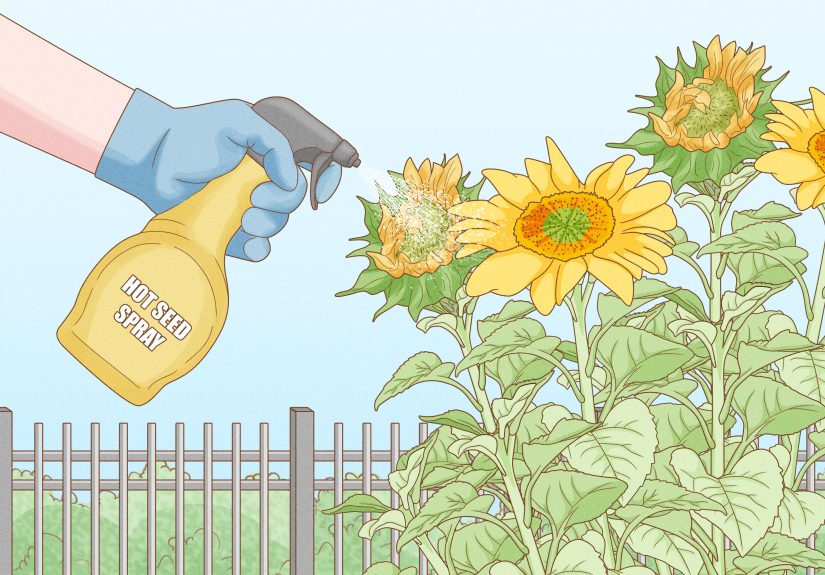
Some gardeners use commercial wildlife repellents containing ingredients such as capsaicin or egg solids. These can help in some situations, especially when used early and reapplied as directed. But they are not magic, and they are not all labeled for edible plants or seed heads.
Read the label carefully before using any repellent near sunflowers grown for seed. Start before damage becomes severe, follow directions exactly, and remember that repellents tend to work best as part of a broader strategy, not as the whole game plan. In other words, repellent is a backup singer, not the lead vocalist.
Step 12: Use Visual Scares Sparingly and Ignore Ultrasonic Hype
Reflective tape, spinners, shiny streamers, and moving deterrents can provide temporary help, especially early on. The key word is temporary. Squirrels are quick learners. A fake owl that never moves eventually becomes just another weird garden ornament with commitment issues.
Rotate visual deterrents if you use them. Move them around. Change the setup. But do not waste too much faith on ultrasonic gadgets and miracle noise machines. Those products are heavily marketed, but they often underdeliver outdoors. Your best defense is still exclusion, timing, and good garden management.
Step 13: Harvest Early and Finish Drying Indoors
If you want the seeds for yourself, this step may save the whole season. Once the back of the sunflower head turns yellow to yellow-brown, the head droops, and seeds begin to mature, cut the head with part of the stem attached and let it finish drying in a warm, airy, protected place.
This move is especially helpful when squirrels have already discovered your patch. You may lose a little on-the-plant ripening time, but you keep the crop. Hang the heads indoors or in a rodent-free shed, then remove the seeds once fully dry. Sometimes the smartest way to win is to end the buffet before your guests arrive with tiny napkins.
Common Mistakes That Make Squirrel Damage Worse
One common mistake is waiting until seeds are visibly disappearing before acting. By that point, squirrels have already identified the food source and will return repeatedly. Another mistake is relying on a single trick, like one fake owl, one sprinkle of hot pepper powder, or one half-secured sheet of netting that flaps around like a surrender flag.
Gardeners also run into trouble when they protect the heads but forget the rest of the environment. If the yard still offers birdseed, easy shelter, and convenient access routes, squirrels remain highly motivated. Finally, some people leave mature heads outdoors too long, hoping for perfect ripeness, only to discover the crop vanished overnight. Squirrels do not respect your harvesting schedule.
The Best Long-Term Strategy
If you want a simple formula, here it is: protect early, cover tightly, remove temptations, and harvest on time. That is the long-term answer to how to protect sunflowers from squirrels without turning your backyard into a full-time wildlife negotiations office.
For most gardeners, the most effective combination looks like this: cover newly planted beds, secure every edge, use temporary cages for seedlings, bag or fleece the heads as they mature, trim nearby access points, and harvest once the seeds are ready enough to finish drying indoors. It is practical, affordable, and much more reliable than wishful thinking.
Experience from the Garden: What Actually Worked for Me
The first year I grew giant sunflowers, I made the classic rookie mistake of assuming nature would politely share. I planted a cheerful row along the back fence, watered them faithfully, admired their fast growth, and mentally planned what I would do with all those seeds in the fall. The squirrels, apparently, also made plans.
At first the trouble looked small. A little digging in one corner. One seedling missing. A leaf that looked nibbled. I blamed “garden mystery” for about a week, which is what gardeners say before accepting that they are losing a low-budget war. Then the flower heads started swelling, and suddenly the damage became obvious. Seeds disappeared in patches. One head looked like somebody had taken a scoop out of it. A squirrel sat on the fence staring at me with the relaxed confidence of a diner who fully intends to order dessert.
What changed everything was realizing I needed stages, not random reactions. The next season, I covered the seed bed the same day I planted. That alone improved germination because my seeds stayed where I put them instead of being relocated to some squirrel real estate development two yards over. Once the seedlings emerged, I used wire baskets over the most vulnerable ones. Not glamorous, but very effective.
The biggest improvement came later, when the flower heads began to mature. Instead of waiting for visible seed loss, I bagged the heads early with breathable mesh and paper covers. I secured them tightly, because I had already learned that a loose tie is basically an engraved invitation. I also trimmed a few leaves near the heads and moved a bird feeder farther away from the patch. Suddenly my yard was less like a wildlife food court and more like a slightly inconvenient restaurant with strict seating policies.
I also started harvesting a little earlier. That was hard at first because gardeners love the idea of leaving everything on the plant until the last possible minute. But “the last possible minute” is also the squirrel’s favorite business hour. Cutting the heads when they were mature enough to finish drying indoors saved a surprising amount of seed.
The funniest part is that nothing I used was particularly fancy. No dramatic contraptions. No high-tech sound machine. No fake owl with a backstory. The real winners were netting, timing, secure ties, cleaner surroundings, and a willingness to stop underestimating a determined squirrel. That is probably the most honest gardening lesson of all: the simple methods work best when you use them consistently.
Now I still lose the occasional seed, because this is gardening, not a courtroom drama where the villain is finally defeated in Act Three. But I harvest far more than I used to, my sunflowers look better longer, and the squirrels seem mildly offended by the inconvenience. Frankly, that is enough victory for me.
Conclusion
If you have been wondering how to keep squirrels off sunflowers, the answer is not one miracle product. It is a sequence of smart moves. Protect the seeds, defend the seedlings, block access, cover the maturing heads, and harvest before the garden turns into an unauthorized seed festival.
Do that, and you will keep more blooms intact, save more seeds for yourself, and enjoy your sunflower patch without watching it get raided by furry little extortionists. And if a squirrel still stares at you from the fence afterward, that is fine. Let it admire your security upgrades.