Table of Contents >> Show >> Hide
- The Story Behind the Tattoos
- Why This Story Resonates So Much
- What Children’s Drawings Really Mean
- Is It Sweet, Strange, or Brilliant?
- The Parenting Lesson Hidden in the Ink
- A Practical Note: Meaningful Tattoos Still Need Smart Choices
- Why the Internet Never Gets Tired of This Story
- Experiences Related to This Story: Why People Connect With It So Deeply
- Conclusion
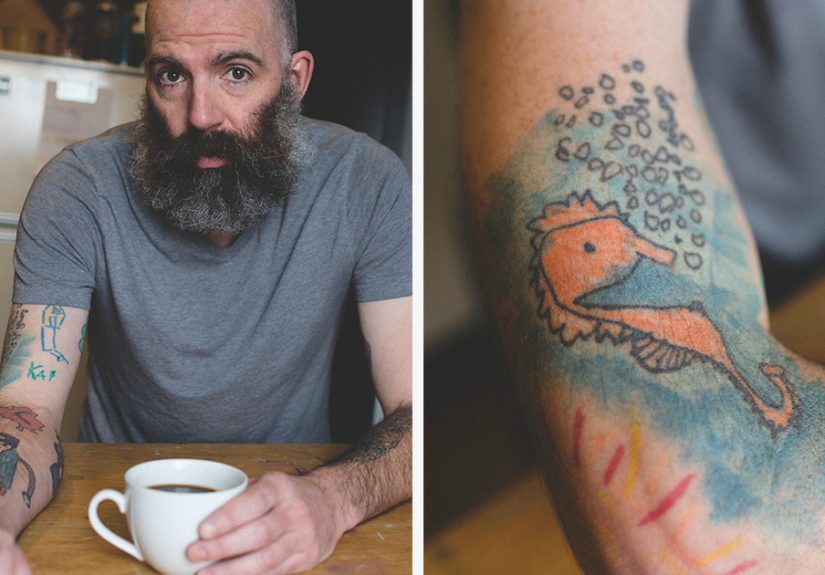
Most parents hang their kid’s artwork on the refrigerator. Some tuck the masterpieces into a memory box. A few very optimistic souls promise themselves they’ll scan everything one day, organize it into folders, and definitely not lose the folder called “Final Final Kid Art 2.” Then there’s Keith Anderson, a dad who took a far more permanent approach: he began tattooing his son’s drawings onto his own body when his son, Kai, was just 5 years old.
And honestly? That is either the most sentimental parenting move ever or the boldest possible way to say, “Yes, this stick-figure daisy is museum-grade.” Maybe both. Either way, the story has stuck with people for years because it lands in that sweet spot where love, memory, creativity, and just a tiny bit of glorious chaos all meet. It is funny at first glance, touching once you think about it, and surprisingly meaningful the longer you sit with it.
In a digital world packed with disposable photos, temporary trends, and childhood memories buried under 40,000 camera-roll screenshots, this story feels different. It is not just about tattoos. It is about what parents keep, what children create, and how family love sometimes shows up in wonderfully weird forms.
The Story Behind the Tattoos
The headline sounds like internet legend, but the core story is very real. Keith Anderson, a father in Ontario, became known for tattooing his son Kai’s drawings onto his own skin year after year. Instead of treating his child’s doodles as cute but temporary little moments, he turned them into lasting body art. What began with a simple flower drawing became a family ritual, one that transformed ordinary children’s sketches into a visual timeline of growing up.
That is what makes the story so memorable. These are not polished, adult-designed tattoo concepts. They are kid drawings in the truest sense: earnest, imaginative, slightly crooked, and completely full of personality. The line quality is not the point. The emotional quality is. Every tattoo preserves not just an image, but a specific age, mood, and phase of childhood. It is basically a scrapbook, except the scrapbook can flex.
As the story gained attention, people were struck by how deeply intentional the tradition was. This was not a one-off sentimental stunt for social media applause. It was an ongoing act of memory-making. That matters. A single tattoo can be sweet. A recurring ritual becomes a family language.
Why This Story Resonates So Much
It turns childhood into something visible
Parents often talk about how quickly childhood disappears. One day your kid is drawing a purple dragon with six knees, and the next day they are asking for privacy and correcting your slang. The pace of change is brutal. A tradition like this slows things down. It says, “This mattered. I want to remember not just the child, but the child’s imagination.”
That is a powerful idea because children’s drawings are not random scribbles to the people who love them. They are evidence of how kids see the world. A house with smoke coming out of three chimneys. A robot butler. A lopsided flower. These images carry humor, innocence, logic, emotion, and little clues about how a child thinks before the world teaches them to edit themselves.
It celebrates creativity instead of perfection
One of the most charming things about a tattoo based on a child’s drawing is that it does not need to be “good” in the conventional sense. In fact, the wobblier the better. The odd proportions, the strange color choices, the suspiciously aggressive smiley sun in the corner, all of that is the magic. It preserves expression, not polish.
That idea is bigger than tattoos. It speaks to how adults respond to childhood creativity in general. When parents display or save a child’s artwork, they send a message: what you make matters. Your ideas matter. Your imagination deserves room. Even if that room happens to be on Dad’s forearm.
It feels surprisingly modern
This story also connects with a broader cultural shift. Tattoos are no longer treated only as rebellious symbols or secret little acts of defiance. For many people, they are memory markers. They honor loved ones, important seasons of life, milestones, grief, joy, and identity. In that context, tattooing a child’s drawing feels less shocking and more like a deeply personal extension of modern family storytelling.
Over the past several years, more parents and public figures have embraced tattoos based on children’s drawings or signatures. That does not make Keith Anderson’s tradition less special. If anything, it helps explain why his story keeps resonating: it captured a feeling before the trend had a name.
What Children’s Drawings Really Mean
It is easy to laugh at kid art in the most affectionate way possible. Please do. You should laugh. Some of it looks like a spaghetti tornado fought a marker set and won. But children’s drawings are also meaningful developmental tools. They help kids express ideas before they have the vocabulary to fully explain them. Drawing lets children build stories, organize emotion, test symbols, and communicate what matters to them.
That is part of why this dad-and-son tattoo story hits so hard. The drawings are not just cute objects; they are little snapshots of a child’s inner world. Preserving them honors more than talent. It honors perspective. It says that childhood imagination is worth treating with seriousness, even when the drawing itself includes a house with seventeen windows and a dinosaur wearing a necktie.
There is also something wonderfully validating about keeping a child’s art in a public, lasting way. Parents often tell kids they are proud of them. Tattoos like these make that pride visible. They say, “I did not just smile and put this on the fridge for a week. I carried it with me.” That kind of gesture can turn ordinary family affection into something unforgettable.
Is It Sweet, Strange, or Brilliant?
Yes.
The best family stories usually live in that exact overlap. Tattooing your kid’s drawings onto your body is not a standard parenting milestone, and that is precisely why people remember it. It is tender without being overly polished. It is emotional without becoming syrupy. It is also funny, because the whole concept contains a delightful amount of dad energy. Regular dads preserve memories with a shoebox. Advanced dads become the shoebox.
But beneath the humor is a serious point: meaningful family traditions do not need to be conventional to be valuable. Some families bake birthday cakes from the same recipe every year. Some keep handwritten notes. Some take annual photos on the same porch. This family chose tattoos. That may not be everyone’s love language, but it is undeniably a love language.
The Parenting Lesson Hidden in the Ink
Even if you would never get a tattoo, the story offers a useful reminder for parents: children notice what we preserve. When adults make room for kids’ creations, questions, jokes, and rituals, children understand that their inner lives are being taken seriously. That kind of attention can build confidence.
It is not about copying this exact tradition. You do not need to call a tattoo studio because your six-year-old drew a suspicious-looking unicorn and declared it “very realistic.” The deeper lesson is to respond to children’s creativity with delight and respect. Save the drawing. Frame one. Rotate the art wall. Make a yearly folder. Turn a doodle into a holiday ornament. Put the monster sketch on a mug. There are countless ways to say, “I see what you made, and I love that you made it.”
That message matters because kids are constantly learning how the world values their ideas. When grown-ups preserve their work, they reinforce pride, expression, and connection. In a way, Keith Anderson simply chose the most unforgettable version of that principle.
A Practical Note: Meaningful Tattoos Still Need Smart Choices
Of course, sentimental tattoos are still tattoos. The emotional story may be adorable, but the practical side should never be ignored. Anyone inspired by family tattoos should approach them with the same seriousness as any other body art. Choose a reputable studio. Make sure equipment is properly sterilized. Follow aftercare instructions carefully. Healing is not the glamorous part of the memory-making process, but it is the part that keeps the whole thing from becoming a regrettable science experiment.
That practical reality actually adds another interesting layer to this story. It is easy to romanticize permanent gestures, but permanence comes with responsibility. A meaningful tattoo is not just about the idea; it is also about doing it safely and thoughtfully. That does not ruin the romance. It proves the commitment is real.
Why the Internet Never Gets Tired of This Story
The internet loves many things: cats, outrage, fries that look like celebrities, and stories that make people feel something immediately. This one lasts because it gives readers more than a quick “aww.” It invites reflection. It makes people think about their own parents, their own children, their own tattoos, their own saved drawings, and the strange little objects that end up carrying the most emotional weight in a family.
It also offers a rare kind of wholesome oddness. Nobody has to pretend it is ordinary. That is part of the charm. A father covered in his son’s childhood drawings is visually striking, emotionally rich, and just unusual enough to keep traveling across the internet year after year. In a landscape full of empty virality, this story actually has a heartbeat.
Experiences Related to This Story: Why People Connect With It So Deeply
What makes “This Dad Has Been Tattooing His Son’s Drawings On His Own Arm Since He Was 5” so emotionally sticky is that a lot of people already have their own version of this experience, even without the tattoo needle. Families keep children’s art in all kinds of ways, and those keepsakes often become far more important over time than anyone expects in the moment.
For one parent, the experience might be opening a kitchen drawer and finding a crayon drawing labeled “Mommy and me,” complete with floating heads, tiny legs, and a dog that looks weirdly like a potato. At first it is cute. Years later, it becomes a time machine. You remember the table where it was made, the little voice explaining it, the age your child was, and the stage of life everyone was living through. That is what Keith Anderson’s tattoos capture so well: not just the art itself, but the whole emotional weather around it.
For another family, the connection may come through fridge displays that slowly spread like ivy across the house. One drawing stays up for months because nobody has the heart to take it down. Another gets laminated by an overachieving grandparent. Another becomes the unofficial family logo because it made everyone laugh so hard they could not let it go. Those experiences are common, and they explain why a tattoo tradition feels less bizarre once you think about it. It is just a more permanent version of something many families already do naturally: they preserve the pieces that feel like proof of love.
There is also the experience of watching children create before they become self-conscious. That season is incredibly special. Kids draw with total confidence. The sun can be green. Cats can have wings. Dad can be taller than the house. Nobody is worried about technique or judgment. Adults often spend years trying to recover that kind of fearless expression. When a parent chooses to preserve a child’s drawing, whether in a frame, a photo book, or a tattoo, they are also preserving that fearless imagination.
Then there is the bonding experience itself. Many parents and kids have small rituals around drawing together: making monsters on rainy afternoons, doodling on restaurant paper placemats, inventing comic-book heroes, or adding details to each other’s sketches. Those moments can feel ordinary while they are happening, but later they become the memories people want to protect. A tattoo based on a child’s drawing takes one of those moments and says, “This was not small to me.” That is probably why so many readers respond so strongly to this story. It validates the emotional importance of what might otherwise look like a simple doodle.
In the end, the experience this story taps into is universal: the desire to hold onto a fleeting version of someone you love. Childhood changes quickly. Drawings change. Families change. Even the jokes attached to the drawings change. But when one of those moments gets preserved in a lasting way, it can feel like you managed to pin a little piece of time in place. Not forever, maybe, but long enough to matter. And really, that is the whole heart of the story.
Conclusion
“This Dad Has Been Tattooing His Son’s Drawings On His Own Arm Since He Was 5” is more than a quirky viral headline. It is a story about memory, creativity, parenting, and the beautiful absurdity of loving someone so much that their childhood doodles become part of your skin. Keith Anderson’s tradition works because it is both hilarious and sincere, playful and profound. It turns the everyday mess of childhood art into a permanent family archive.
That is why the story keeps traveling. It reminds us that the things children make are rarely just things. They are clues, snapshots, and emotional records. Whether you preserve them in a box, a frame, a phone gallery, or, if you are especially committed, your actual arm, the impulse is the same: to say this mattered, this was beautiful, and I do not want to forget it.